Norwegian currency loses momentum. Economists point to a key problem
The Norwegian krone weakened after the decision by Norges Bank to keep the interest rate at 4.25%. The currency market reacted even though a rate hike was not the main scenario expected. Economists point out that the krone exchange rate remains one of the key factors for the Norwegian economy.
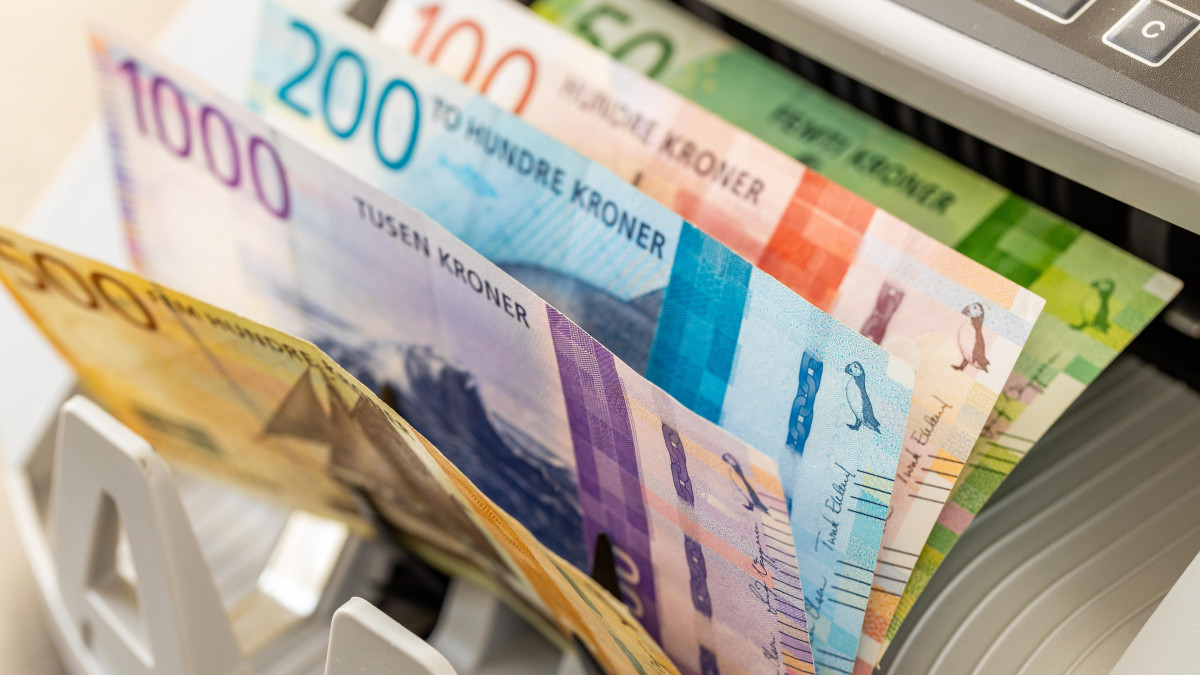
The Norwegian krone weakened after the latest Norges Bank decision
Fot. Adobe Stock, licencja standardowa
The year 2026 started differently. For several months, the krone was one of the strongest gaining currencies in the world, which improved Norwegians’ purchasing power abroad. Then the trend weakened. A stronger currency lowers import costs. It also matters for price pressure, which in Norway has remained above Norges Bank’s 2% target for several years. After Thursday’s decision, the market’s attention again focused on the exchange rate.
Norwegian krone weakens, market reacts
The dollar became more expensive. Before the decision, it cost 9.50 NOK, and afterwards 9.77 NOK. In the past month, the krone has weakened against the dollar by over 5%. The euro rose from 11.04 to 11.16 NOK.
Currency strategist Magne Østnor from DNB Bank ASA (DNB) assessed that the currency market may have been disappointed. According to him, after the May rate hike, Norges Bank took the initiative, but now chose a more wait-and-see approach. This may have strengthened a movement that was already visible earlier. Østnor also pointed to the impact of the situation around Iran and the Strait of Hormuz, as well as lower oil prices.
Kjetil Storesletten, a professor at the University of Minnesota, stated that Norges Bank should have raised the rate. In his opinion, the weakening of the krone after the decision shows that monetary policy was not restrictive enough. He noted that the Norwegian currency continued to lose value later in the day. In his view, a small currency must take into account the moves of foreign central banks.
Harald Magnus Andreassen, chief economist at Sparebank 1 Markets, sees a weaker link between the decision and the krone's movement. He pointed to the drop in oil prices from $110 to below $80 per barrel in the past month. According to him, the krone fell even less than would have been expected from the oil market movement. He assessed that Norges Bank wanted to check the effects of the May rate hike.
Currency strategist Magne Østnor from DNB Bank ASA (DNB) assessed that the currency market may have been disappointed. According to him, after the May rate hike, Norges Bank took the initiative, but now chose a more wait-and-see approach. This may have strengthened a movement that was already visible earlier. Østnor also pointed to the impact of the situation around Iran and the Strait of Hormuz, as well as lower oil prices.
Kjetil Storesletten, a professor at the University of Minnesota, stated that Norges Bank should have raised the rate. In his opinion, the weakening of the krone after the decision shows that monetary policy was not restrictive enough. He noted that the Norwegian currency continued to lose value later in the day. In his view, a small currency must take into account the moves of foreign central banks.
Harald Magnus Andreassen, chief economist at Sparebank 1 Markets, sees a weaker link between the decision and the krone's movement. He pointed to the drop in oil prices from $110 to below $80 per barrel in the past month. According to him, the krone fell even less than would have been expected from the oil market movement. He assessed that Norges Bank wanted to check the effects of the May rate hike.
An interest rate hike in 2026 is considered very likely.Photo: Norges Bank press materials
Interest rates. Foreign pressure on Norway
The interest rate differential matters. Higher rates in Norway compared to other countries usually support the krone, as they increase the attractiveness of holding funds in this currency. Storesletten pointed to the rate hike in the eurozone. He also noted signals from the US central bank about a more restrictive policy than the market expected.
Norges Bank assumes that the rate may rise up to two more times this year. The bank also presented a path for further changes. According to the forecast, inflation is expected to return to 2% in 2029. Storesletten assessed that this is a long period for an economy that has been facing high price dynamics for four years.
A stronger krone helps the central bank in two ways. It lowers the prices of imported goods and services, thus limiting pressure from abroad. It also affects the profitability of export companies, which earn more in NOK when the krone is weaker. This may be important for future wage negotiations.
In the Norwegian model, the industry competing in foreign markets sets the framework for wage agreements across the entire economy. In recent years, a weaker krone has increased the pool of profits to be shared between companies and employees. Higher wage increases can strengthen price pressure. That is why the exchange rate remains important for Norges Bank's decisions.
Norges Bank assumes that the rate may rise up to two more times this year. The bank also presented a path for further changes. According to the forecast, inflation is expected to return to 2% in 2029. Storesletten assessed that this is a long period for an economy that has been facing high price dynamics for four years.
A stronger krone helps the central bank in two ways. It lowers the prices of imported goods and services, thus limiting pressure from abroad. It also affects the profitability of export companies, which earn more in NOK when the krone is weaker. This may be important for future wage negotiations.
In the Norwegian model, the industry competing in foreign markets sets the framework for wage agreements across the entire economy. In recent years, a weaker krone has increased the pool of profits to be shared between companies and employees. Higher wage increases can strengthen price pressure. That is why the exchange rate remains important for Norges Bank's decisions.
Norges Bank now faces the task of assessing the effects of the May rate hike and Thursday's pause. The market will be watching the krone, oil prices, and decisions by foreign central banks. Upcoming data will show whether the currency's weakness will become a lasting problem for the inflation path.
How do you rate this article?