
17.11.2026 08:11
Norway is buying new cars in large numbers. Much could change from January
Norway has set a record not seen in more than 30 years. In October, 15,725 new passenger cars were registered, 41.2% more than a year earlier. As many as 98.8% of them were electric vehicles.
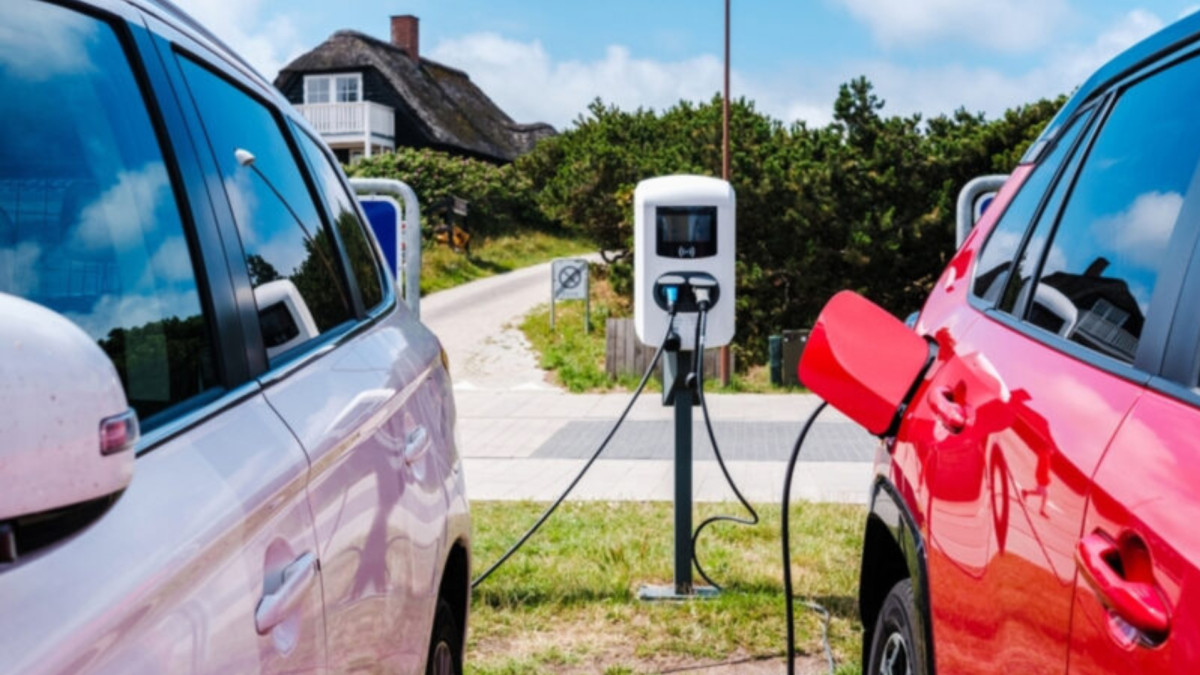
The number of electric cars being purchased in Norway continues to rise.
Fot. Shutterstock, za: OFV
The Norwegian market clearly stands out from the other Nordic countries. Data from the Norwegian Road Traffic Information Council (OFV) shows that across the region, registrations of new internal combustion engine cars fell by 32% in October, while the number of new electric vehicles increased by 45%. In total, three out of four new passenger cars registered in the four countries were electric.
Record after more than 30 years. EVs dominate in Norway
Demand for new cars in Norway has risen significantly. From January through the end of October 2026, 130,921 new passenger cars were registered, 5.2% more than in the same period last year. This raises the question of another record. OFV indicates that this year’s results could challenge the 2025 sales record. The share of EVs rose from 97.4% a year earlier to 98.8% in October 2026.
Tesla became the most popular brand in Norway. In October, 1,548 cars from the brand were registered, just 55 more than Toyota. The Tesla Model Y was the leading model, with 1,429 registrations. It was followed by the Toyota bZ4X with 725 units and the Volkswagen ID.4 with 553 registrations. Chinese brands also achieved a record result, accounting for 22.5% of all new passenger cars registered in Norway.
Tesla became the most popular brand in Norway. In October, 1,548 cars from the brand were registered, just 55 more than Toyota. The Tesla Model Y was the leading model, with 1,429 registrations. It was followed by the Toyota bZ4X with 725 units and the Volkswagen ID.4 with 553 registrations. Chinese brands also achieved a record result, accounting for 22.5% of all new passenger cars registered in Norway.
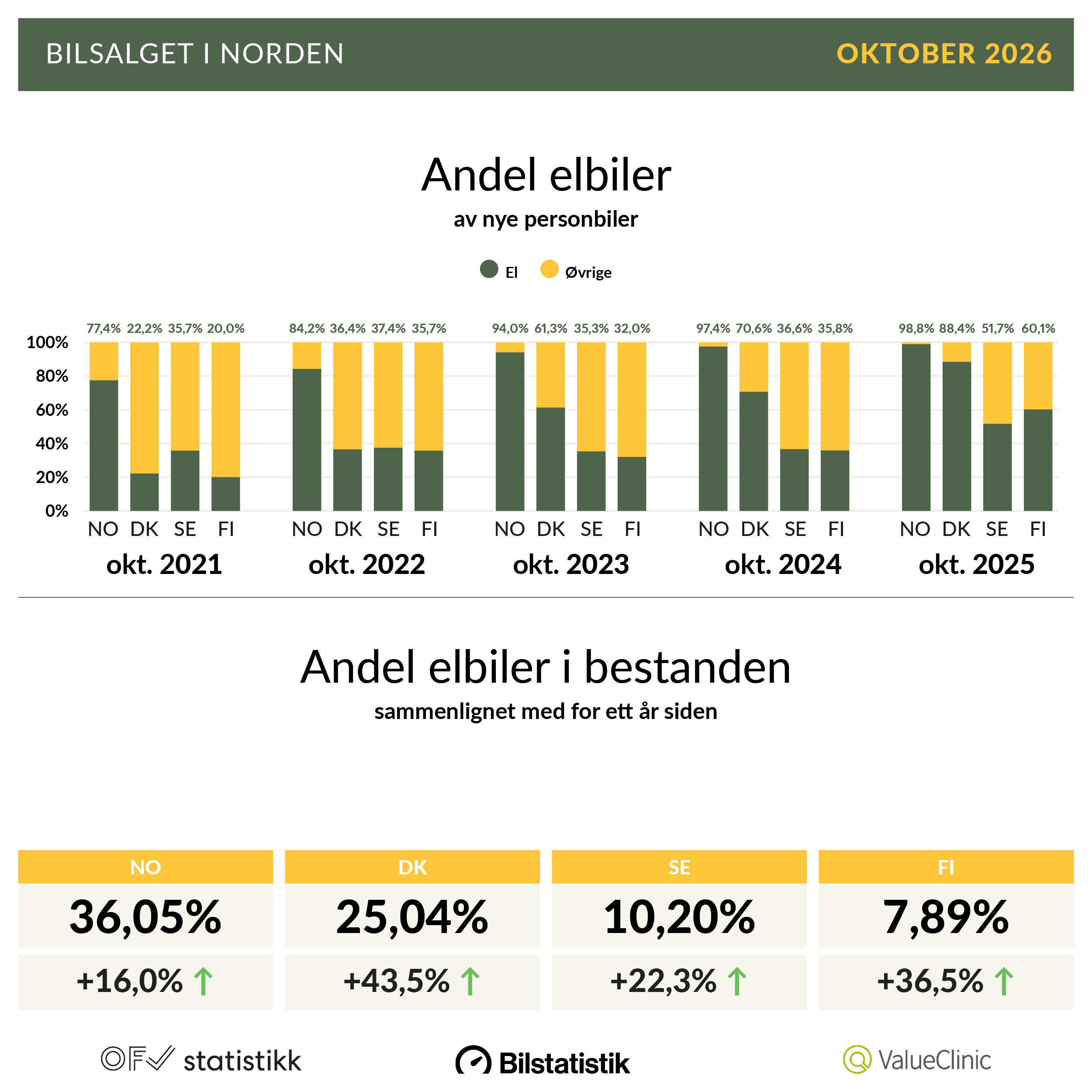
Pictured: new vehicles in the Nordic countries, broken down into electric vehicles (green) and others (yellow).Fig. OFV
Government plans VAT changes. Drivers may speed up purchases
An additional factor affecting purchasing decisions has emerged on the Norwegian market. The government has proposed lowering the VAT exemption threshold for new electric cars from NOK 300,000 to NOK 150,000 as of 1 January 2027. The change could mean higher purchase costs for some models. OFV CEO Geir Inge Stokke notes that many customers may decide to buy before the end of 2026 to avoid a potential increase.
A similar situation is occurring in Denmark. From the beginning of 2027, the registration tax on electric cars is set to increase there, unless politicians decide to change the current rules. The share of EVs among new cars reached 88.4% in October. In Sweden, it reached 51.7%, and in Finland, 60.1%. OFV points out that accelerated purchases in Norway and Denmark at the end of the year could lead to a decline in registrations during the first months of 2027.
A similar situation is occurring in Denmark. From the beginning of 2027, the registration tax on electric cars is set to increase there, unless politicians decide to change the current rules. The share of EVs among new cars reached 88.4% in October. In Sweden, it reached 51.7%, and in Finland, 60.1%. OFV points out that accelerated purchases in Norway and Denmark at the end of the year could lead to a decline in registrations during the first months of 2027.
Electric cars are also increasing their share of Norway’s entire passenger car fleet. At the end of October, they already accounted for 36.05% of all passenger cars in the country, compared with 25.04% in Denmark, 10.20% in Sweden and 7.89% in Finland. The situation was different in Norway’s van market, where the number of new registrations fell by 28.8% to 1,931 vehicles.
How do you rate this article?
Latest articles
-
 What to do when working in Norway leaves you exhausted?
-
 A drone appeared just before the plane took off. What happened next worries Norwegian pilots
-
 Isfjord Norway salmon processor goes bankrupt. What about the salaries of 300 employees and how much will NAV pay?
-
 Almost the entire Oslo Metro closed from 19 to 22 November. How to get to the city centre
-
 Norway exports electricity despite low water reserves. Soaring energy bills in the background
-
 Norway prepares for protest. Oslo metro and trams to stop