
25.11.2026 08:26
Norway has not seen a situation like this in 22 years. Fewer and fewer people want to live in the land of the fjords
Norway’s population increased by 9,700 people in the third quarter of 2026. This was the lowest population growth for this time of year since 2004. At the same time, statisticians recorded another increase in the number of births.

Although Norway’s net migration remains positive, the increase in the number of newcomers is getting smaller.
Fot. Adobe Stock, licencja standardowa (zdjęcie poglądowe)
Data from Statistics Norway (SSB) show that at the end of September 2026, Norway had a population of 5,646,600. The pace of population growth was primarily affected by declining immigration, which reached one of its lowest levels in two decades. A different trend can be observed in birth statistics.
Fewer and fewer people are moving to Norway. Immigration continues to decline
In the third quarter of 2026, 14,600 people moved to Norway. This was the lowest figure for this period since 2006, excluding the pandemic year of 2020. The decline is part of a trend observed for several years. Following the sharp increase in immigration caused by Russia’s full-scale invasion of Ukraine, the number of people arriving in Norway has been steadily decreasing.
The inflow of Ukrainian citizens is also decreasing. From July to September 2026, 1,700 Ukrainians moved to Norway. This is still more than before the start of the full-scale invasion. Since the beginning of 2025, the number of Ukrainian citizens arriving in Norway has usually ranged from 1,700 to 3,300 each quarter.
The inflow of Ukrainian citizens is also decreasing. From July to September 2026, 1,700 Ukrainians moved to Norway. This is still more than before the start of the full-scale invasion. Since the beginning of 2025, the number of Ukrainian citizens arriving in Norway has usually ranged from 1,700 to 3,300 each quarter.
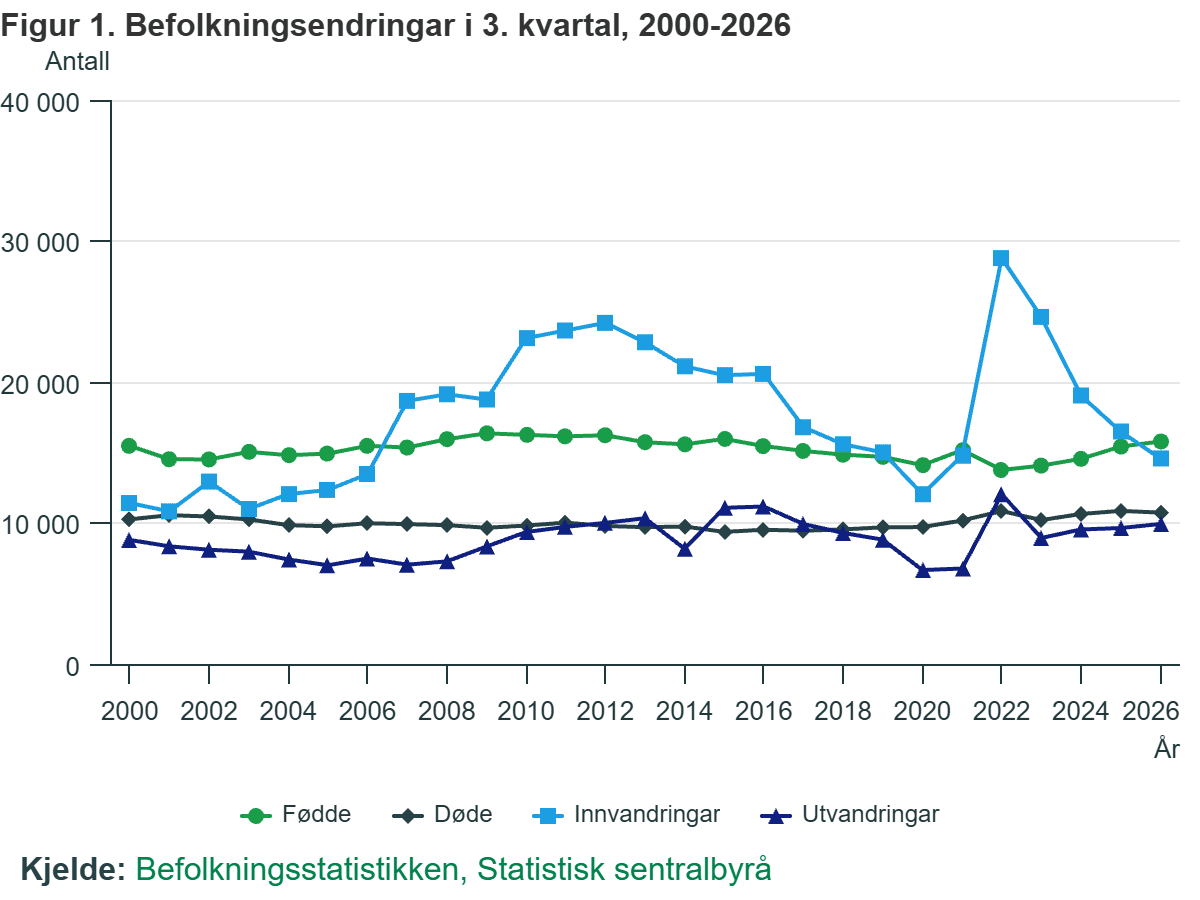
Demographic changes in Norway. Third quarter, 2000–2026.Fig. SSB
More children are being born in Norway. The trend has continued since 2022
In the third quarter of 2026, 15,800 children were born in Norway. In the same period of the previous year, 15,400 births were recorded, 400 fewer. The number of births has been steadily increasing since 2022. The latest data confirm that this trend is continuing.
The increase is also visible in statistics covering the first nine months of the year. Compared with the same period in 2022, the number of births increased by 5,100. SSB does not yet have data for the final quarter of 2026. Complete statistics will make it possible to determine the scale of this year’s increase.
The increase is also visible in statistics covering the first nine months of the year. Compared with the same period in 2022, the number of births increased by 5,100. SSB does not yet have data for the final quarter of 2026. Complete statistics will make it possible to determine the scale of this year’s increase.
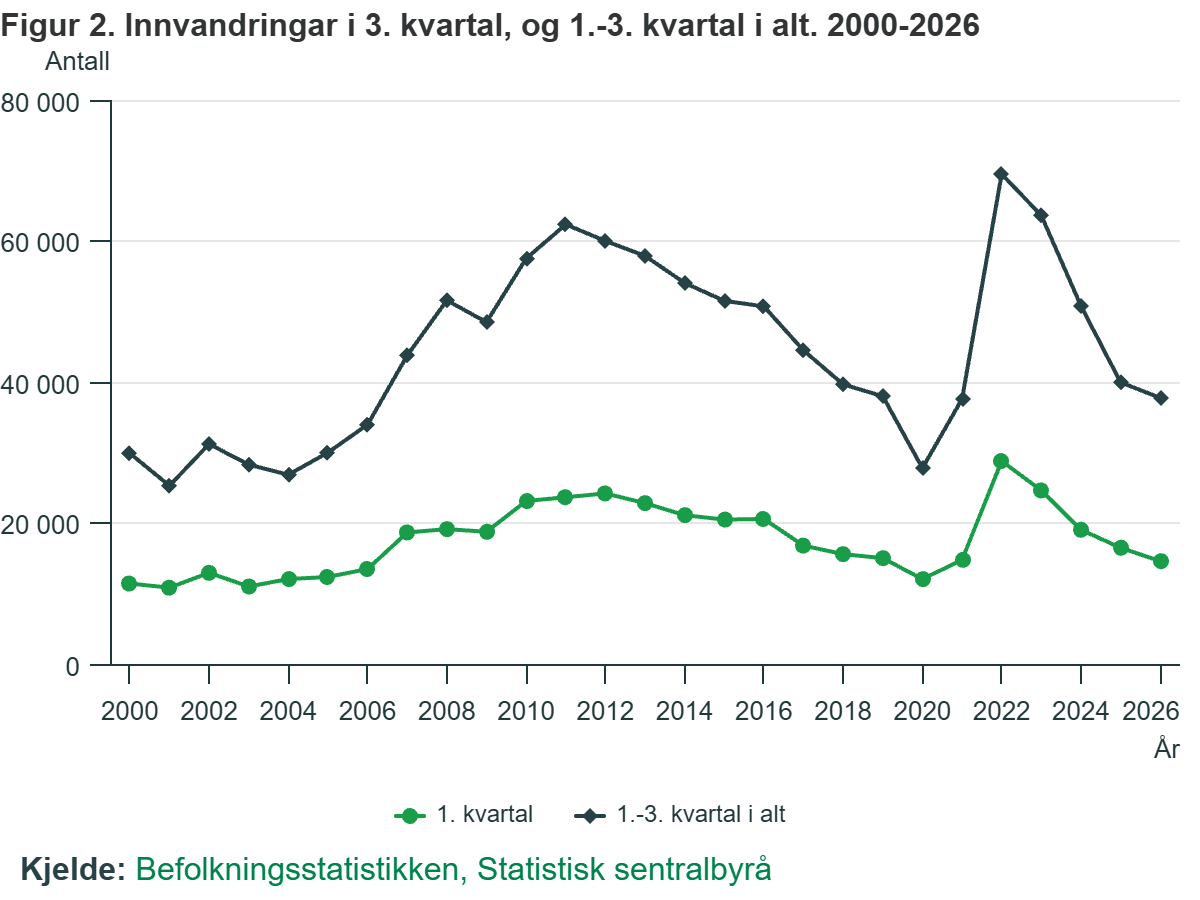
Migration in Norway, 2000–2026. Data for the first quarter and the first three quarters of the year.Fig. SSB
Espen Andersen, a senior adviser at SSB, points to the possibility of another increase in Norway’s fertility rate. The birth data collected so far indicate this. The final value of the indicator will be known once statistics for the fourth quarter are included.
How do you rate this article?
Latest articles
-
 Morning briefing: electricity up to NOK 3.87, −20 degrees in Røros, poorer air quality in Oslo and Bergen
-
 Bringing alcohol back to Norway for Christmas? 1 litre of spirits, 100 cigarettes, higher fines since July
-
 NAV pays early: pensions on 11 December, child benefit on 16 December. Which payments have no tax deducted
-
 Passport without travelling to Oslo. Registration for the Bergen appointment opens today at 16:00, and for Ålesund on 1 December
-
 Your shift is changed in Norway. When must you be notified 14 days in advance?
-
 Your first ski day in Norway can start at a borrowing desk