Have you completed a medical internship in Poland? You can apply for an assessment against LIS1
From 1 January 2026, Norway allows parts of foreign training programmes to be assessed against the duration and learning objectives of LIS1. This is an important change for doctors who trained outside Norway.
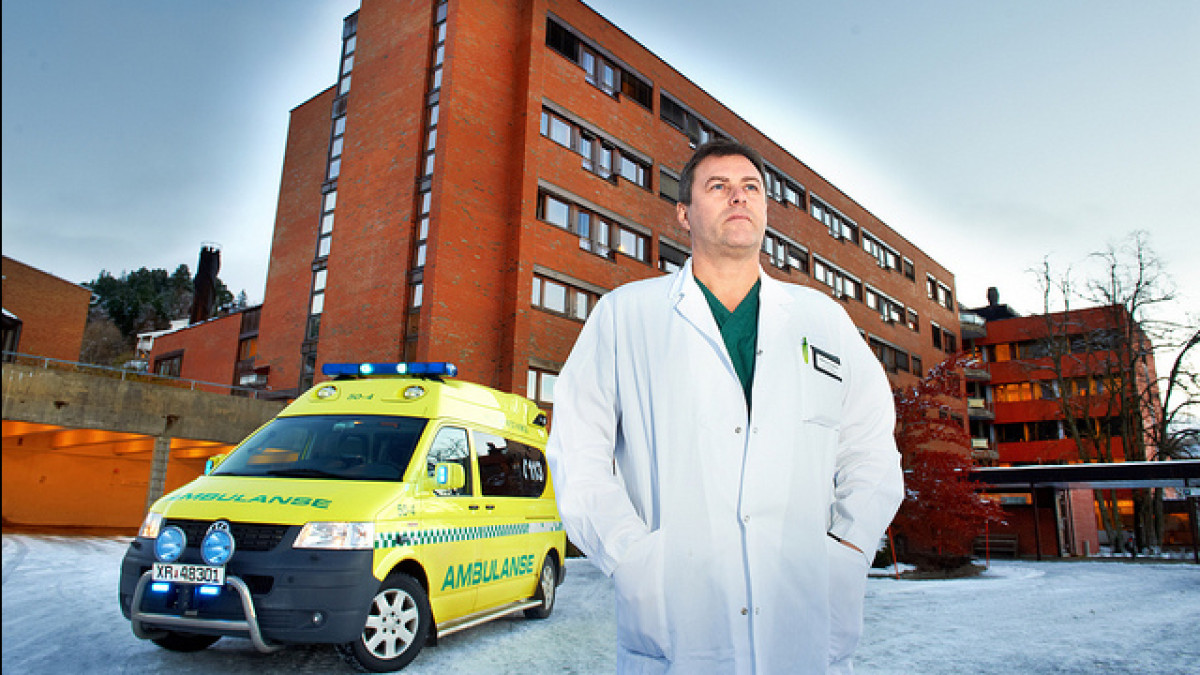
doctor
Helse Midt-Norge/flickr.com
In brief
- From 1 January 2026, foreign training programmes may be individually assessed against LIS1.
- The Polish postgraduate internship is not recognised automatically.
- Norwegian medical authorisation is required before submitting an application.
- The authority assesses the duration, scope of practice, learning objectives and documentation.
- The fee is NOK 1,000, and processing may take up to 12 months.
- Documents in Polish require a translation that meets Helsedirektoratet's requirements.
However, the Polish postgraduate internship is not recognised automatically. Helsedirektoratet does not list it by name. The doctor must submit documents, and the authority will assess whether the programme meets Norwegian requirements and what exactly can be credited.
What changed in 2026?
LIS1 is the first stage of medical training in Norway, common to all specialities. It lasts a total of 18 months:
- 12 months in the specialist health service,
- 6 months in the municipal health service.
From 1 January 2026, a foreign programme may be assessed against LIS1 if it was completed after graduating from medical school and meets specific conditions.1
The programme must:
- last at least 12 months,
- be completed as part of employment,
- be organised, formal and regulated by a competent authority or educational institution,
- have a described programme and objectives,
- include supervision of the doctor,
- provide for competence assessment or documentation of achieved objectives,
- be completed.
Helsedirektoratet gives the Danish KBU, Swedish AT and Icelandic kandidatsår as examples. The Polish internship is not included in this list.1
Important caveat: not all post-graduation practice is eligible for assessment
The Norwegian authority clearly states that it does not assess mandatory practice such as turnus or an internship if it forms part of basic medical education. It gives the German Praktisches Jahr as an example.1
Polish regulations define the postgraduate internship as professional preparation for doctors. The internship is completed after graduation, under an employment contract, according to a formal programme and under supervision. It lasts 13 months.5
This provides grounds to apply for an individual assessment. However, there is no published position from Helsedirektoratet confirming that every Polish internship will qualify under the new procedure.
The Norwegian authority will decide whether a specific programme was separate post-graduation training or practice counted as part of basic medical education.
13 months of a Polish internship does not mean 13 months of credited LIS1
This should not be calculated in a simple way:
18 months of LIS1 – 13 months of internship in Poland = 5 months to complete.
Helsedirektoratet assesses separately:
- the duration of the training,
- its actual content,
- the distribution of practice across the individual fields,
- documented competencies and learning objectives.
Norwegian guidelines refer to areas corresponding to LIS1:
- internal medicine,
- surgery, including orthopaedics,
- general and family medicine,
- psychiatry.
Individual objectives may be approved if the foreign practice was of appropriate duration and scope. This does not mean automatic recognition of the entire programme.1
The latest report from Helsedirektoratet shows that Danish KBU may provide up to 12 months of credited LIS1 time, while Swedish AT may provide up to 18 months. However, the number of recognised objectives depends on the programme, the course of practice and the documentation.2
In the case of a Polish internship, only the authority's decision will show:
- whether the programme can be assessed,
- how much time will be credited,
- which learning objectives will be recognised,
- what the doctor will still need to complete in Norway.
First Norwegian authorisation, then the application
Before applying for confirmation of LIS1 learning objectives, you must have Norwegian medical authorisation.1
The application is submitted electronically through Altinn. A person without Norwegian electronic ID must also attach a copy of their passport and a signed form.1
All attachments should be colour scans of the original documents saved in PDF format.1
What documents need to be prepared?
Helsedirektoratet requires detailed documentation of the programme and work performed. For training completed in Poland, the following may be needed:
- a diploma showing the date of graduation from medical school,
- a CCPS document from Poland,
- the training programme, including a description of objectives, valid at the time of the internship,
- confirmation of acquired competencies, for example an internship record card, logbook or relevant certificates,
- formal confirmation that the programme was completed,
- a completed self-declaration on Helsedirektoratet's form,
- Helsedirektoratet's standard certificate concerning completed practice.
The programme that was in force in the year when the doctor completed the internship is particularly important. The current version of the programme may differ from an earlier one and may not be sufficient for the assessment.
If a doctor also wishes to document specialist training started abroad, the authority requires a document confirming that the work was part of formal specialist training, as well as a detailed description of its content.1
Documents in Polish must be translated appropriately
Documents not prepared in Norwegian, Swedish, Danish or English must be translated into one of these languages by a statsautorisert translatør, i.e. a translator holding Norwegian authorisation for the relevant language direction.1
The translation must be placed in the same PDF file as the document in the original language.1
Do not assume that a regular translation or one prepared by a Polish sworn translator will always meet this requirement. Before ordering a translation, confirm the translator's exact type of authorisation.
Do you have documents for Helsedirektoratet?
Send your scans to MultiNOR. We will check the scope of the documents and prepare a free quote (translation quote in 3 min PL/NO).
In the “Comments” field, enter:
LIS1 – Helsedirektoratet – statsautorisert translatør required
Before paying for the order, ask for confirmation that the quote includes a translation meeting this exact requirement of the authority.
Have you already received a refusal? You can submit a new application
The change in rules covers cases that were not finalised on 1 January 2026. In such cases, Helsedirektoratet may ask for additional documentation.1
If an earlier case has already been closed, but the new rules may allow a larger part of foreign training to be recognised, the doctor may submit a new application.1
An earlier refusal does not therefore have to end the matter definitively.
How much does the application cost and how long does processing take?
The fee for confirmation of learning objectives for doctors with partially completed training abroad is currently NOK 1,000.3
Helsedirektoratet states that processing an application concerning foreign practice in LIS1 may take up to 12 months.3
The timeframe applies to a correctly completed and complete application. Missing documentation may extend the processing time.
The case of Danish doctors went to court
The change in practice also has a legal background. Two doctors who completed Danish KBU demanded that Norway genuinely compare their competencies with LIS1 requirements, rather than refusing without an individual assessment.
On 5 November 2025, Oslo District Court found in favour of the doctors and held that the state had breached EEA law. The state appealed the judgment.6
Legeforeningen reported that the appeal case before Borgarting Court of Appeal was to be heard in August 2026.6
As of 1 September 2026, Legeforeningen had not published information on the outcome of the appeal, so we do not prejudge the result of the proceedings.
What should a doctor who completed an internship in Poland do?
Do not assume at the outset that you must repeat the entire LIS1. Nor should you assume that the Polish internship will be credited in full.
First:
- obtain Norwegian medical authorisation,
- collect documentation from your Polish internship,
- find the programme valid when you completed it,
- prepare confirmations of practice and acquired competencies,
- obtain translations in the form required by Helsedirektoratet,
- submit the application through Altinn.
The most important change is that a foreign programme meeting the conditions no longer has to be excluded from the outset. A doctor may request an individual assessment against the duration and learning objectives of LIS1.1
In the case of a Polish internship, however, there is no guarantee or automatic conversion. The documents and Helsedirektoratet's individual assessment are decisive.
Documents for LIS1?
Helsedirektoratet requires a translation prepared by a statsautorisert translatør. Send your documents for a free quote and include this requirement in the comments (translation quote in 3 min PL/NO).
Frequently asked questions
Does a Polish internship automatically exempt you from LIS1?
No. The Polish internship is not listed by Helsedirektoratet as a programme recognised by name. The authority will first assess whether the programme qualifies for the procedure, and then examine its duration, scope and learning objectives.
After 13 months of internship in Poland, are only 5 months of LIS1 left?
There is no such automatic conversion. Not only the duration of the internship matters, but also the content of individual placements and documented competencies.
Do you need Norwegian authorisation before submitting the application?
Yes. Norwegian medical authorisation is required before applying for confirmation of LIS1 learning objectives.
How much does the procedure cost?
The fee for confirmation of objectives with partially completed foreign training is NOK 1,000.
How long does application processing take?
Helsedirektoratet states a processing time of up to 12 months for an application concerning foreign practice in LIS1.
Sources
- Helsedirektoratet: Confirmation of learning objectives in the first part of specialist training with partial specialist training completed abroad
- Helsedirektoratet: Changes for doctors with practice from abroad
- Helsedirektoratet: Processing time and application process
- Ministry of Health and Care Services: 2026 letter of allocation to Helsedirektoratet, assignment TB2026-45
- Ministry of Health: Postgraduate internship for doctors and dentists
- Legeforeningen: Continuing the fight against the state for doctors educated in Denmark
- Legeforeningen: Approval scheme for KBU and similar training programmes introduced from 1 January 2026
Sources current as of 1 September 2026.
How do you rate this article?