Golden Age for Norway’s Richest: How Their Wealth Changed in 10 Years
The wealthiest one percent of Norway’s population has doubled its wealth over the past ten years. The total value of their assets amounts to NOK 2,041 billion. The data is based on information from tax lists.

A debate is ongoing about capital concentration in Norway.
Fot. Adobe Stock, licencja standardowa (zdjęcie poglądowe)
During the analyzed period, the wealth of this group grew at a rate of about seven percent per year. Retired professor Kalle Moene from the University of Oslo points out that such growth leads to a doubling of value within a decade.
He notes that large fortunes are associated with increasing decision-making power. This is especially significant when capital is invested in the corporate sector.
He notes that large fortunes are associated with increasing decision-making power. This is especially significant when capital is invested in the corporate sector.
Concerns About Labor Market Relations
According to Moene, wealth concentration means a clear strengthening of the influence of the richest. The professor emphasizes that this may affect the Norwegian model of cooperation in employer–employee relations.
He believes that employees may be less inclined to moderate their wage expectations. This could be significant for future collective bargaining.
He believes that employees may be less inclined to moderate their wage expectations. This could be significant for future collective bargaining.

Moene disagrees with the thesis that the labor market depends on the richest.Photo: fotolia.com
A Different Interpretation of Wealth Data
A different position is presented by Mathilde Fasting, an expert from a think tank. She points out that tax lists do not give a full picture of actual inequalities.
She emphasizes that income inequality in Norway remains low and stable compared to countries belonging to the Organisation for Economic Co-operation and Development. She also highlights the importance of state-owned wealth, which formally belongs to the entire society.
She emphasizes that income inequality in Norway remains low and stable compared to countries belonging to the Organisation for Economic Co-operation and Development. She also highlights the importance of state-owned wealth, which formally belongs to the entire society.
The Role of the Richest in Job Creation
A Civita note from 2025 shows that in 2023, the wealthiest one percent of owners accounted for nearly half of the jobs in private companies with Norwegian capital.
This group created the most new positions. According to Fasting, private ownership in business is linked to the concentration of value in company assets. As companies grow, their valuation also increases.
This group created the most new positions. According to Fasting, private ownership in business is linked to the concentration of value in company assets. As companies grow, their valuation also increases.
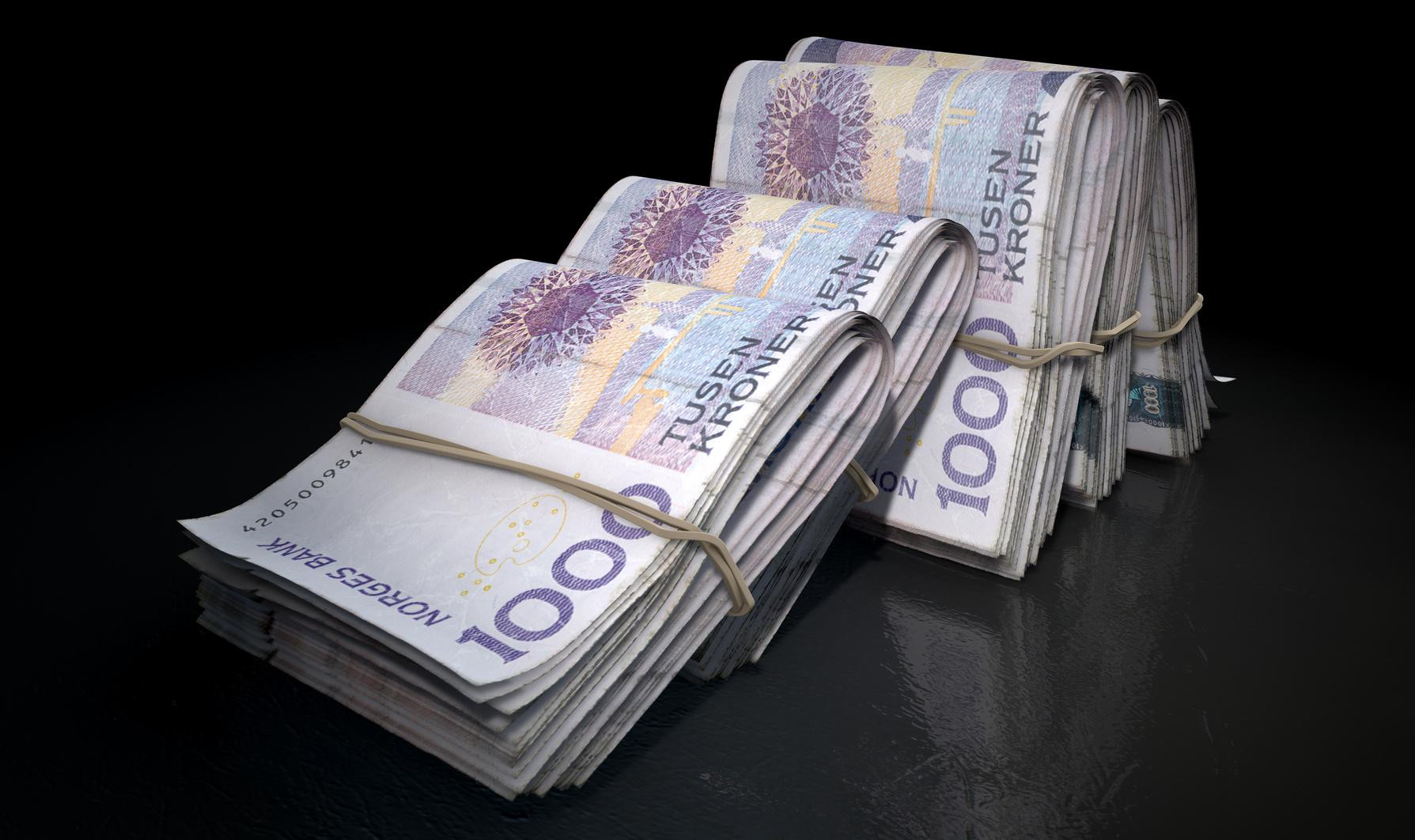
The average rate of wealth growth was about seven percent per year.Photo: fotolia
Debate Over the Future Development Model
At the same time, a debate is ongoing about the long-term effects of wealth concentration. Kalle Moene questions the view that innovation and new jobs depend solely on a narrow group of very wealthy people.
He refers to historical arguments linking ownership with the right to make decisions. In his opinion, a more even distribution of capital could encourage broader public participation in economic development.
He refers to historical arguments linking ownership with the right to make decisions. In his opinion, a more even distribution of capital could encourage broader public participation in economic development.
How do you rate this article?