
25.11.2026 15:00
Electricity averages NOK 3.89 on Thursday, the highest this year. Record-low reservoir levels in the south
On Thursday, 26 November, the average electricity price will be the highest this year in all five Norwegian price zones. In Oslo, Bergen and Kristiansand, a kilowatt-hour will cost more than NOK 4.90 in the afternoon; in the north, up to NOK 3.65. Hydropower reservoirs in the southwest are 50.8 per cent full. According to data from the NVE, this is the lowest level for this time of year since 1995.
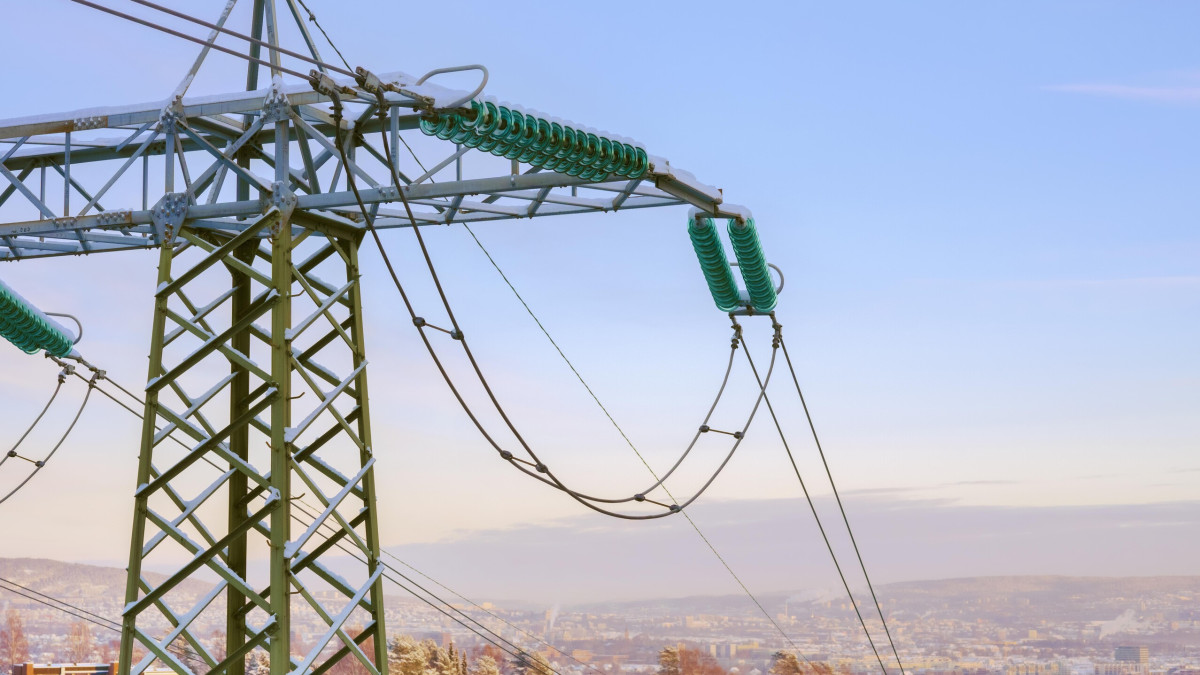
On Thursday, the average electricity price is the highest this year in all price zones. Illustrative photo.
Photo: NVE press materials
How much electricity costs on Thursday
These are exchange prices per kilowatt-hour including VAT, excluding grid fees (nettleie) and the supplier's margin:
In each of the five zones, this is the highest daily average price this year. In the south, electricity is one quarter more expensive than on Wednesday. In the north, the average price is more than four times higher: on Wednesday it was NOK 0.65.
In Oslo, electricity costs more than NOK 4 from 7 a.m. to 9 p.m. It is cheapest at night, between midnight and 5 a.m.: around NOK 2.60. Prices are provided by hvakosterstrommen.no; the comparison with other days of the year is our calculation.
- Oslo and eastern Norway – NOK 3.87 on average, peaking at NOK 4.92 at 5 p.m.,
- Kristiansand and Stavanger – NOK 3.89 on average, peaking at NOK 4.96 at 5 p.m.,
- Bergen – NOK 3.88 on average, peaking at NOK 4.94 at 5 p.m.,
- Trondheim and Ålesund – NOK 3.71 on average, peaking at NOK 4.64 at 4 p.m.,
- Bodø and Tromsø – NOK 2.87 on average, peaking at NOK 3.65 at 2 p.m. (households in the north do not pay VAT on electricity).
In each of the five zones, this is the highest daily average price this year. In the south, electricity is one quarter more expensive than on Wednesday. In the north, the average price is more than four times higher: on Wednesday it was NOK 0.65.
In Oslo, electricity costs more than NOK 4 from 7 a.m. to 9 p.m. It is cheapest at night, between midnight and 5 a.m.: around NOK 2.60. Prices are provided by hvakosterstrommen.no; the comparison with other days of the year is our calculation.
How much you will actually pay
It depends on your contract. Example for Oslo, Thursday, 5 p.m., price of energy alone:
You receive the subsidy automatically if you do not have Norgespris: the grid operator deducts it from your bill. The state covers 90 per cent of the amount that exceeds 77 øre excluding VAT in a given hour, up to 5,000 kWh per month. Electricity at a holiday cabin (hytte) is not subsidised. The rules are described by the NVE.
In the north, Thursday's most expensive hour costs around NOK 1.06 with the subsidy, and NOK 0.40 with Norgespris.
- exchange price with the electricity subsidy (strømstøtte) – around NOK 1.36 per kilowatt-hour,
- Norgespris – NOK 0.50, regardless of the hour,
- exchange price without the subsidy – the full NOK 4.92.
You receive the subsidy automatically if you do not have Norgespris: the grid operator deducts it from your bill. The state covers 90 per cent of the amount that exceeds 77 øre excluding VAT in a given hour, up to 5,000 kWh per month. Electricity at a holiday cabin (hytte) is not subsidised. The rules are described by the NVE.
In the north, Thursday's most expensive hour costs around NOK 1.06 with the subsidy, and NOK 0.40 with Norgespris.
Reservoirs: 50.8 per cent in the southwest, compared with the usual 80 per cent
On Wednesday at 1 p.m., the NVE published its weekly hydropower reservoir data. Levels as of Sunday, 22 November:
“Usually” means the median for the same week of the year in 2006–2025, according to the NVE. In the southwest, the previous lowest level at this time of year was 57.1 per cent in 1996. Nationwide, there has been less water in this week of the year only four times: in 1996, 2002, 2003 and 2010.
- southwest (Kristiansand, Stavanger) – 50.8 per cent. At this time of year, the level is usually around 80 per cent; it was 66.7 per cent a year ago,
- west (Bergen) – 64.6 per cent, usually around 81 per cent,
- east (Oslo) – 72.7 per cent, usually around 82 per cent,
- central Norway (Trondheim) – 67.2 per cent, usually around 76 per cent,
- north – 90.2 per cent, clearly more than usual (around 77 per cent),
- all of Norway – 66 per cent, usually around 79 per cent.
“Usually” means the median for the same week of the year in 2006–2025, according to the NVE. In the southwest, the previous lowest level at this time of year was 57.1 per cent in 1996. Nationwide, there has been less water in this week of the year only four times: in 1996, 2002, 2003 and 2010.
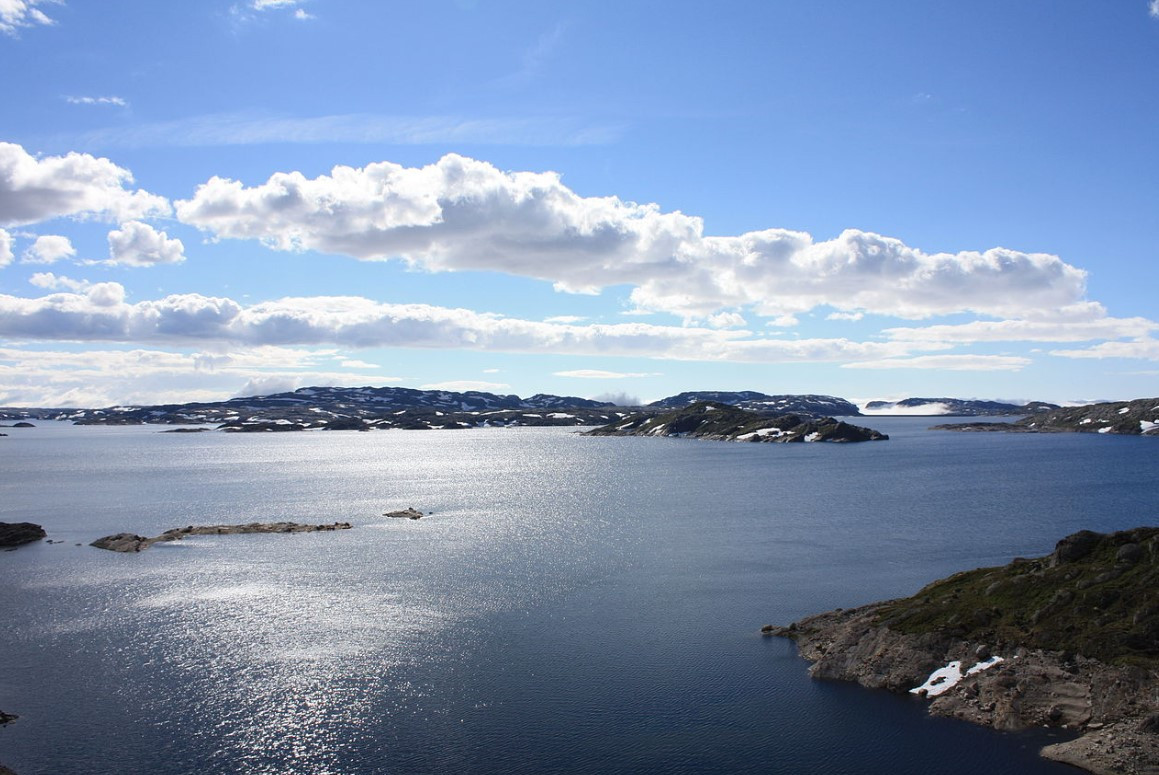
Blåsjø, Norway's largest hydropower reservoir. Archive photo.Photo: Martin NH, CC BY-SA 3.0, Wikimedia Commons
Analyst: prices could be extremely high in winter
Tor Reier Lilleholt, an analyst at Volue, told Finansavisen that prices could be extremely high in winter. His statement is quoted by Aftenposten. According to Volue's simulations, there is a 70 per cent chance that reservoir levels in southern Norway will fall below 10 per cent before spring.
If the winter is like the one in 2025, the exchange price could reach around NOK 6 per kilowatt-hour, he says. Including VAT and the grid fee, this would mean NOK 7–8 for weeks on end. This is the analyst's scenario, not an official forecast.
The weather forecast for the area around Blåsjø, the country's largest reservoir, predicts three weeks of freezing temperatures, and precipitation there is expected to fall as snow, Aftenposten writes. The newspaper also cites the NVE's weekly report: power plants saved water in the past week because of low reservoir levels.
There will be light in the bulbs, but reservoir levels may become very low. Then prices will be extremely high throughout the winter, and in March or April we could get explosive prices.
Norgespris from January: 56.25 øre and a new order
Those with Norgespris currently pay NOK 0.50 per kilowatt-hour including VAT for energy, regardless of the exchange price. This protects up to 5,000 kWh per month in a house or apartment and up to 1,000 kWh in a holiday cabin. Consumption above the limit is charged at the contractual price, which is why high bills may threaten cabin owners, Finansavisen writes, as cited by Aftenposten.
From 1 January 2027, the rate is set to rise to 56.25 øre including VAT, or by 12.5 per cent. The government included this in its draft budget. Wednesday's budget agreement between four parties does not change this, SV MP Lars Haltbrekken confirmed to Nettavisen. The budget has not yet been adopted: the Storting will vote on 7 December.
Norgespris for 2027 must be ordered again, including by those who have it now:
- orders open on Tuesday, 5 January 2027 on Elhub Min side,
- an order placed by Thursday, 14 January applies from 1 January; later orders apply from the day of ordering,
- the choice is binding until the end of 2027, and you have 14 days from ordering to cancel,
- those who do nothing switch to the regular subsidy scheme (strømstøtte).
Frost: −6 degrees in Oslo on Thursday morning, −20 in Røros
The Norwegian Meteorological Institute's forecast for Thursday at 7 a.m. (read on Wednesday at 2:50 p.m.): −6 degrees in Oslo and Drammen, −5 in Bergen, −8 in Trondheim, −4 in Tromsø, −3 in Kristiansand, and −20 in Røros. You can check the current forecast for your locality on Yr.
Friday is expected to be warmer: around zero in Oslo and up to 4 degrees above zero in Bergen. Røros will remain frosty, at around −19 degrees in the morning. The exchange will publish electricity prices for Friday at around 1 p.m. on Thursday.
How do you rate this article?
Latest articles
-
 Christmas ribs for NOK 59 per kilogram. Extra, Kiwi and Rema 1000 cut prices by more than half
-
 Norway with the fourth-highest result in history. The amount could be even higher in 2026
-
 Budget 2027: kindergarten for up to NOK 1,000, lower diesel tax, monthly pass for NOK 499. Five votes short
-
 Norway has not seen a situation like this in 22 years. Fewer and fewer people want to live in the land of the fjords
-
 Morning briefing: electricity up to NOK 3.87, −20 degrees in Røros, poorer air quality in Oslo and Bergen
-
 Bringing alcohol back to Norway for Christmas? 1 litre of spirits, 100 cigarettes, higher fines since July