Electric Boom in Norway. We Know What Percentage of Cars Are EVs
Norway ended 2025 as the global leader in electromobility. Data from the Norwegian Road Traffic Information Council shows an almost complete electrification of the new car market.
Norway stands out in Europe and worldwide.
Fot. Shutterstock, za: OFV
According to a statement from the Norwegian Road Traffic Information Council (Opplysningsrådet for veitrafikken, OFV), national tax and regulatory conditions played a decisive role. The market accelerated especially at the end of 2025. December saw record registration figures. This phenomenon was directly related to regulatory changes effective from January 1, 2026.
Record Registrations in Norway
In 2025, 179,550 new passenger cars were registered in Norway. This represents an increase of 39.5 percent compared to 2024. December alone ended with 35,188 first registrations, a year-on-year increase of 157.8 percent.
Electric cars accounted for 95.9 percent of new registrations. Petrol and diesel vehicles have been practically eliminated from the primary market. By the end of 2025, 32.5 percent of all passenger cars in Norway were fully electric. This is the highest share in the entire Nordic region.
Electric cars accounted for 95.9 percent of new registrations. Petrol and diesel vehicles have been practically eliminated from the primary market. By the end of 2025, 32.5 percent of all passenger cars in Norway were fully electric. This is the highest share in the entire Nordic region.
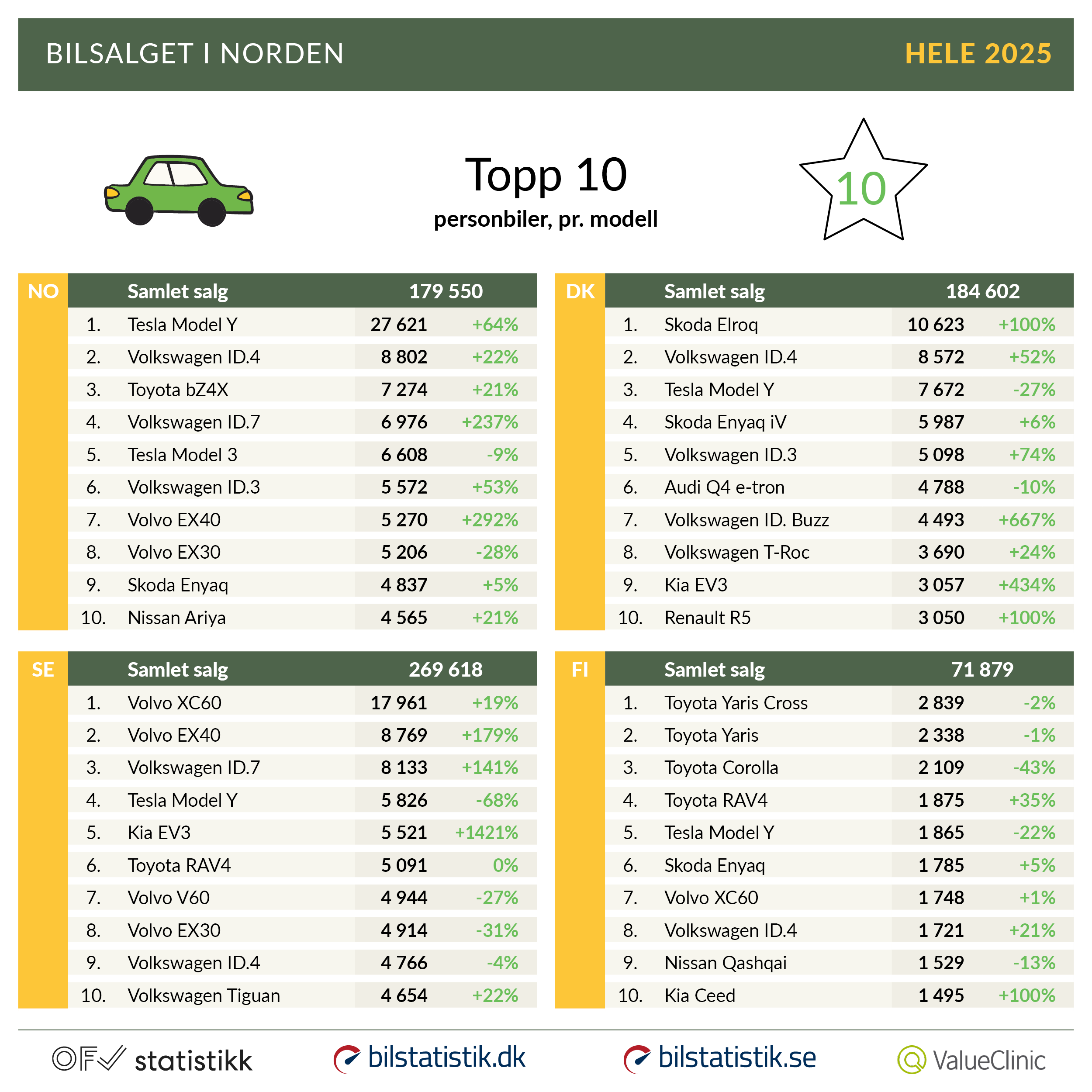
TOP10 new car models in 2025.OFV press materials
The Market Responds to Fiscal Decisions
According to the Norwegian Road Traffic Information Council, the end of the year was the result of several factors. High vehicle availability played a role. Intensive promotional activities by importers and dealers were also important. However, the key factor was the announced tax changes from 2026.
Many customers decided to speed up the purchase of a new car to maintain the existing conditions for electric vehicles. The data show that the Norwegian market quickly adapts to regulatory changes. The effects of administrative decisions are directly visible in the statistics.
Many customers decided to speed up the purchase of a new car to maintain the existing conditions for electric vehicles. The data show that the Norwegian market quickly adapts to regulatory changes. The effects of administrative decisions are directly visible in the statistics.
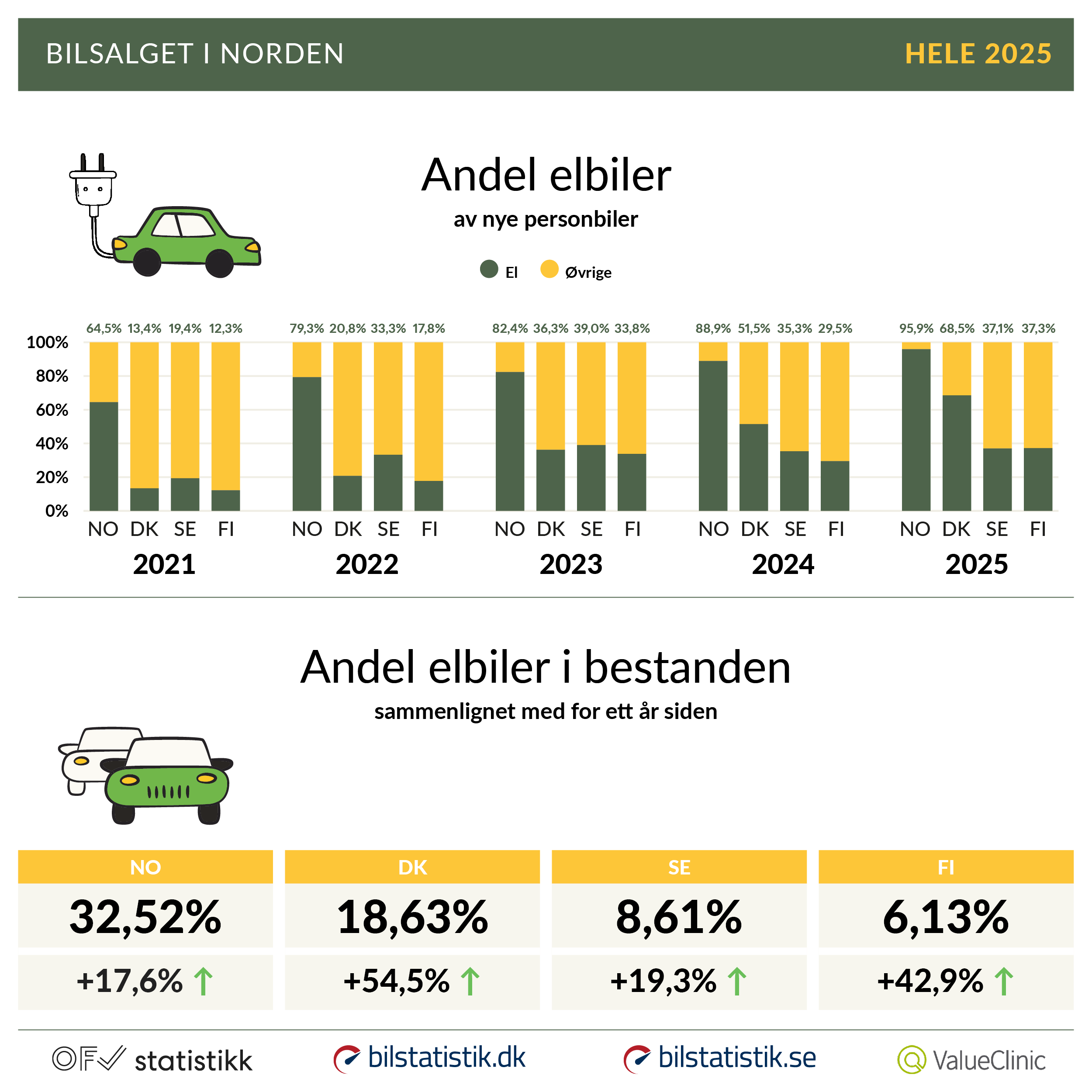
Popularity of vehicles by energy type over the past five years.OFV press materials
Compared to Norway, other Nordic countries are increasing the share of electric cars at a slower pace. Denmark, Sweden, and Finland are seeing growth, but at much lower levels than Norway. Norwegian national legal and tax frameworks are the main drivers of the pace of change in the automotive market.
How do you rate this article?