Are Norwegians Lonely? Research Results Leave No Doubt
14.5% of adults in Norway report that they have felt quite or very affected by loneliness in the past two weeks. Data from the latest edition of the Central Statistics Bureau (SSB) survey show that the problem affects around 650,000 people. Prolonged loneliness can lead to serious health consequences.

Compared to the rest of Europe, Norway remains one of the countries with the lowest rates of loneliness.
Fot. Adobe Stock, licencja standardowa (zdjęcie poglądowe)
Survey results show that the highest percentage of lonely people is found among those aged 18–24. As many as 23.3% of young adults report a strong sense of loneliness. In the 25–44 age group, the rate is 19.1%, which also indicates a significant prevalence of the problem.
Studies from recent years confirm that young adults experience loneliness more often than older age groups. At the same time, there has been an improvement compared to 2021, when the loneliness level among the youngest exceeded 30%.
Studies from recent years confirm that young adults experience loneliness more often than older age groups. At the same time, there has been an improvement compared to 2021, when the loneliness level among the youngest exceeded 30%.
Contrast Between Seniors and Middle-Aged People
The situation is different among older people. The lowest rate of loneliness was recorded in the 67–79 age group, where 5.3% of respondents reported severe symptoms of isolation. Among people over 80, the level of loneliness increases, which is linked to health conditions and limitations in social contacts.
Data also show an increase in loneliness among those aged 45–66 – from 10.5% to 12.3% between 2024 and 2025. The differences between women and men are not statistically significant.
Data also show an increase in loneliness among those aged 45–66 – from 10.5% to 12.3% between 2024 and 2025. The differences between women and men are not statistically significant.
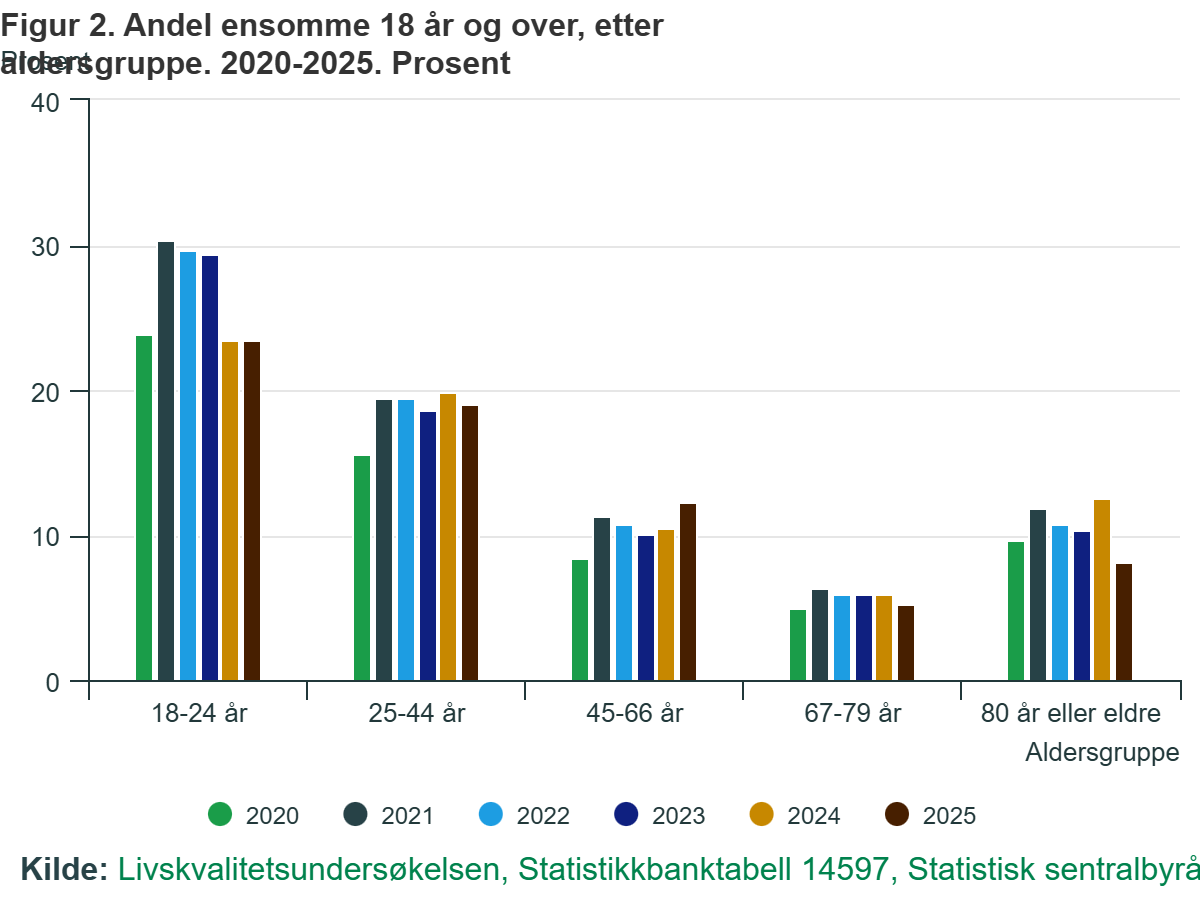
Percentage of lonely people by age group, 2020-2025.Ill. SSB
People Outside the Labor Market Are Especially at Risk
People outside the labor market are highly at risk of loneliness. Among the unemployed, the percentage of lonely people exceeds 36%, and among those unable to work, it is about 30%. Students and pupils have also experienced significant fluctuations – after an increase until 2023, their rate dropped to 21%, but rose again to 22.9% in 2025.
Analysis indicates significant differences depending on mental health status: 45.4% of people with mental health problems report loneliness, compared to 4.8% among respondents without such symptoms.
Analysis indicates significant differences depending on mental health status: 45.4% of people with mental health problems report loneliness, compared to 4.8% among respondents without such symptoms.
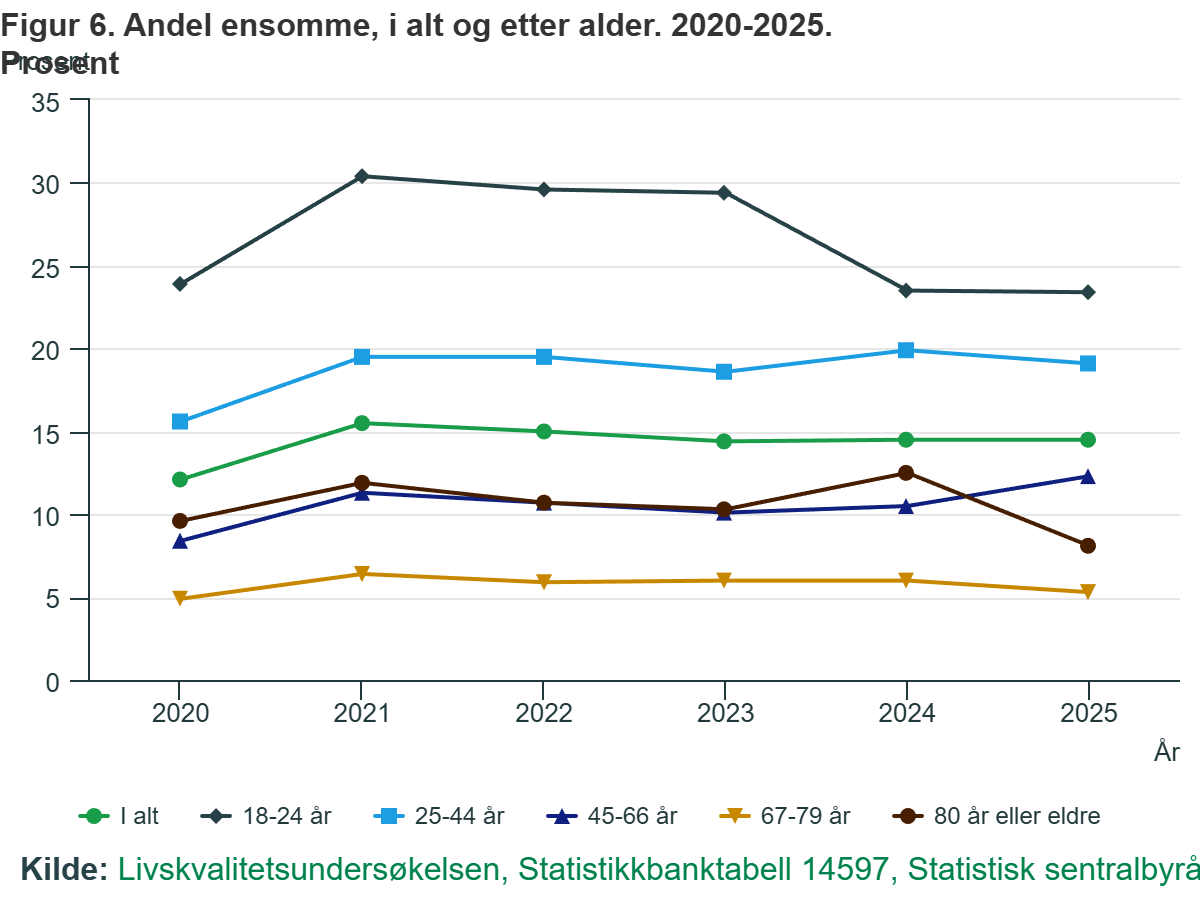
Percentage of lonely people overall and by age, 2020-2025.Ill. SSB
Single Parents and Singles Experience Isolation More Often
Loneliness rates are higher among people living alone than among those with a partner. Among singles, the rate is nearly 28%, and among single parents, it is 36.7%. Having a partner clearly lowers the level of loneliness – both among singles and single parents.
However, data suggest an increase in loneliness among single parents in recent years. People living in relationships consistently maintain low values, below 10%.
However, data suggest an increase in loneliness among single parents in recent years. People living in relationships consistently maintain low values, below 10%.
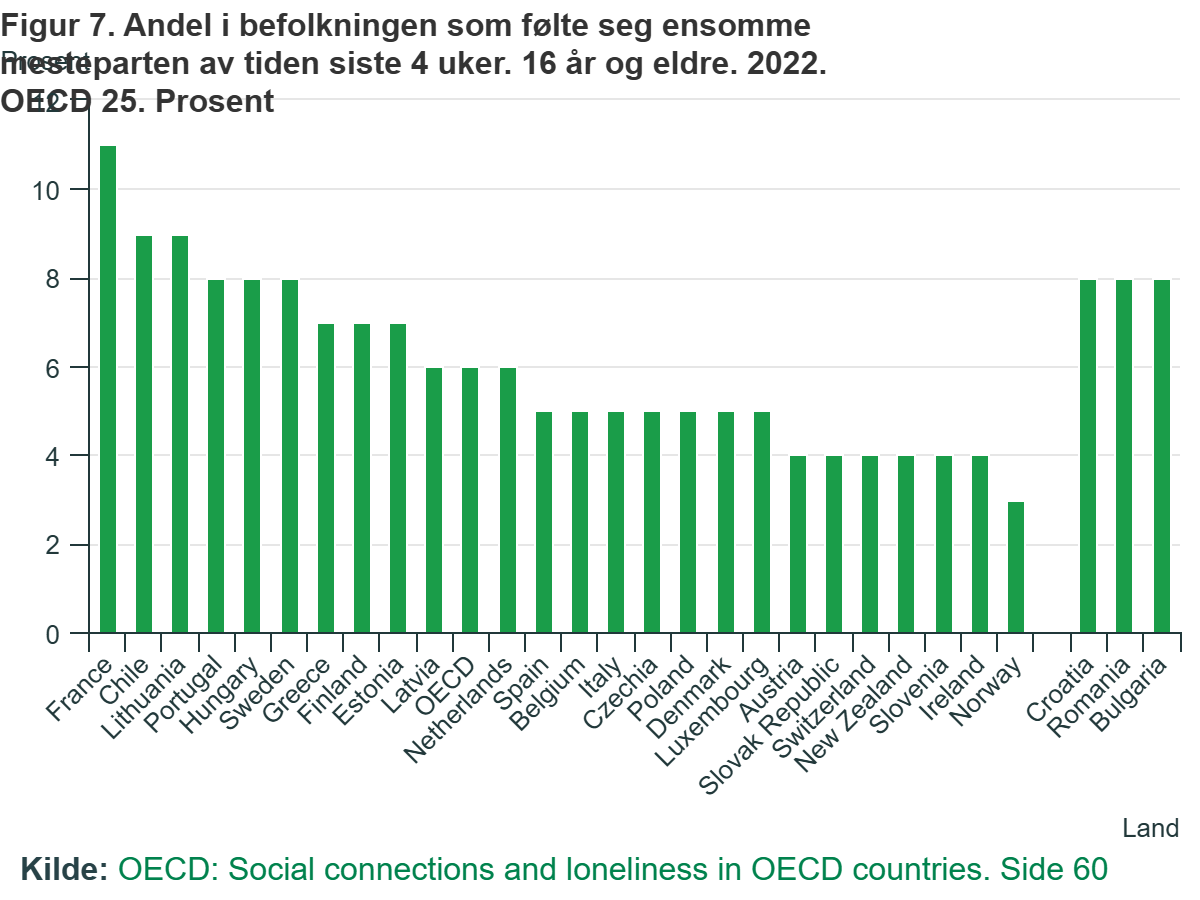
Percentage of the population who felt lonely most of the time in the past 4 weeks. People aged 16 and over.Ill. SSB
Different Trends and the Need for Further Observation
The latest results show parallel trends – improvement among young adults and deterioration in groups at risk of social isolation, such as the unemployed, people with poor mental health, or single parents. At the same time, Norway remains one of the countries with the lowest levels of loneliness in Europe, as confirmed by EU-SILC data from 2022.
Comparing risk groups and observed changes over time allows for a better understanding of which areas require further analysis. This points to a growing need to monitor social and health factors affecting the sense of loneliness.
Comparing risk groups and observed changes over time allows for a better understanding of which areas require further analysis. This points to a growing need to monitor social and health factors affecting the sense of loneliness.
How do you rate this article?