moon

16.11.2026 20:27

Almost the entire Oslo Metro closed from 19 to 22 November. How to get to the city centre
From Thursday 19 November to Sunday 22 November, almost the entire metro system in Oslo will be out of service. Sixty-three of the 101 stations will be closed, including all stations in the city centre. Ruter, which runs public transport in Oslo, appeals to people: if you do not have to travel, please do not do so on these days.
Copy link
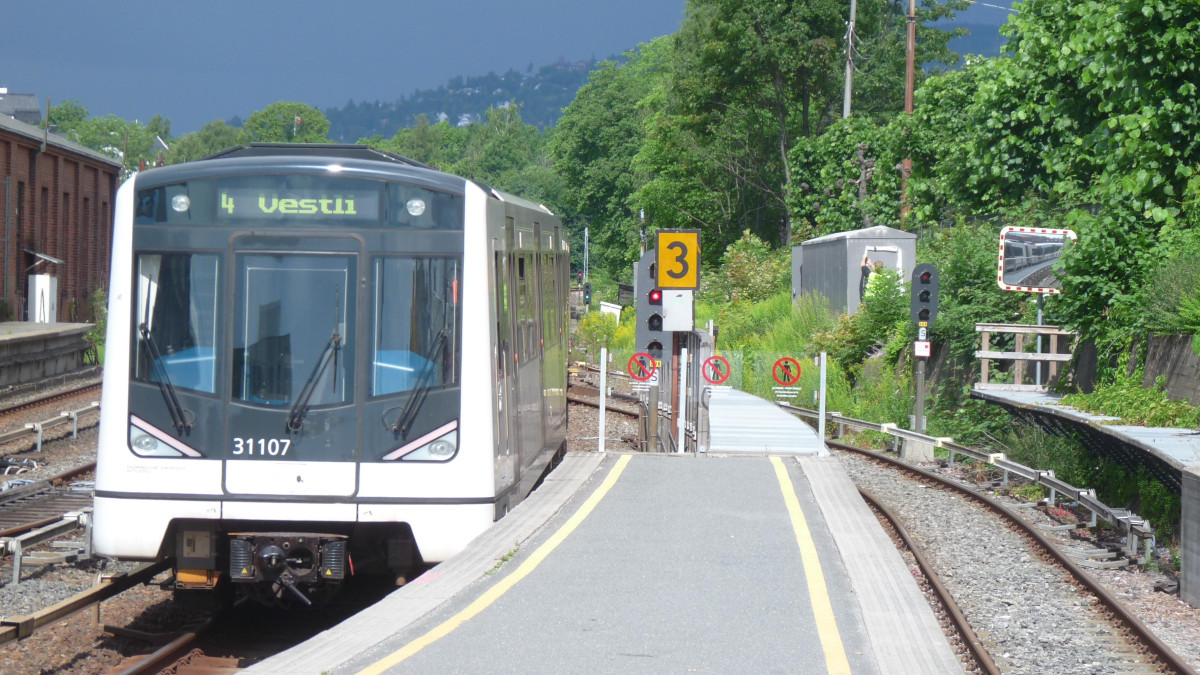
Biało-szary pociąg metra w Oslo z napisem 4 Vestli stoi przy peronie
Metro train on Line 4 in Oslo. From 19 to 22 November 2026, Lines 4 and 5 will not operate. Illustrative photo. wikimedia.commons/Smiley.toerist/https://creativecommons.org/https://creativecommons.org/licenses/by-sa/4.0/deed.en
The closure will last four days and will be in effect around the clock. Lines 4 and 5 will not operate at all. Lines 1, 2 and 3 will run only on short sections on the western side of the city:
  • Line 1: Frognerseteren–Frøen,
  • Line 2: Østerås–Makrellbekken,
  • Line 3: Kolsås–Ullernåsen.

The metro will not pass through the city centre. Stations without metro service will include Nationaltheatret, Stortinget, Jernbanetorget, Grønland and Tøyen.

Around 400,000 journeys are made on the Oslo Metro every day. Ruter is adding buses and trams, but warns that they will not replace the metro, as there are neither enough vehicles nor enough space on the streets.
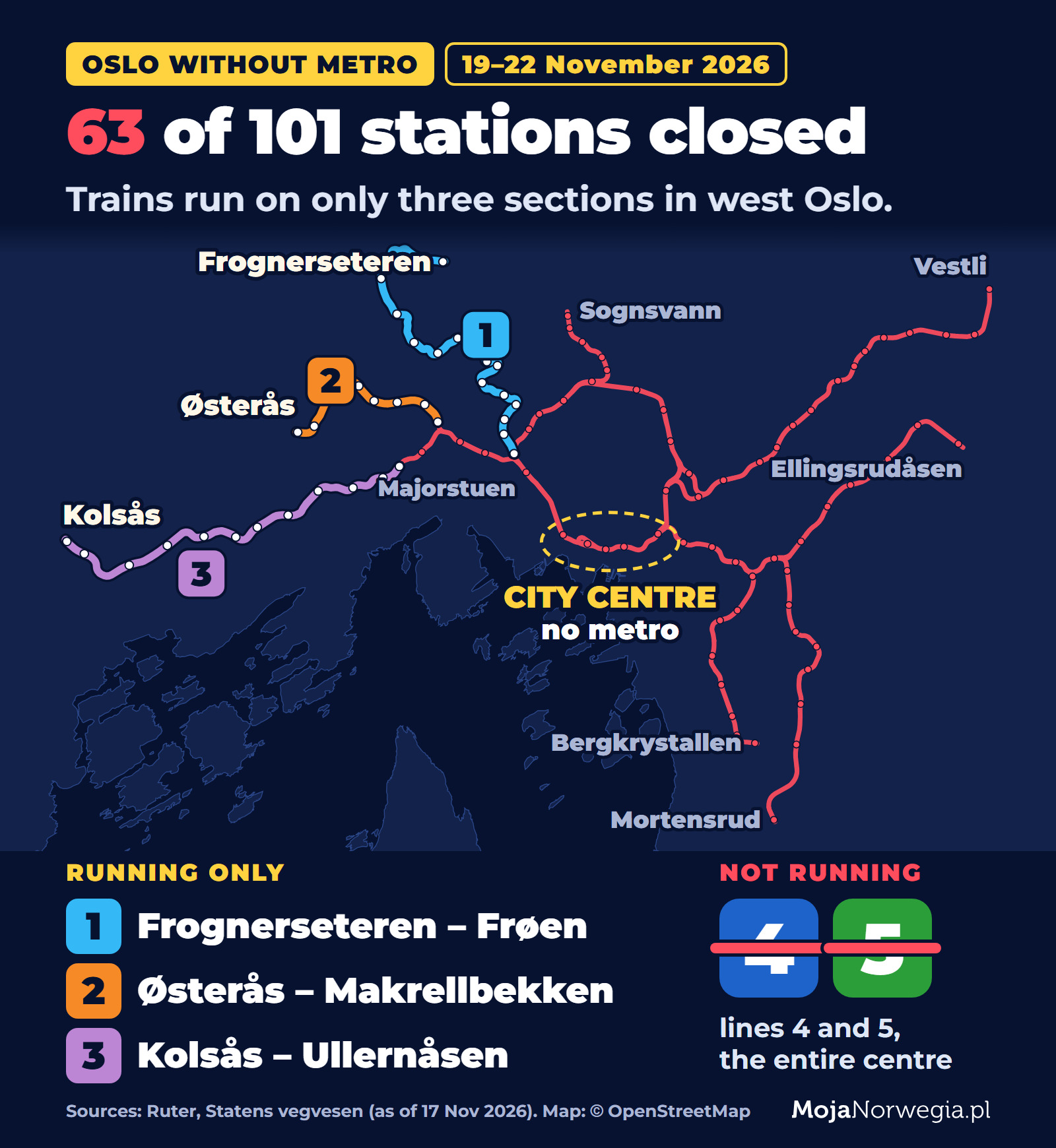
Oslo Metro from 19 to 22 November 2026. Closed sections are marked in red; the three sections where trains operate are shown in colour.

Oslo Metro from 19 to 22 November 2026. Closed sections are marked in red; the three sections where trains operate are shown in colour.Graphic: MN, data: Ruter, map: © OpenStreetMap

How to get to the city centre

The following services go to the city centre or nearby areas, such as Majorstuen and Tjuvholmen:
  • trams 12, 13, 15, 17, 18, 19 and 19x,
  • buses 20, 21, 25, 30, 31, 34, 37, 45, 46, 54, 60, 70, 71, 74, 81, 100, 110 and 300.
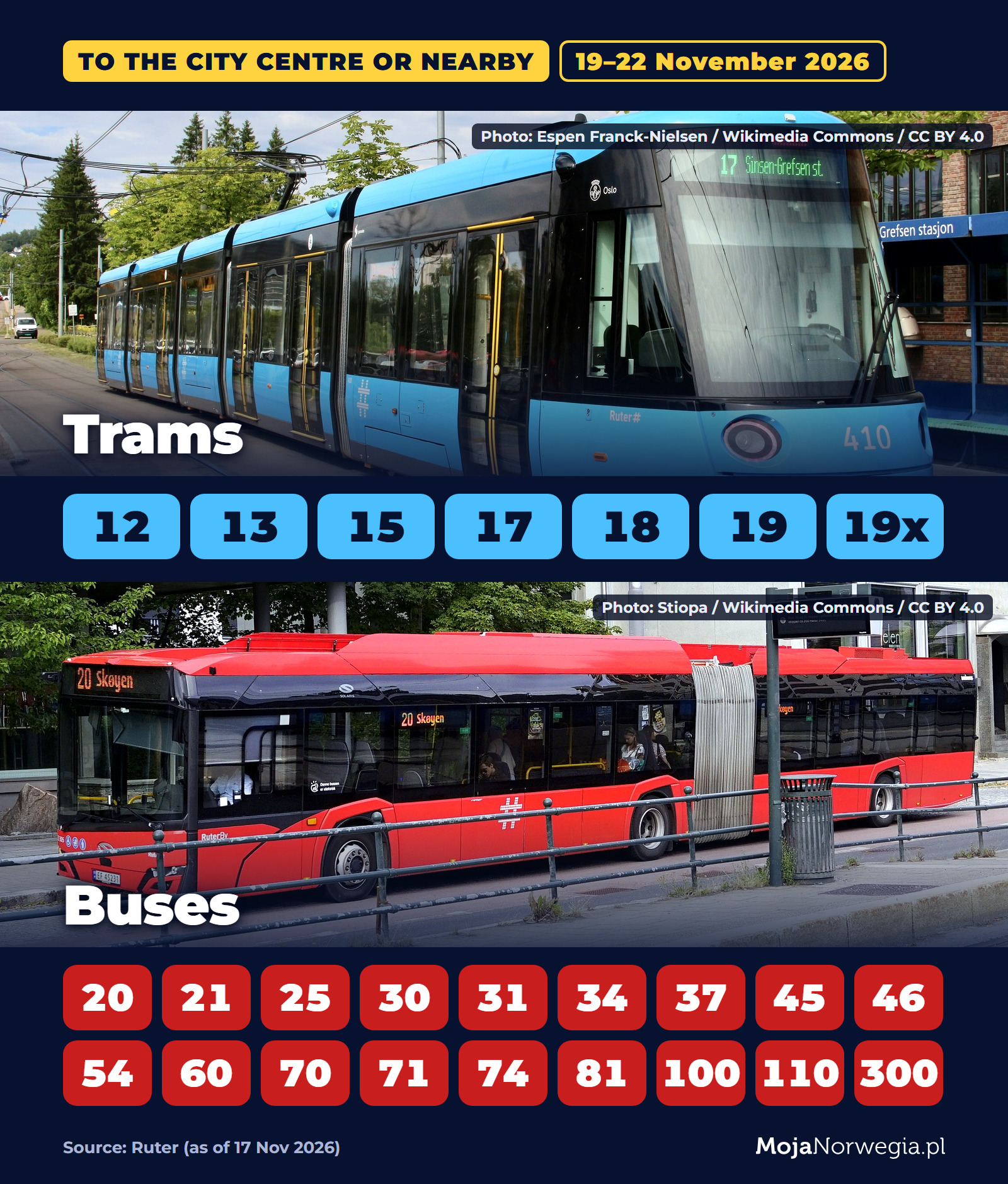
Trams and buses that, according to Ruter, travel to or near Oslo city centre.

Trams and buses that, according to Ruter, travel to or near Oslo city centre.Graphic: MN, data: Ruter. Photos: Espen Franck-Nielsen, Stiopa / Wikimedia Commons, CC BY 4.0 (cropped)

Three replacement bus lines will run instead of the metro:
  • 2B: Hovseter–Majorstuen,
  • 3B: Åsjordet–Majorstuen,
  • 25B: Majorstuen–Sognsvann, every 15 minutes throughout the day.
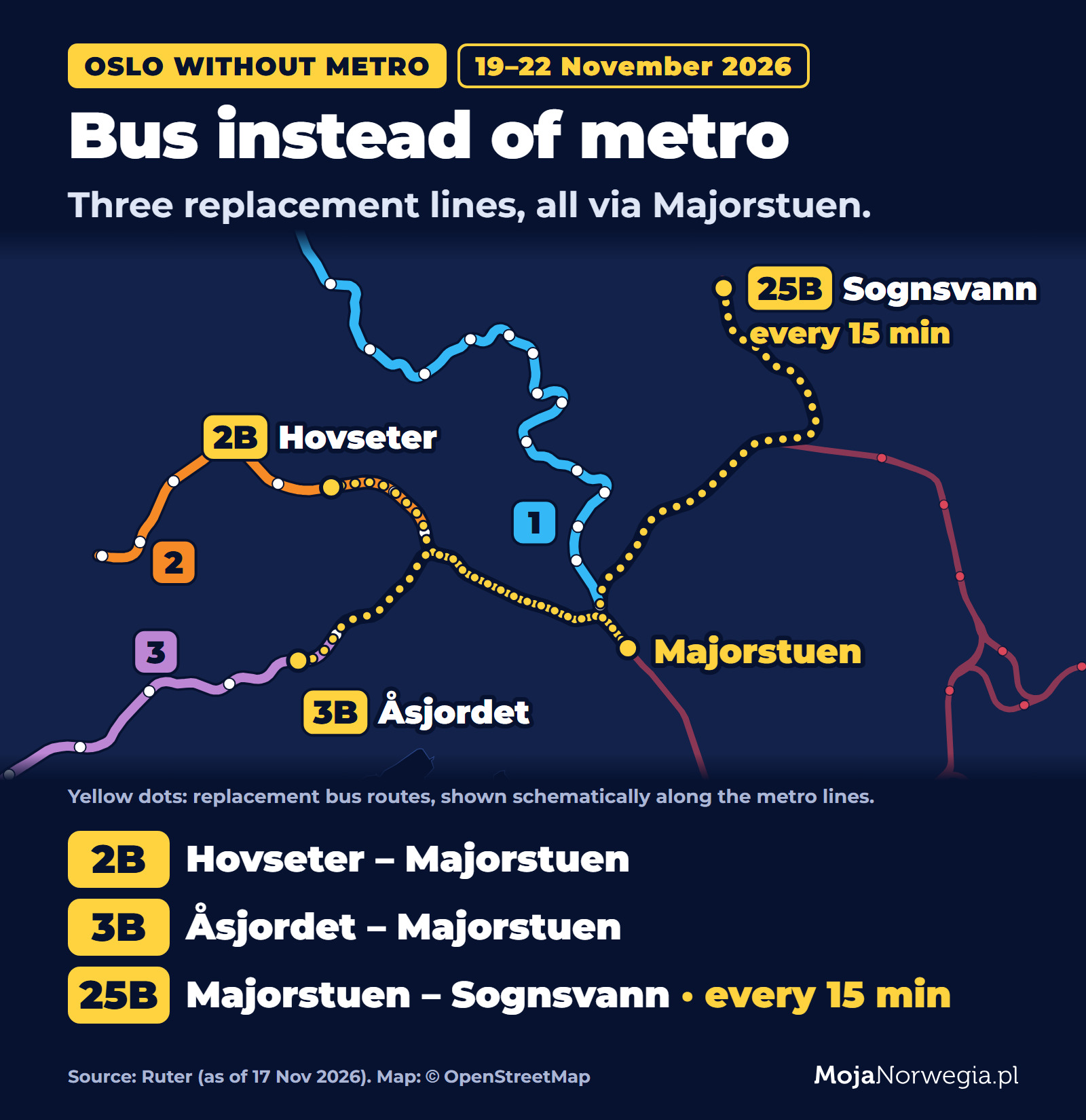
Replacement buses 2B, 3B and 25B. Routes shown schematically along the metro lines.

Replacement buses 2B, 3B and 25B. Routes shown schematically along the metro lines.Graphic: MN, data: Ruter, map: © OpenStreetMap

Buses 31E, 70E, 71, 74, 76, 79, 110, 150 and 380, as well as tram 19, will run more frequently than usual. On Thursday and Friday during peak hours, bus 76 will run all the way to Bjørvika. Bus 380 will run four times an hour between Gjelleråsen and Hausmanns bru. On Thursday and Friday during peak hours, an additional 46X service will also run from Hovseter to Majorstuen.

Some routes will change. On Thursday, Friday and Saturday, bus 42 will run only between Voksen skog and Lysaker. Route 69 will be extended to Nils Hansens vei at Brynseng. Route 72 will run between Seterbråten and Hauketo, with departures coordinated with trains at Hauketo station.

On Thursday and Friday, routes 67, 80E, 81, 83 and 84E will have fewer departures. Ruter has moved buses from these routes to where they will be needed more. Route 67 will run every half hour instead of every 15 minutes.

Ruter: check your route before leaving home

All changes are already available in the Ruter app and in the journey planner at reise.ruter.no. Ruter advises passengers to check their route there before leaving and to set off earlier than usual, as the journey will take longer. Those who can should travel outside peak hours, or walk or cycle for at least part of the journey.

The most important thing for us during these days is that those who have to travel get where they need to go. We are adding buses and trams, but they cannot replace the metro, so we need help. Consider whether you really need to travel, and where possible, walk or cycle. The appeal is clear: do not travel if you do not have to.~Sondre Eftedal Blom, acting director of Ruter

Ruter staff will be present at stops where the most changes are taking place. Passengers can ask them for directions. People who need assistance when travelling can book special transport between Frøen and Majorstuen stations. It can be booked through Sporveien on 952 58 000, no later than three hours before the journey.

Ruter provides the full list of changes on its Det store T-baneløftet page.
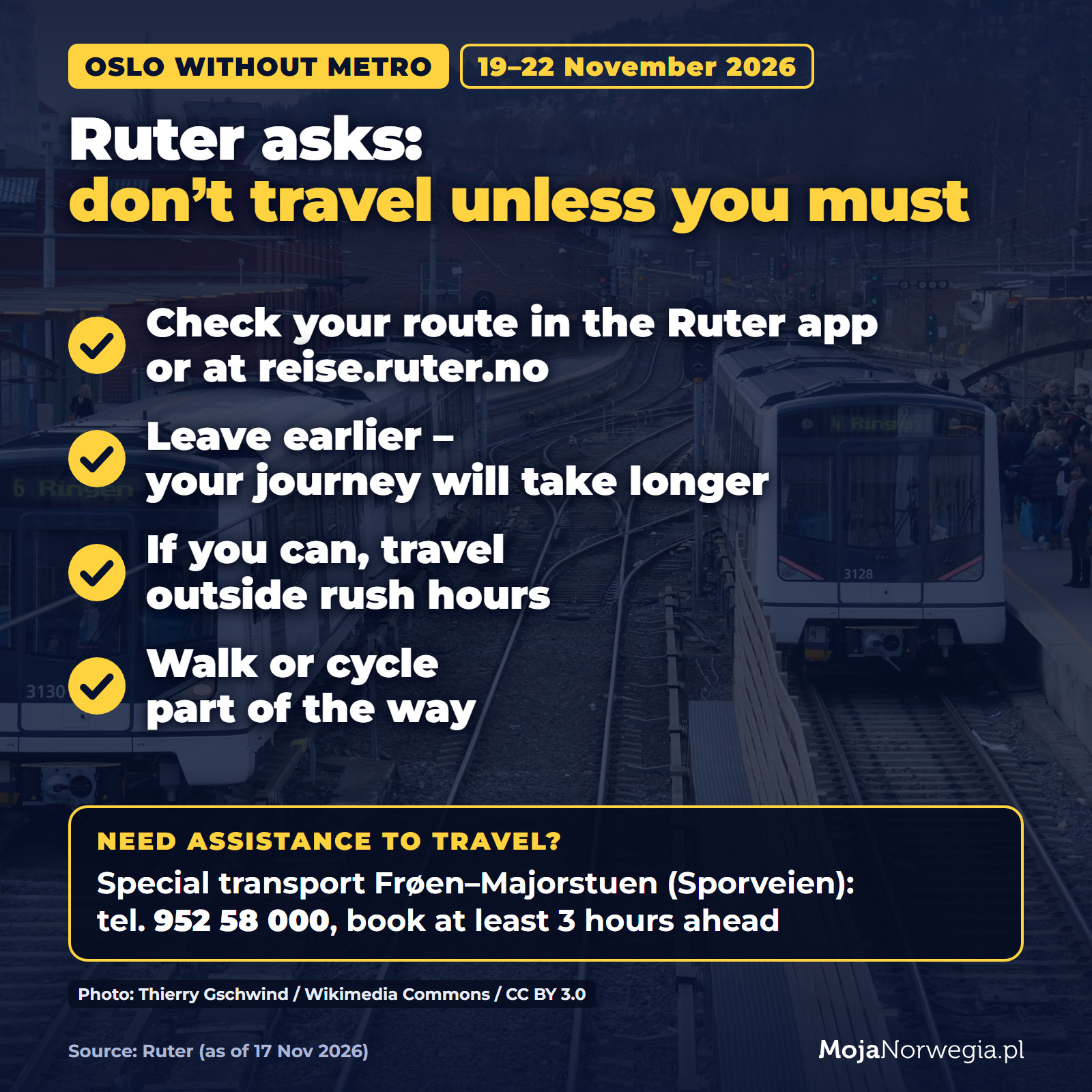
Ruter's advice for passengers on days without metro service.

Ruter's advice for passengers on days without metro service.Graphic: MN, data: Ruter. Photo: Thierry Gschwind / Wikimedia Commons, CC BY 3.0 (cropped, darkened)

Drivers: worst congestion expected on Thursday and Friday

Statens vegvesen, Norway's road authority, expects heavy traffic and congestion. Conditions are expected to be most difficult on Thursday 19 and Friday 20 November, when people travel to and from work. Thursday may be particularly busy because it is the first day without metro service.

“When so many passengers have to find another way to travel, pressure on Oslo's roads may be very high. We must expect heavy traffic and congestion, and there will not be enough space on the roads for everyone either,” says Kari Martini Momrak of Statens vegvesen.

The authority advises people to leave their cars at home if the trip is not necessary. Those who have to drive should choose their travel time carefully. Current traffic information is available at 175.no and in the Vegvesen trafikk app.

Reason: testing of a new train control system

Sporveien, the municipal company that operates the Oslo Metro, is testing a new train traffic control system. The current one dates from the 1960s. Tests cannot be carried out with passengers on board. Switching from the old system to the new one, testing entire sections and switching back to the old system takes a long time, which is why four consecutive days are needed.

The new system is intended to enable more frequent services. It is also needed to connect the metro line currently being built to Fornebu to the network. It is due to begin operating in the central part of the network in autumn 2027, and across the entire metro system by 2029.
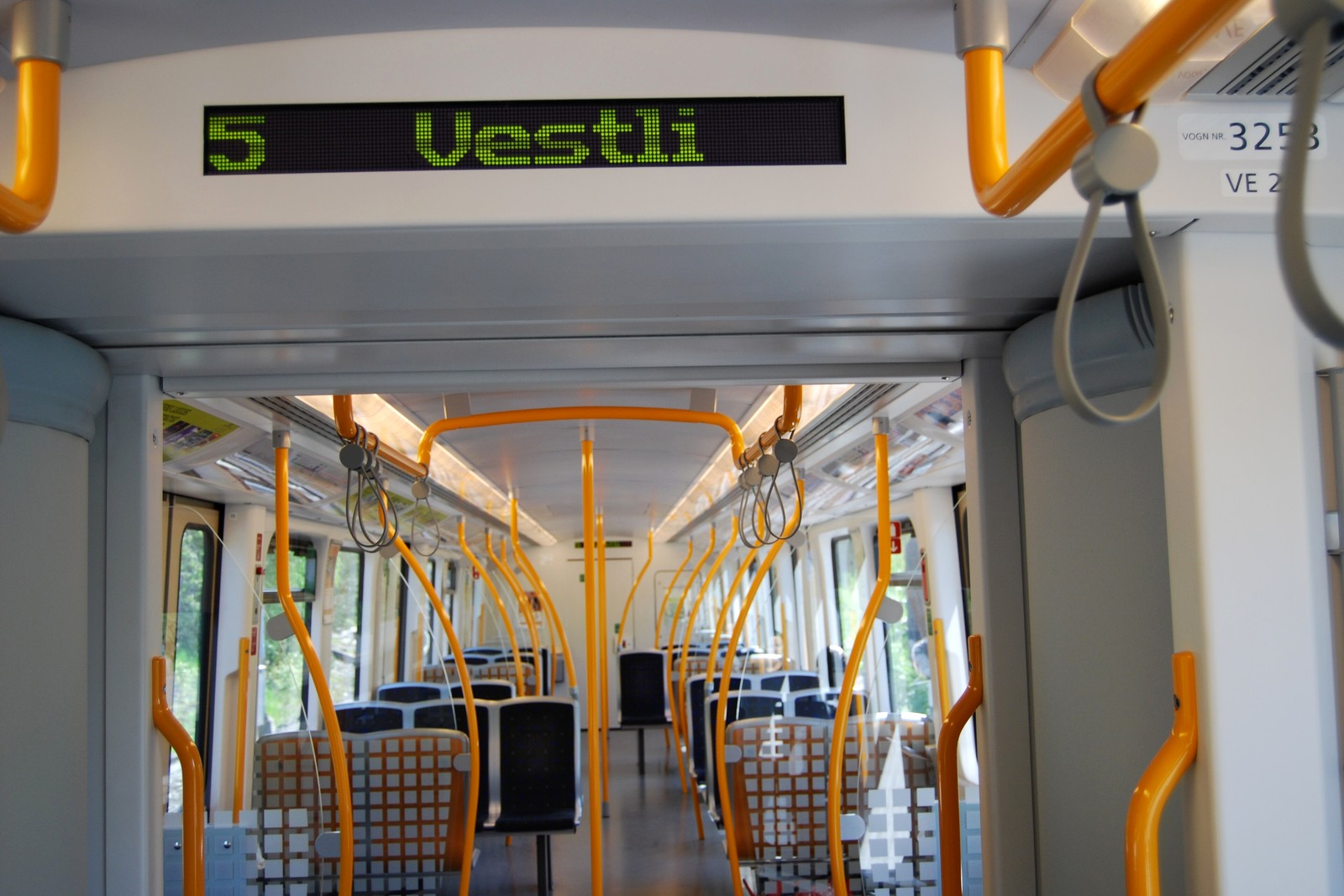
Interior of a Line 5 metro train in Oslo. Tests of the new system cannot be conducted with passengers on board. Illustrative photo.

Interior of a Line 5 metro train in Oslo. Tests of the new system cannot be conducted with passengers on board. Illustrative photo.Photo: Maxxii / Wikimedia Commons, public domain

Further closures in 2027

The November closure is the first of several. Ruter plans the next ones mainly during school holidays and public holidays:
  • 25–28 February 2027 (winter holidays),
  • 26–29 March 2027 (Easter),
  • 4–7 May 2027 (around Ascension Day),
  • 1–4 July 2027 (school holidays),
  • 12–15 August 2027 (school holidays).

Ruter notes that the dates may still change.
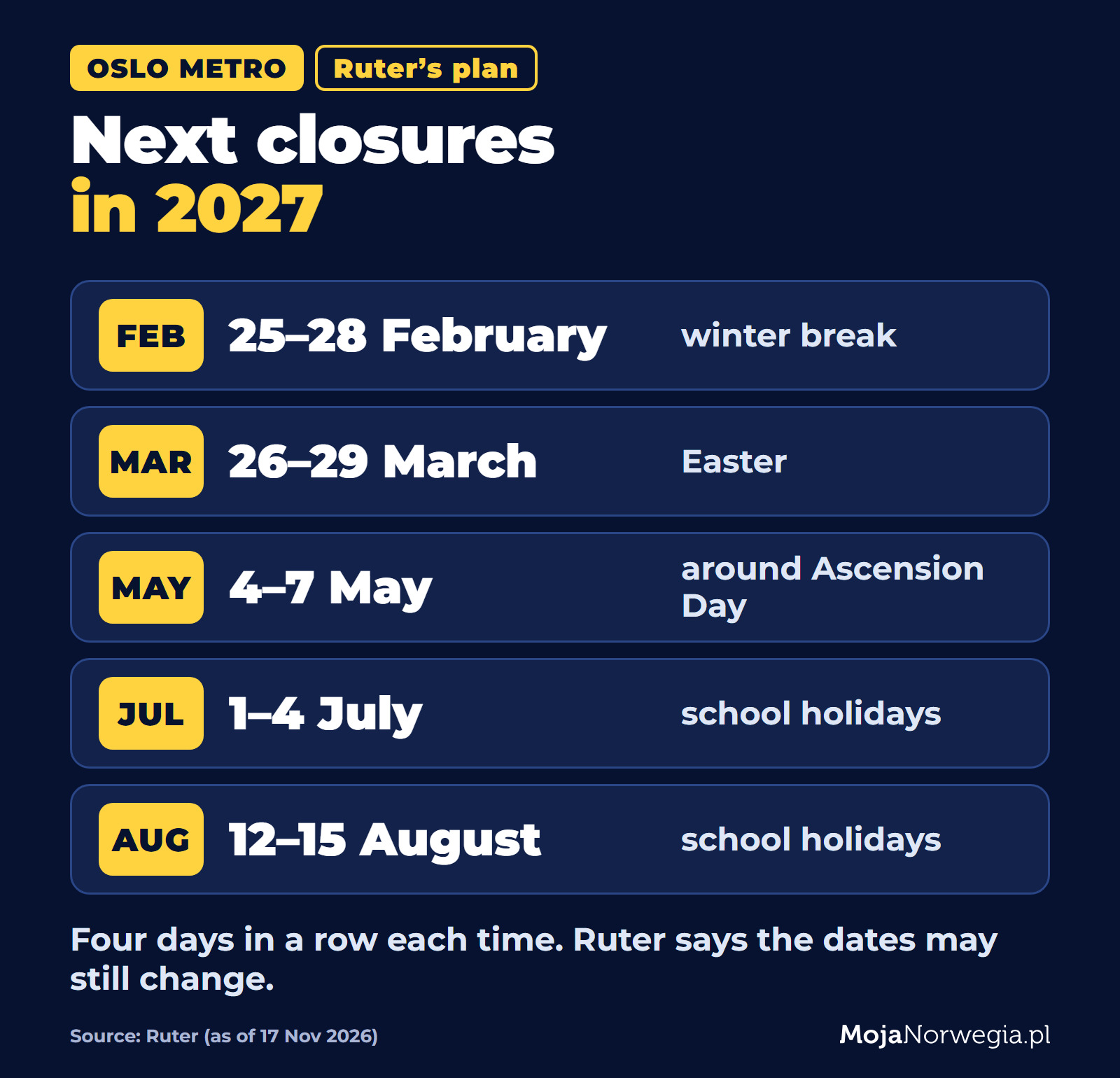
Dates of further Oslo Metro closures planned by Ruter for 2027. The dates may still change.

Dates of further Oslo Metro closures planned by Ruter for 2027. The dates may still change.Graphic: MN, data: Ruter

How do you rate this article?
0
0
0
0
0
Facebook Messenger YouTube Instagram TikTok
This website uses cookies

Our website uses cookies to optimize performance, analyze traffic, and customize content and advertisements to your preferences. In accordance with Google requirements, we use consent mode, which allows you to control what data is collected and processed. You can consent to all cookie categories or manage your preferences. More information can be found in our Privacy Policy.

Necessary

These cookies are essential for the website to function and cannot be switched off in our systems. They are set in response to actions made by you, such as privacy settings, logging in, or filling in forms. These cookies do not store any personally identifiable information.

Analytics

Analytical cookies allow us to measure website traffic and analyze how users interact with it. This helps us improve the website's functionality and adapt its content to user needs. We use Google Analytics in Consent Mode, which operates according to your preferences. If you do not consent, Google Analytics will limit data collection and processing.

Marketing

Marketing cookies are used to personalize the ads you see on our website and on third-party sites. They ensure that ads are more relevant and match your interests. Google Ads operates in accordance with consent mode, which adjusts the level of ad personalization to your settings. You can decide whether you want your data to be used for personalized advertising.

Manage preferences
Reject all
Confirm selection
Accept all