26.11.2026 15:38
47% of Poles in Norway believe their Norwegian is good enough. Nearly half paid for a course themselves
47% of Poles living in Norway believe they know Norwegian well enough to manage here. Nearly half paid for a course themselves, while 35% have not taken any course in Norway. These are the findings of a study presented by the Norwegian Language Council (Språkrådet) on Tuesday, 24 November.
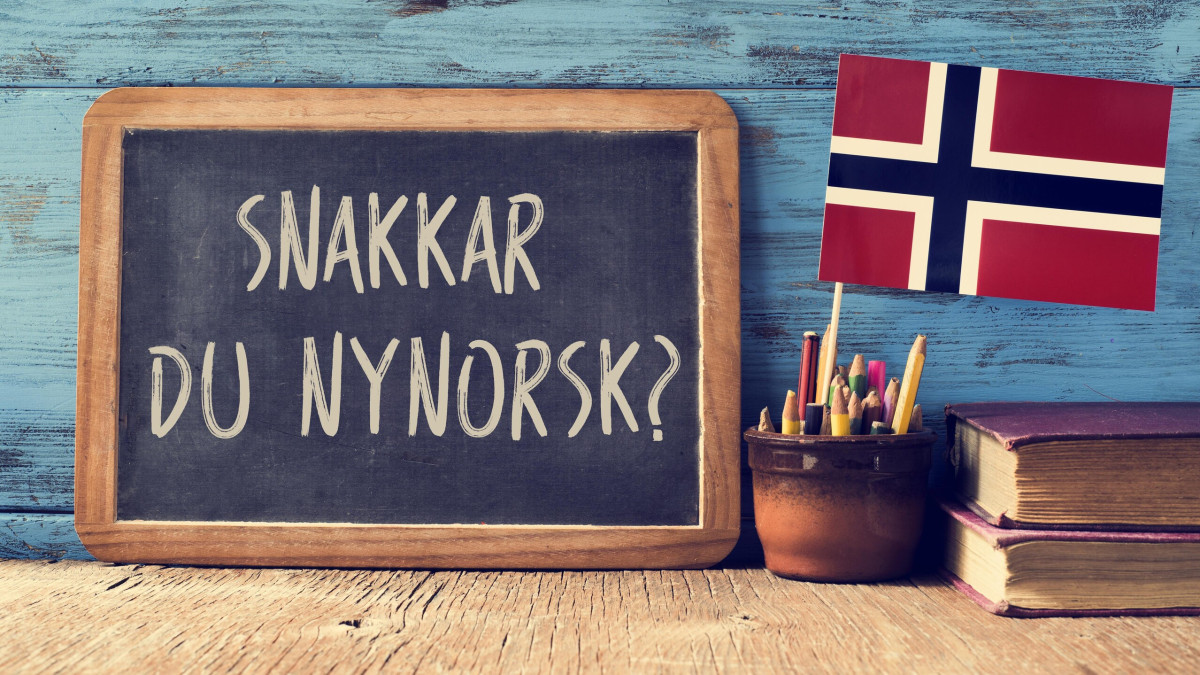
The sign asks, “Do you speak Nynorsk?” Nynorsk is one of the two written forms of Norwegian. Illustrative photo.
Fot. nito – stock.adobe.com
Who took part in the survey
The survey, “Norsk i hverdagen” (Norwegian in everyday life), was conducted by the research company Verian on behalf of Språkrådet, the government agency responsible for the Norwegian language. Between 7 August and 13 September 2026, 4,404 people born in Poland, Lithuania and Ukraine who had moved to Norway as adults answered questions online. There were 1,396 Poles. The questionnaire could be completed in Polish.
Most Polish respondents have lived here for a long time: 69% for at least 10 years. 82% are employed, and 57% came for work. The report shows how people assess their own Norwegian skills. It is not an exam result.
Reading is easiest, writing is hardest
In speaking, writing and listening comprehension, Poles rate themselves the highest of the three groups surveyed. The percentages of Poles who say they do these well are:
When these four answers are combined, 42% of Poles have a high level of Norwegian, 33% a medium level and 25% a low level. 47% agree with the statement, “I know Norwegian well enough to manage well in Norwegian society,” while 33% disagree. Among Lithuanians, 46% agree, compared with 39% of Ukrainians.
Length of residence matters most. Among Poles who have lived in Norway for at least 10 years, 48% have a high level and 17% a low level. In the group that has lived there for 6 to 9 years, 32% have a high level and 36% a low level. In all three groups, people working in manufacturing and practical occupations rate themselves the lowest, while those employed in healthcare, care services and the public sector rate themselves the highest.
- reading – 52%,
- listening comprehension – 49%,
- speaking – 46%,
- writing – 38%.
When these four answers are combined, 42% of Poles have a high level of Norwegian, 33% a medium level and 25% a low level. 47% agree with the statement, “I know Norwegian well enough to manage well in Norwegian society,” while 33% disagree. Among Lithuanians, 46% agree, compared with 39% of Ukrainians.
Length of residence matters most. Among Poles who have lived in Norway for at least 10 years, 48% have a high level and 17% a low level. In the group that has lived there for 6 to 9 years, 32% have a high level and 36% a low level. In all three groups, people working in manufacturing and practical occupations rate themselves the lowest, while those employed in healthcare, care services and the public sector rate themselves the highest.
Nearly half paid for a course out of their own pocket
When asked about Norwegian courses in Norway, Poles answered as follows (several answers could be selected):
By comparison, 74% of respondents from Ukraine studied in the introductory programme for refugees. Språkrådet points out that immigrants from Poland and Lithuania have neither the right nor the obligation to take state-organised Norwegian language courses, unlike refugees from Ukraine.
- 49% attended a course they paid for themselves,
- 15% had a course paid for by their employer,
- 13% had a course paid for with public funds,
- 35% had not attended any of these courses.
By comparison, 74% of respondents from Ukraine studied in the introductory programme for refugees. Språkrådet points out that immigrants from Poland and Lithuania have neither the right nor the obligation to take state-organised Norwegian language courses, unlike refugees from Ukraine.
Differences between the groups should be interpreted in light of their different circumstances of arrival, length of residence and access to Norwegian language training, rather than solely as an expression of motivation or interest in learning Norwegian.
Too expensive and not enough time
Apart from courses, 61% of Poles learned Norwegian independently, 27% used apps and 13% attended a course in Poland. 19% said they had not taken part in any form of Norwegian language learning.
Poles who had not attended a course in Norway (440 people) gave the following reasons:
What would persuade them? Half replied that a course must be easily accessible, while 44% said it must be affordable enough. In comments on the questionnaire, Poles wrote that courses are expensive and difficult to access for workers from EU countries.
There is no lack of willingness. 74% of Poles plan to continue learning Norwegian, and 63% disagree with the statement that they no longer need to learn it.
Poles who had not attended a course in Norway (440 people) gave the following reasons:
- I study on my own – 42%,
- the course is too expensive – 36%,
- I do not have time – 31%,
- it was not my priority – 15%,
- I do not need it – 14%.
What would persuade them? Half replied that a course must be easily accessible, while 44% said it must be affordable enough. In comments on the questionnaire, Poles wrote that courses are expensive and difficult to access for workers from EU countries.
There is no lack of willingness. 74% of Poles plan to continue learning Norwegian, and 63% disagree with the statement that they no longer need to learn it.

People working in manufacturing and practical occupations rate their Norwegian skills the lowest. Illustrative photo.Photo: Adobe Stock, standard licence
At work, 30% mainly speak English
Working Poles most often use Norwegian at work (63%). 30% mainly speak English there, while 7% speak Polish. During lunch breaks, 54% choose Norwegian, 28% English and 16% Polish.
In other situations, the main language used by Poles is:
When Norwegian is necessary, 70% use translation tools or artificial intelligence. 22% ask friends for help, 20% ask family, and 15% use a professional interpreter. These answers come from people who use a language other than Norwegian as their main language in at least one situation.
In other situations, the main language used by Poles is:
- at public offices, for example Nav or Skatteetaten – Norwegian for 66%, English for 29%,
- at the doctor’s – Norwegian for 63%, English for 30%,
- at a child’s school or kindergarten – Norwegian for 80%,
- at home – Polish for 79%,
- when following the news – Norwegian for 44%, Polish for 36%.
When Norwegian is necessary, 70% use translation tools or artificial intelligence. 22% ask friends for help, 20% ask family, and 15% use a professional interpreter. These answers come from people who use a language other than Norwegian as their main language in at least one situation.
Half feel they are part of Norwegian society
51% of Poles agree with the statement, “I feel that I am part of Norwegian society,” while 19% disagree. This is the lowest figure among the three groups: it is 57% among Lithuanians and 64% among Ukrainians.
At the same time:
The report repeatedly identifies one relationship: those with better Norwegian skills are more likely to feel part of society, more likely to want to stay and less likely to plan a return. People who have lived in Norway for 6 to 9 years stand out separately (across all three groups combined). They use English most often and are least likely to feel part of society. The authors suggest this may result from the composition of this group: country of origin, reason for moving and occupation. They did not examine this.
At the same time:
- 81% of Poles want to stay in Norway for many years,
- 16% plan to return to Poland, while 41% say they do not plan to do so (27% of Lithuanians plan to return),
- 84% of those who work like their jobs,
- 71% of parents whose children live in Norway want them to stay there.
The report repeatedly identifies one relationship: those with better Norwegian skills are more likely to feel part of society, more likely to want to stay and less likely to plan a return. People who have lived in Norway for 6 to 9 years stand out separately (across all three groups combined). They use English most often and are least likely to feel part of society. The authors suggest this may result from the composition of this group: country of origin, reason for moving and occupation. They did not examine this.
Will courses become free?
For now, nothing is changing: a worker from Poland has no statutory right to a free course, although 13% of the Polish respondents attended a course funded with public money. In April, the government appointed an expert committee to review Norwegian language training for adult immigrants. According to its terms of reference, the committee will assess, among other things, whether labour immigrants may be covered by Norwegian language training under the Integration Act, to what extent, and whether they or their employers would have to pay for it. It will also assess whether a permanent nationwide online Norwegian course should be established. The committee’s proposals must not increase budget expenditure. Its report is due by 15 June 2027.
Two points should be kept in mind when reading the results. The survey covered people registered as residents in Norway, so it includes few workers who come for short periods. 7.4% of invited Poles responded, and the results were weighted so that gender and age proportions matched the list of people selected from the population register.
How do you rate this article?
Latest articles
-
 144,000 people were looking for work in Norway. Who does SSB count as unemployed?
-
 Starting Monday, an SMS from the state about church membership. It is not a scam; the message contains no link
-
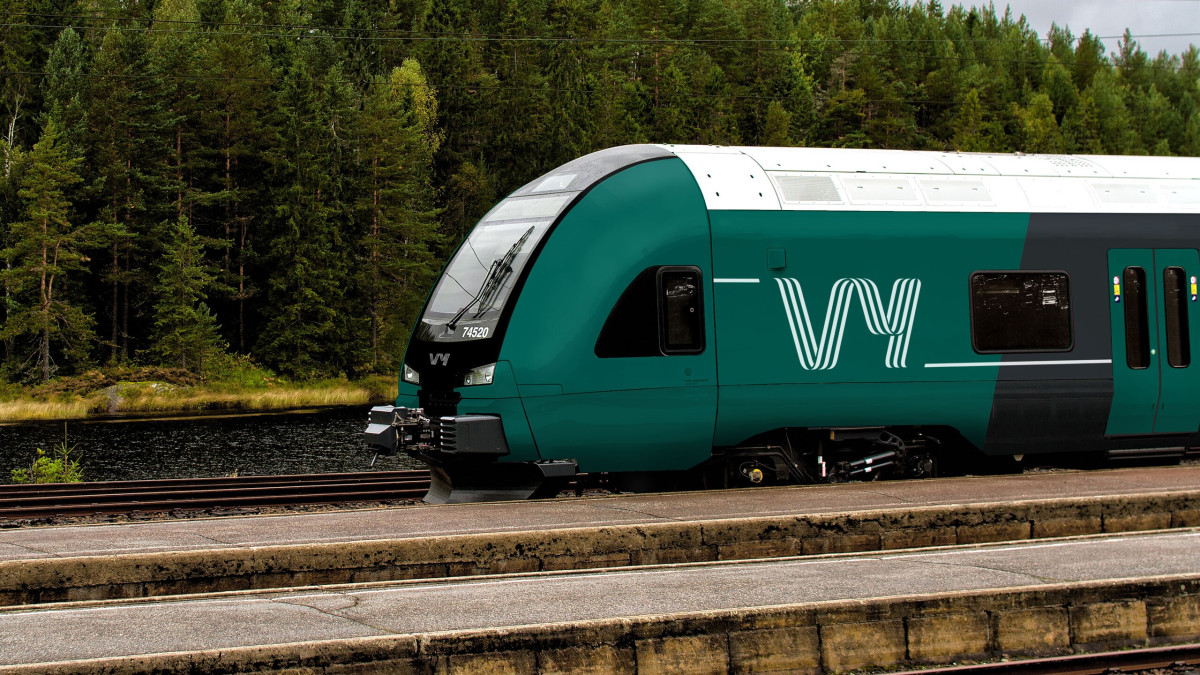 Vestfold Line: from Sunday, only three evening trains in each direction. Full line to reopen on 7 December
-
 Morning briefing: 3 out of 4 products became cheaper after Black Friday, a text message from the government, thaw this weekend
-
 Electricity averages NOK 3.89 on Thursday, the highest this year. Record-low reservoir levels in the south
-
 Christmas ribs for NOK 59 per kilogram. Extra, Kiwi and Rema 1000 cut prices by more than half