English
|
We współpracy z kancelarią Advokatfirma Nierzwicki & Bluszko AS
|
13.04.2026 08:10
When Is It Worth Making a Will? Three Situations When You Really Should Consider It.
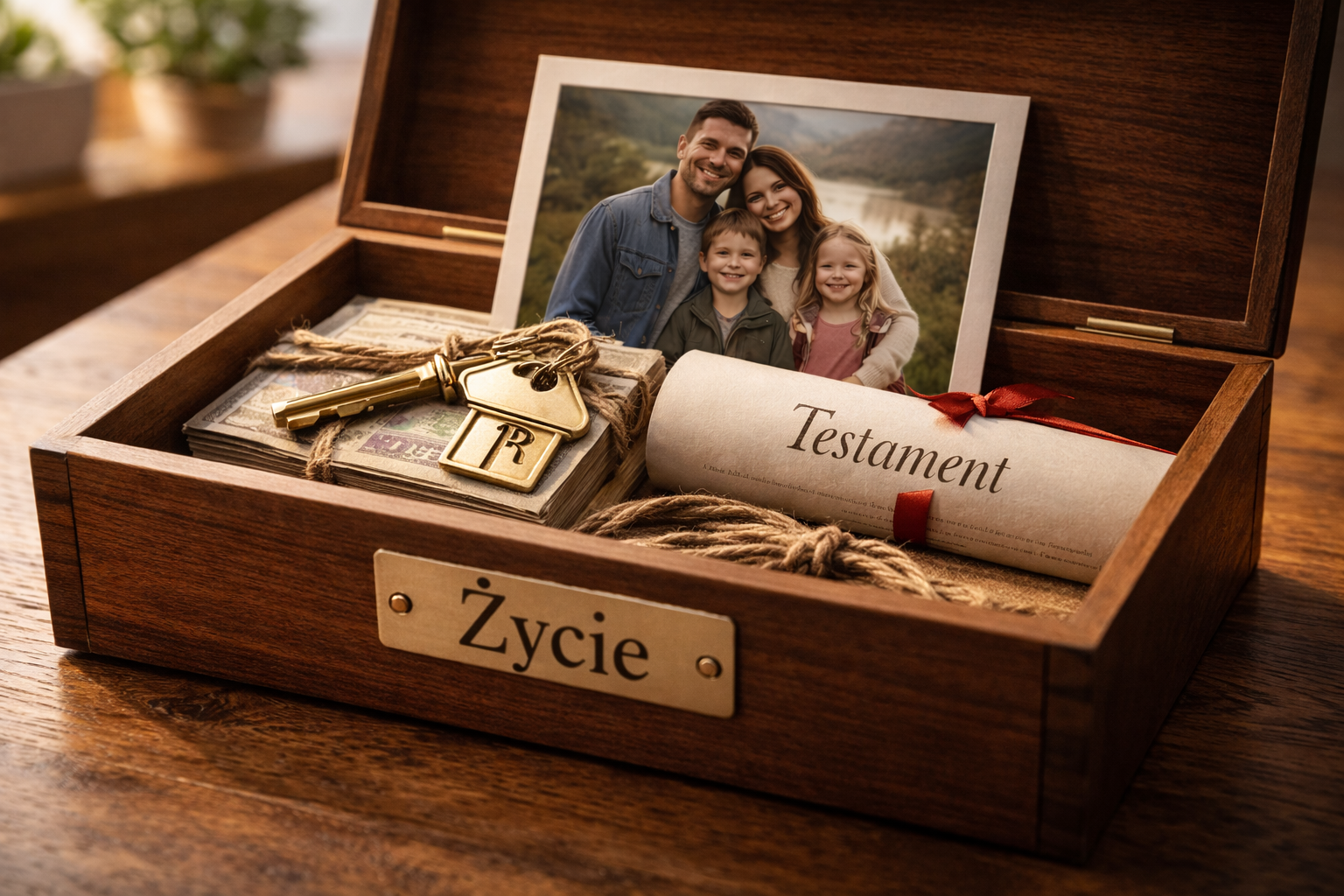
For many people, the topic of a will seems distant. We often hear: "there's still time," "that's something for the future." However, in legal practice, it turns out that the lack of a will can greatly complicate life for your loved ones—especially when the family lives in different countries or the family situation is not 'by the book.'

Will in Norway
MojaNorwegia
Recently on the MojaNorwegia portal, we already discussed the topic of wills in the article “Don’t Leave Things for Later. A Will in Norway Is Your Peace of Mind”, where we explained the basic rules for making a will and the most important differences between Polish and Norwegian law.
Norwegian inheritance law (Arveloven) specifies in detail who inherits the estate if there is no will. Children and the spouse are first in line, followed by more distant relatives.
The problem is that the statutory division of assets does not always reflect how we would really like to secure our loved ones.
A will is, in practice, a very simple tool that allows you to put many matters in order. Unfortunately, many people only start thinking about it when a family conflict, illness, or a difficult inheritance situation arises.~says Tomasz Nierzwicki, advokat (MNA) from Advokat Nierzwicki & Bluszko AS.
However, there are situations in which making a will is especially important.
No Children – Especially Then
One of the most common surprises for Poles in Norway is that not having children does not automatically mean that the entire estate will go to the partner.
If a will has not been made and the deceased left no children, the closest relatives inherit the estate—most often parents, siblings, or their children.
For people living in partnerships, this can lead to very difficult situations.
In Norway, many couples live in partnerships for many years, sharing a home and a life together, but are not formally married. Without a will, the partner may not be properly secured. In the event of death, everything will go to the deceased’s relatives.~explains Tomasz Nierzwicki.
In practice, this means that the deceased’s assets may go to more distant family—even if they live in another country and were not involved in the deceased’s daily life. It may happen, for example, that half the house goes to a relative you have never even met.
A will allows you to clearly specify who should receive your assets and avoid such situations.
When There Are Children from a Previous Relationship
The second situation in which a will is very important is so-called patchwork families—where partners have children from previous relationships.
Norwegian law protects children's inheritance rights. According to the regulations, the so-called compulsory share for children is generally 3/4, although there are also monetary limits to this share.
In practice, this means that without a will, the division of assets may look completely different from what the family would expect.
In such situations, it is especially important to plan property matters in advance. A will can, for example, secure the partner’s right to live in the home or specify a way of dividing assets that will be fair to everyone.~says Tomasz Nierzwicki.
The lack of such arrangements often leads to disputes between heirs or the need to sell real estate.
When You Run a Business
A will is also very important for people running their own businesses.
If the business owner dies without clear provisions, many questions arise:
- who will take over the company,
- who will make decisions,
- whether the heirs will be able to run the business together.
The lack of such arrangements can even lead to the paralysis of the company’s operations.
A well-prepared will allows you to clearly define the rules of succession, who will take over the company or shares in the business. Thanks to this, the business can continue to operate without chaos and disputes among heirs.~emphasizes Tomasz Nierzwicki.
This is important not only for the family but also for employees and business partners.
Will in Norway – A Few Important Rules
For a will to be valid in Norway, it must meet certain formal requirements. The document should be in writing and signed in the presence of two witnesses, who must also sign it. Importantly, the witnesses cannot be people who inherit from the will.
For Poles living in Norway, international issues often arise as well.
In our practice, we very often encounter cases involving elements of both Norwegian and Polish law—for example, when part of the estate is in Poland and the testator lived in Norway. In such situations, proper preparation of the will is especially important, including making the right choice of law.~says Tomasz Nierzwicki.
Such cases are called cross-border proceedings and require determining, among other things, which law will apply and which court will be competent to resolve the inheritance case.
Don’t Put Off This Decision
Conversations about wills are rarely easy. Many people postpone them for years.
However, in practice, it is the lack of decision that often becomes the biggest problem for the family.
Don’t leave things “for later.” A will in Norway is your peace of mind.
Do You Need Legal Help in Norway?
Inheritance and will matters in Norway often differ from those known from Polish law. Especially in situations where assets, heirs, or documents are located in different countries, proper preparation of a will is crucial.
If you have doubts about a will or inheritance in Norway, contact the law firm
Advokatfirma Nierzwicki & Bluszko AS.
The law firm specializes in helping Poles living in Norway with inheritance and property matters. They combine knowledge of Norwegian and Polish law, which allows them to effectively assist in cross-border cases when elements of the case concern both legal systems.
Contact us to discuss your situation and make sure your interests are properly protected.

Advokatfirma Nierzwicki & Bluszko ASAdvokatfirma Nierzwicki & Bluszko AS
How do you rate this article?