The Arctic is losing ice at a rapid pace. Scientists report one of the lowest levels in history
The extent of Arctic sea ice is approaching one of the lowest levels in the history of satellite measurements.
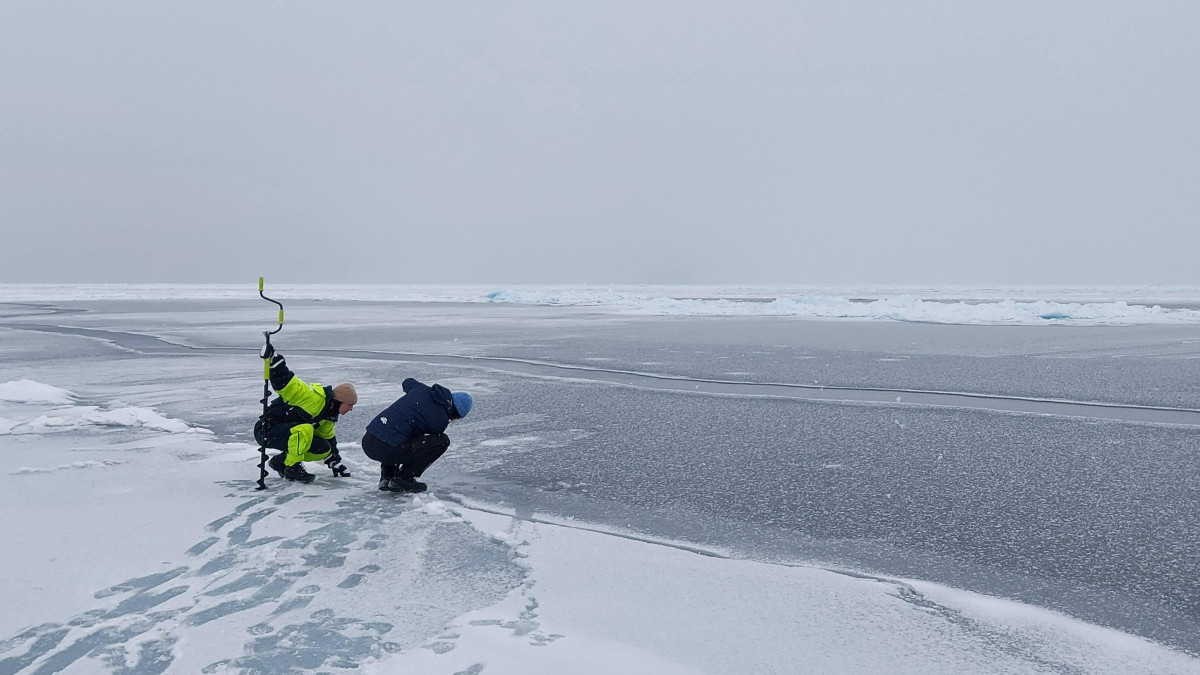
Winter sea ice edge in Disko Bay in March 2023. PhD student Linda Latuta and master's student Dana King are looking for a safe place to measure the temperature and salinity of landfast ice, which is attached to the land and supported by icebergs.
Fot. Lars Henrik Smedsrud
The maximum winter extent of sea ice in 2026 will likely be the second lowest since 1979. Only 2025 recorded a lower level. The data comes from satellite observations and analyses by researchers from the Bjerknes Centre and the University of Bergen. Scientists point to an accelerating downward trend.
Record Low Ice Levels
Since measurements began in 1979, the maximum ice extent was over 16.5 million km². By 2026, it has decreased by about 1.5 million km². This year's values are similar to those from 2018 and 2025. Scientists observe a clear acceleration of the decline after a period of relative stability. This indicates the simultaneous influence of natural variability and climate warming.
The largest ice losses have been recorded in the Labrador Sea region, west of Greenland. Significant changes are also visible in the Barents Sea. Another area is the region north of Svalbard, where the reduction in ice cover is particularly pronounced. The changes affect vast parts of the Arctic.
The largest ice losses have been recorded in the Labrador Sea region, west of Greenland. Significant changes are also visible in the Barents Sea. Another area is the region north of Svalbard, where the reduction in ice cover is particularly pronounced. The changes affect vast parts of the Arctic.
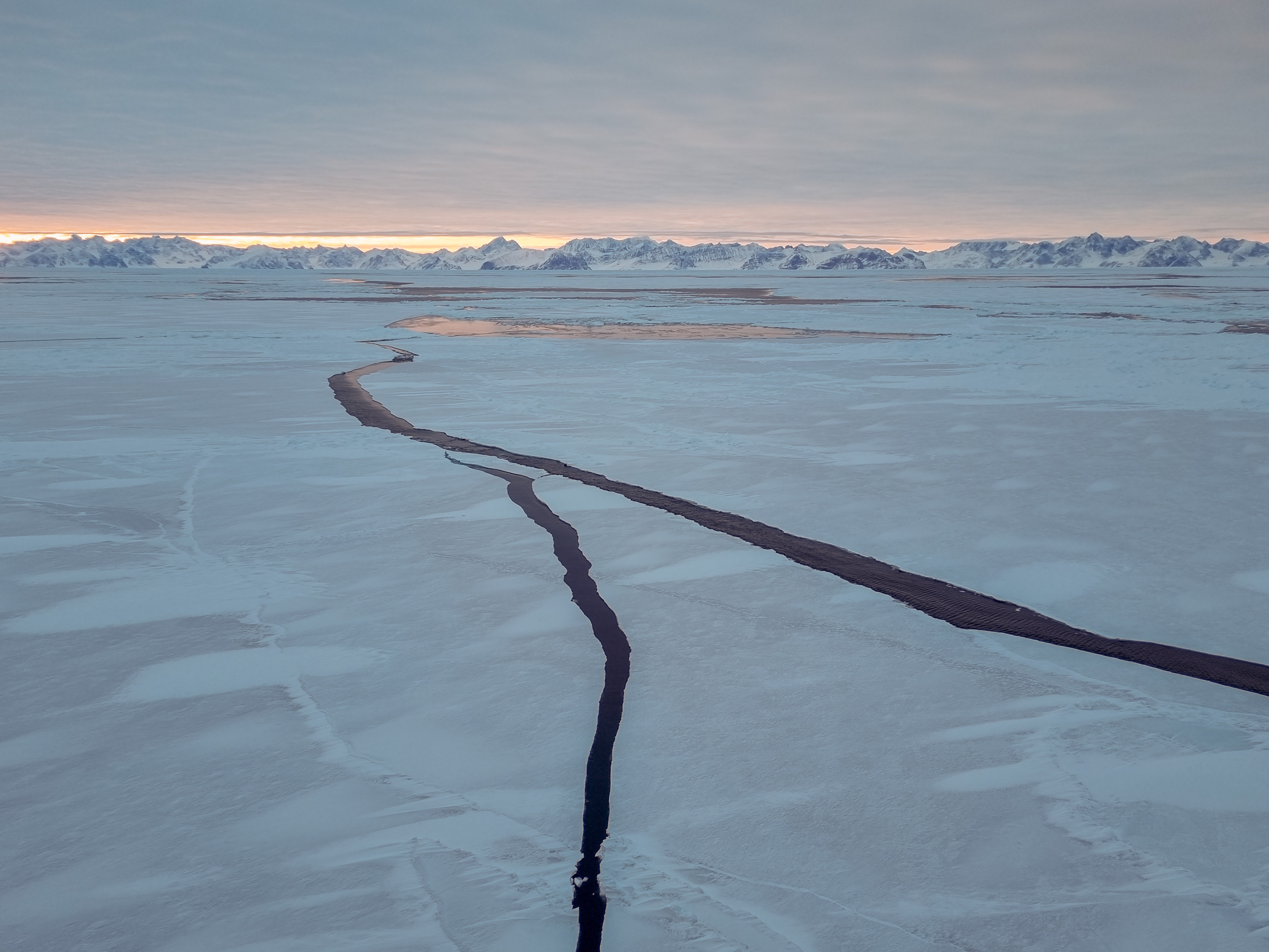
Photo of the Greenland Sea taken during a cruise in March 2025.Photo: Ellen Viste Bjerknes Centre for Climate Research
Changes Consistent with CO2 Emissions
According to researchers, the downward trend corresponds to the increase in carbon dioxide emissions. Analyses from the last 30–40 years indicate an almost linear pattern of change. The decline in winter sea ice extent correlates with the rise in atmospheric CO2 concentration. The phenomenon is in line with previous forecasts. The data confirm a long-term trend.
In winter, sea ice is now mainly present in the central part of the Arctic Ocean. The area between the North Pole and Greenland remains its main region. In the past, the ice reached much further south, covering the area around Bjørnøya and the entire Disko Bay. In March 2026, this area remains ice-free.
In winter, sea ice is now mainly present in the central part of the Arctic Ocean. The area between the North Pole and Greenland remains its main region. In the past, the ice reached much further south, covering the area around Bjørnøya and the entire Disko Bay. In March 2026, this area remains ice-free.
Research conducted as part of the "Climate Narratives" project indicates a link between Atlantic water temperatures and the presence of sea ice. This relationship was previously confirmed in the Barents Sea. It is now also observed in the Disko Bay region. Analyses of these processes expand the scope of climate change monitoring in the Arctic.
How do you rate this article?