Samples every 20 kilometers. This is how scientists will study the central part of the Arctic Ocean
The first expedition carried out as part of the Polhavet 2050 program has reached the westernmost point of its route. The research vessel FF Kronprins Haakon is now roughly halfway between the North Pole and the northern coast of Canada. This allows scientists to collect samples from areas that had not been reached earlier during this voyage.
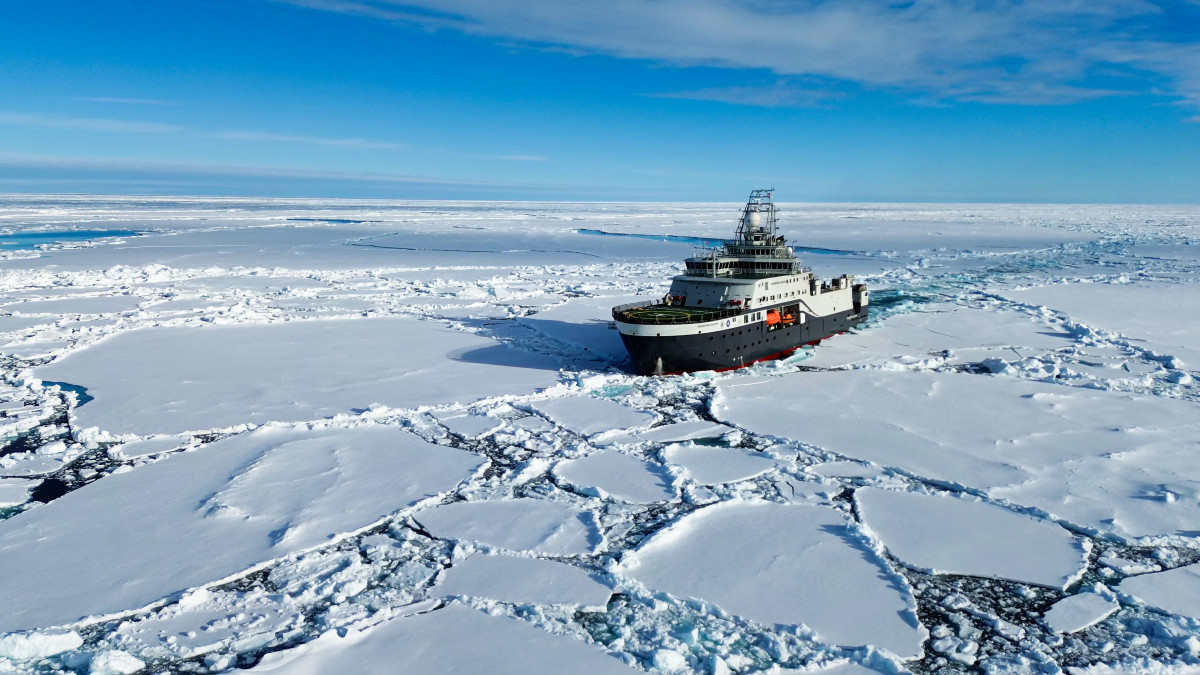
The FF Kronprins Haakon vessel at the westernmost point of the expedition.
Fot. Vegard Stürzinger/ Norsk Polarinstitutt / Polhavet 2050
Reaching the western point marks several important stages of the expedition. Researchers gained access to the Makarov Basin and the Lomonosov Ridge, and for the first time crossed the entire width of the transpolar current. Previously, only its eastern edge had been studied. Expedition leader and Norwegian Polar Institute (NPI) researcher Paul Dodd points out that the new measurements will allow for a more detailed study of the transport processes occurring across the Arctic Ocean.
They reached further west. Now the samples matter
If the plan is carried out, scientists will gather high-resolution data from three important basins of the Arctic Ocean: the Makarov Basin, the Amundsen Basin, and the Nansen Basin. Originally, the vessel was supposed to travel another 50 to 100 kilometers further west. However, large expanses of multi-year ice, strong ice pressure, and poor visibility significantly slowed the journey.
The team therefore decided to turn back earlier. Dodd explains that continuing along the planned route would probably have been possible, but would have required more time and could have limited the implementation of the measurement program. The priority became completing all planned research. The vessel is now heading about 1,200 kilometers east, toward the northern coast of Svalbard.
The team therefore decided to turn back earlier. Dodd explains that continuing along the planned route would probably have been possible, but would have required more time and could have limited the implementation of the measurement program. The priority became completing all planned research. The vessel is now heading about 1,200 kilometers east, toward the northern coast of Svalbard.
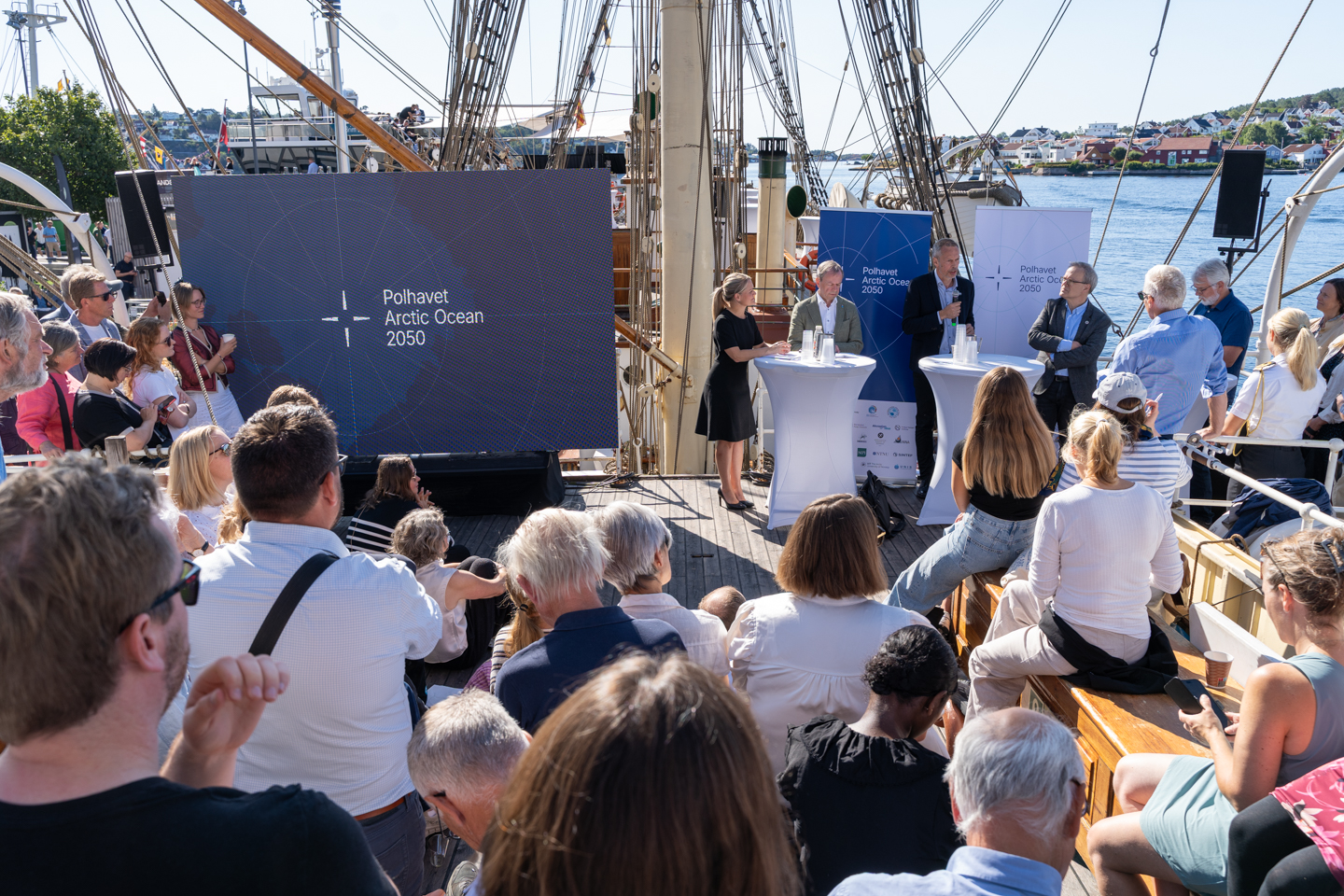
The research program has gained as many as 18 partners.Photo: Kjetil Rydland / UiT/ Arctic Ocean 2050
A long route ahead. Conditions remain challenging
Along the way, researchers will stop approximately every 20 kilometers. At each station, they will collect samples from the atmosphere, snow, sea ice, ocean, and seabed. The work is being carried out by a team of scientists representing various disciplines. They are studying, among other things, organisms living in and under the ice, physical and biogeochemical processes in the water column, and life on the ocean floor.
The research is taking place amid vast areas of multi-year ice. The expedition was planned so that scientists would travel with the drifting ice through the central part of the Arctic Ocean, making the next stages dependent on weather and ice conditions. Not all points of the program can therefore be guaranteed in advance. However, Dodd assesses that work so far is progressing very well.
The research is taking place amid vast areas of multi-year ice. The expedition was planned so that scientists would travel with the drifting ice through the central part of the Arctic Ocean, making the next stages dependent on weather and ice conditions. Not all points of the program can therefore be guaranteed in advance. However, Dodd assesses that work so far is progressing very well.
The next stops on the route toward Svalbard are expected to provide material from several elements of the Arctic environment at once. Combining samples from the atmosphere, snow, ice, water, and seabed will allow researchers to conduct analyses across the entire cross-section of the studied area. How much of the planned program will be completed will depend primarily on the weather and ice situation in the next stages.
How do you rate this article?