A Historic Moment in Norway: More Electric Cars Than Diesels
For the first time in history, the number of electric cars in Norway has surpassed the number of diesel vehicles. Data from the Norwegian Road Traffic Information Council (Opplysningsrådet for veitrafikken, OFV) confirms a lasting shift in the country's automotive market structure.
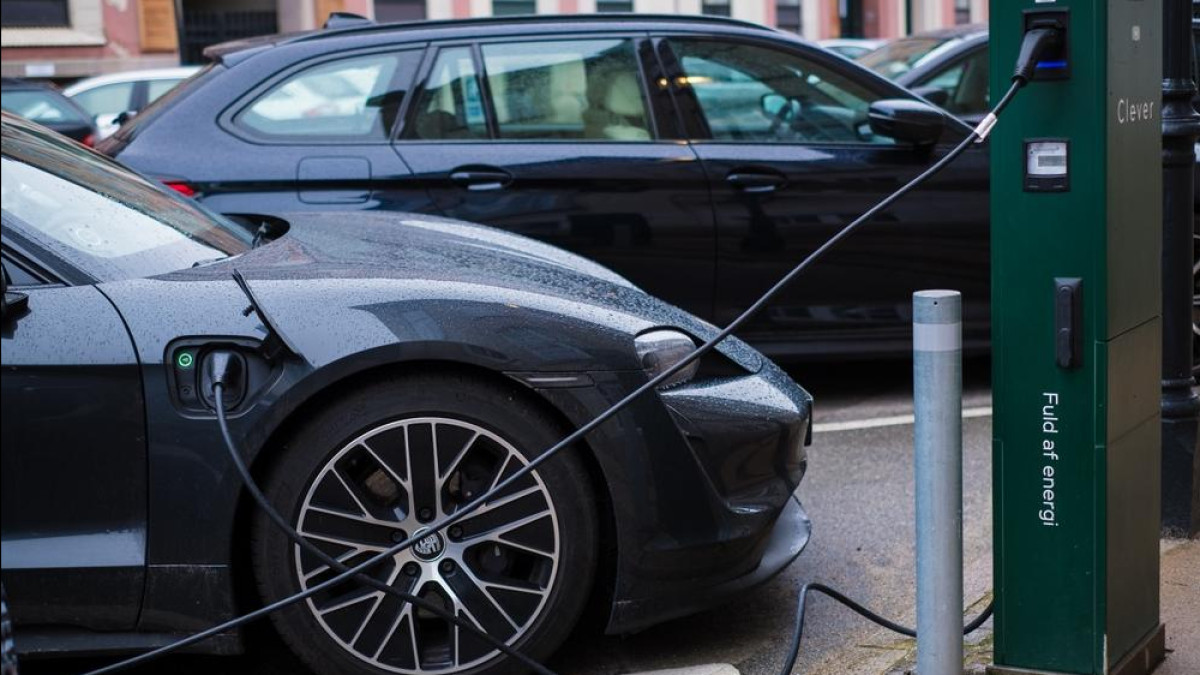
As of December 4, 2025, electric cars are the most popular type of passenger vehicle in Norway.
Fot. Shutterstock, za: OFV
The breakthrough occurred on December 4, 2025. On this day, electric cars became the largest group in Norway’s passenger car market. Electricity has become the dominant type of propulsion nationwide. This change is the result of years of growth in electric vehicle registrations, driven by the country’s regulations and, previously, numerous discounts and tax incentives.
Electric Cars Overtake Diesels Nationwide
At the beginning of December 2025, electric cars made up 31.78% of Norway’s passenger vehicles. The share of diesel cars dropped to 31.76%. Petrol cars accounted for 23.90% of the fleet. Hybrids, both conventional and plug-in, together made up 12.56%.
OFV notes that this is the first time such a situation has occurred in Norway’s history. In the new automotive market, petrol and diesel cars now play a marginal role. At the same time, more than two-thirds of the entire fleet are still combustion engine vehicles. The replacement process remains uneven over time.
OFV notes that this is the first time such a situation has occurred in Norway’s history. In the new automotive market, petrol and diesel cars now play a marginal role. At the same time, more than two-thirds of the entire fleet are still combustion engine vehicles. The replacement process remains uneven over time.
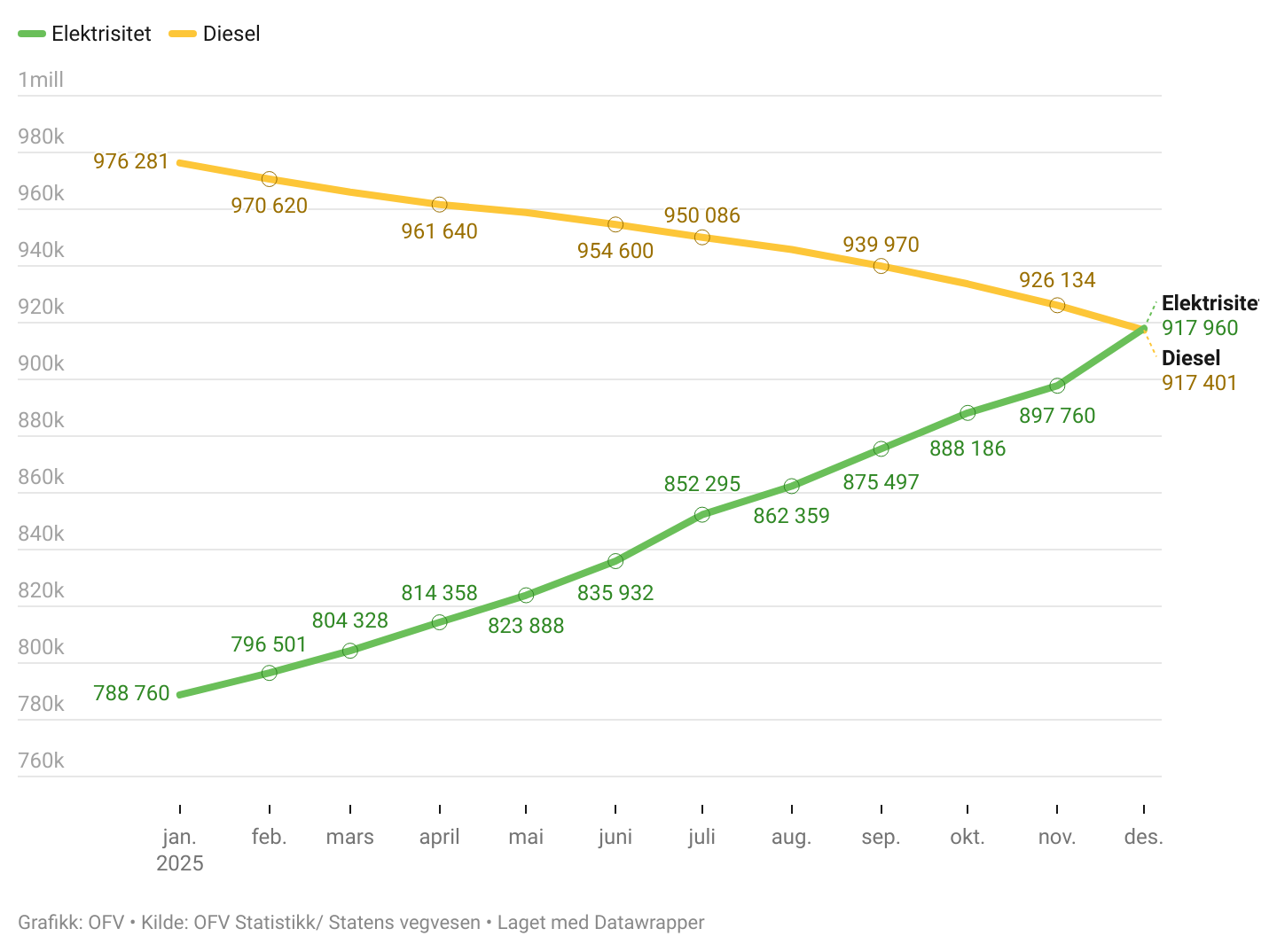
In the photo: the number of diesel and electric vehicles throughout 2025 in Norway.Ill. OFV
Rapid Pace of Change and Regional Differences
The transformation is progressing fastest in the new car segment. The share of electric cars in new sales rose from 89.3% in 2024 to 95.6% in 2025. In several regions, including Innlandet, Nordland, and Troms, over 90% of new cars were electric. In Finnmark, the share increased from 77.68% to 84.69%.
Regional differences remain pronounced. Oslo has the highest share of electric cars in the entire fleet, at 45.54%. High values are also recorded in Akershus and Vestland. The highest share of diesels is found in Finnmark, Troms, and Nordland, where combustion engines still dominate.
Regional differences remain pronounced. Oslo has the highest share of electric cars in the entire fleet, at 45.54%. High values are also recorded in Akershus and Vestland. The highest share of diesels is found in Finnmark, Troms, and Nordland, where combustion engines still dominate.
All data and calculations indicate that charging an electric vehicle in Norway is cheaper and more advantageous than using combustion engine vehicles.Photo: stock.adobe.com/standard license
Data from the Norwegian Road Traffic Information Council shows that the turning point in the automotive market structure has already occurred. At the same time, the pace of change varies regionally and depends on infrastructure conditions and regulatory frameworks. The coming years will show how quickly the dominance of electric cars will lead to a lasting decline in the number of combustion vehicles nationwide.
How do you rate this article?