Will Norway Uncover Antarctica’s Greatest Secret? Groundbreaking Discovery Arrives in Bergen
Scientists from the University of Bergen have begun studying an ice core from Antarctica, with its oldest layers dating back at least 1.2 million years. Every millimeter of ice contains a record of ancient climate conditions.
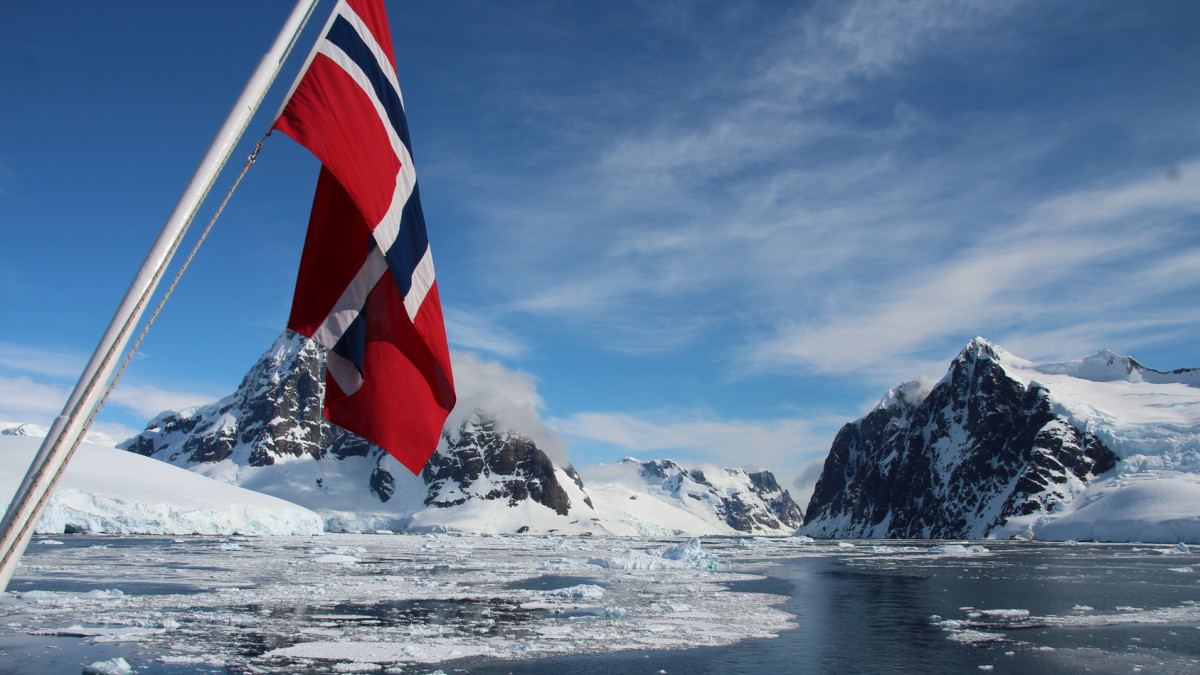
The research material is significant for climate science.
Fot. Fotolia (zdjęcie poglądowe)
The core was extracted from a depth of 2.5 km in one of the most inaccessible regions of Antarctica. The material has been delivered to the laboratories of the Geophysical Institute at the University of Bergen. Research will cover the entire length of the ice core. Analyses are expected to provide data about the atmosphere from hundreds of thousands of years ago, including temperatures and CO₂ concentrations.
Ice as a Climate Archive
The ice core was formed from snow that fell on Antarctica long before humans appeared. Its structure has preserved microscopic air bubbles, trapped at the moment the ice formed. These bubbles contain information about the composition of the ancient atmosphere, allowing scientists to precisely reconstruct past climate conditions.
Direct temperature measurements only go back about 150 years. Ice analysis allows us to look back at least 1.2 million years. The data obtained will be used to test climate models, which are essential for forecasting future changes. Every new piece of information increases the accuracy of these predictions.
Direct temperature measurements only go back about 150 years. Ice analysis allows us to look back at least 1.2 million years. The data obtained will be used to test climate models, which are essential for forecasting future changes. Every new piece of information increases the accuracy of these predictions.
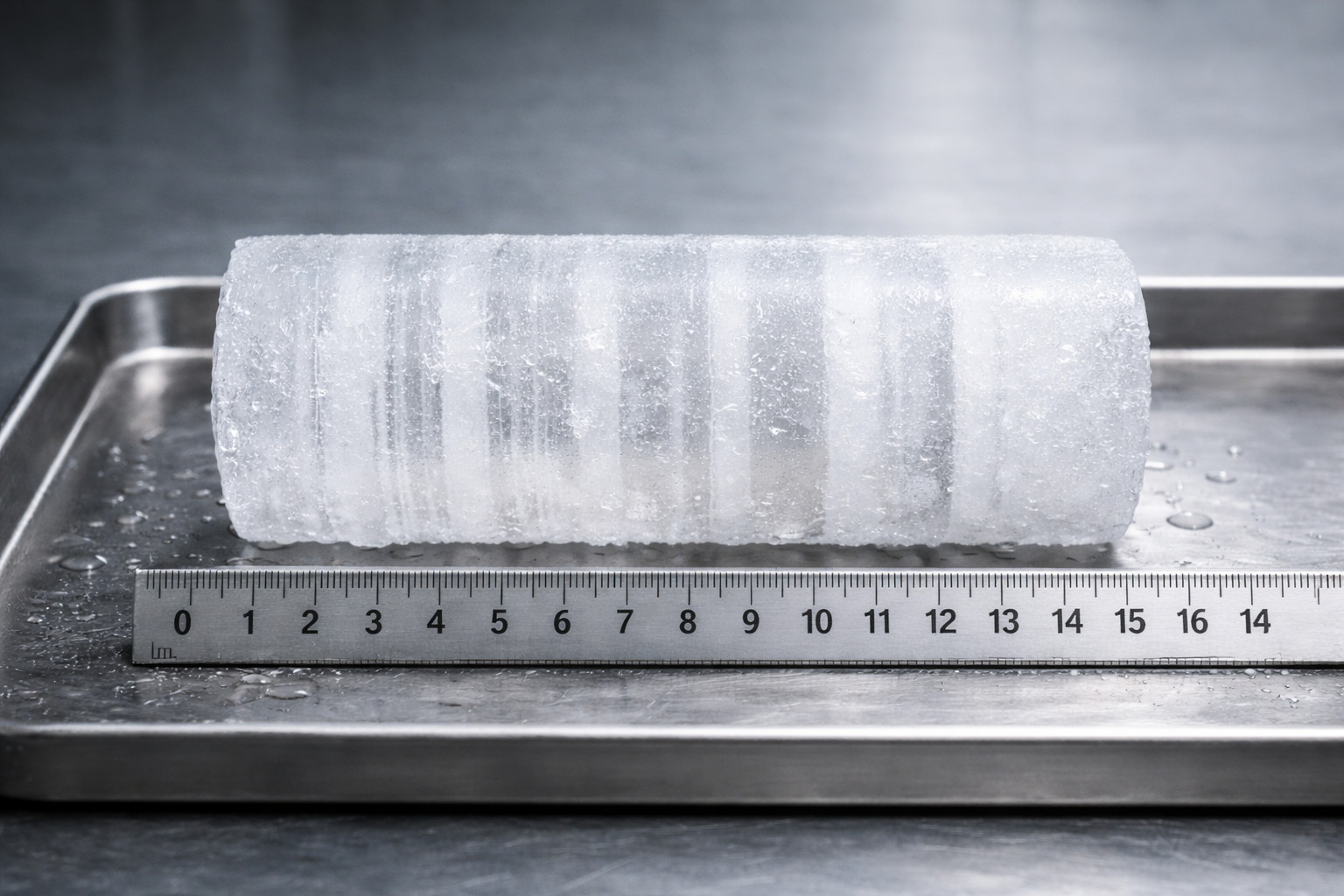
The core is one of the oldest finds of its kind.Photo generated with AI assistance
A Continuous Record from Deep Within Antarctica
The core comes from the Little Dome C site. Its uniqueness lies in the continuity of its climate record. The youngest layers correspond to modern times, while the oldest reach back at least 1.2 million years. This enables the analysis of climate changes without gaps in the data sequence.
The Beyond EPICA – Oldest Ice project began searching for such ancient ice in 2019. The discovery was confirmed in 2025. Scientists do not rule out that the deepest layers may be even older. The exact age will be determined after laboratory analysis of each segment of the core.
The Beyond EPICA – Oldest Ice project began searching for such ancient ice in 2019. The discovery was confirmed in 2025. Scientists do not rule out that the deepest layers may be even older. The exact age will be determined after laboratory analysis of each segment of the core.
Work in Bergen has only just begun. Scientists are dividing the core into samples and conducting initial measurements. One millimeter of ice corresponds to about 20 years of climate history. Analyzing the entire material will take many years. The results will gradually expand our knowledge of Earth’s past climate changes.
How do you rate this article?