When do you need to change to winter tyres in Norway and what penalties apply for neglecting this?
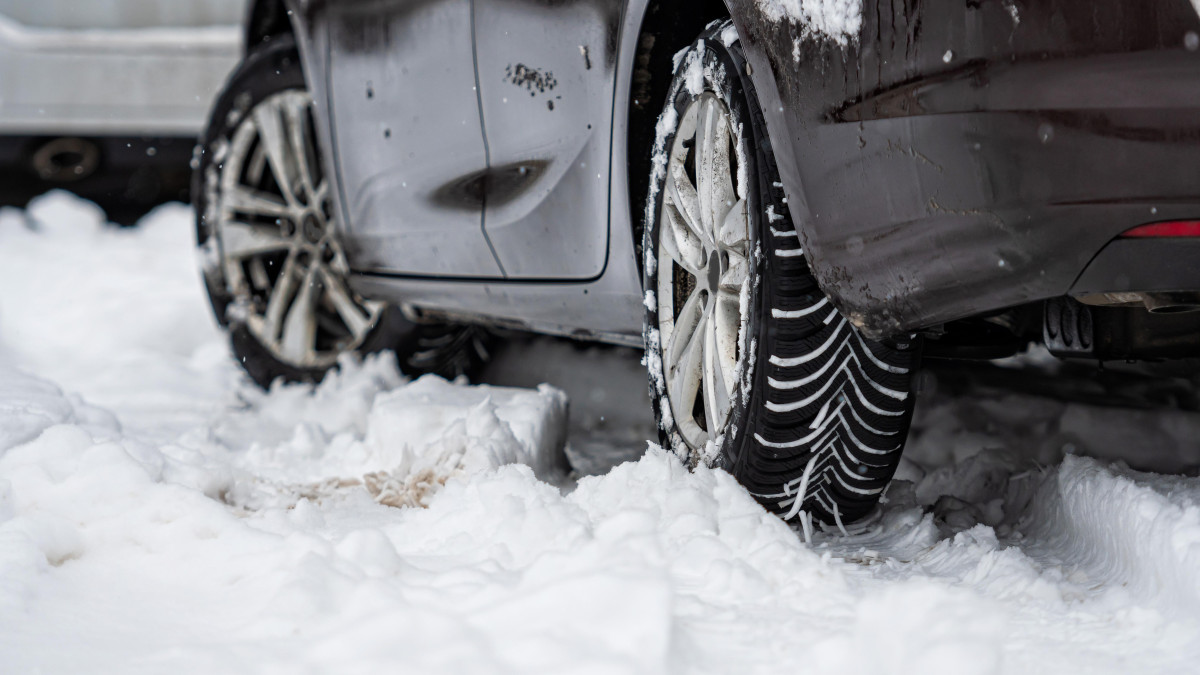
In Norway, one rule applies: tyres must be suited to the current weather conditions.
stock.adobe.com/licencja standardowa
In Norway, road conditions are the main factor determining when to change tyres. However, regulations specify the minimum tread depth and the period during which studded tyres may be used. Excessively worn tyres can result in a fine of NOK 1,000 for each wheel. Check the key rules before winter.
When do you need to fit winter tyres?
For passenger cars with a maximum authorised mass of up to 3.5 tonnes, there is no single date requiring all drivers to switch to winter tyres. However, all year round, the vehicle must have tyres that provide grip appropriate to the conditions. As Statens vegvesen, the Norwegian Public Roads Administration, points out, summer tyres cannot be used on snow and ice because they do not provide sufficient grip. So, if you are heading to the mountains in autumn, check the conditions along the entire route. The absence of snow outside your home does not mean you can safely cross a mountain pass on summer tyres.
Winter tread depth: minimum 3 mm
For vehicles with a maximum authorised mass of up to 3.5 tonnes, the minimum tread depth during the winter period is 3 mm. The period during which this requirement applies depends on the region.
Outside this period, the statutory minimum is 1.6 mm. However, you must still ensure grip appropriate to the conditions. If you are towing a trailer, check its tyres as well. The same tread-depth requirements apply to them as to the towing vehicle. Detailed rules are provided by Statens vegvesen.
| Region | Period when the 3 mm minimum applies |
|---|---|
| Nordland, Troms and Finnmark | From 16 October through 30 April |
| The rest of Norway | From 1 November through the first Sunday after Easter Monday |
Studded tyres: when can they be used?
Studded tyres, known as piggdekk, are normally permitted during the same periods shown in the table:
- in Nordland, Troms and Finnmark — from 16 October to 30 April;
- in the rest of the country — from 1 November to the first Sunday after Easter Monday.
What penalties apply for unsuitable tyres?
Driving with a tyre whose tread is below the statutory minimum may result in an administrative fine of NOK 1,000 for each non-compliant tyre on a vehicle with a maximum authorised mass of up to 7,500 kg. For the driver of a standard passenger car, this means:
- one tyre below the minimum — NOK 1,000;
- two tyres below the minimum — NOK 2,000;
- four tyres below the minimum — NOK 4,000.
Studs in the city may mean an additional fee
Some municipalities charge a piggdekkgebyr, a local fee for using studded tyres. In Oslo, during the season from 1 November 2026 to 4 April 2027, it must also be paid if you are only passing through the city. For a vehicle with a maximum authorised mass below 3.5 tonnes, the fee is:
Driving without the required fee may result in an additional penalty of NOK 750. Details and payment methods are available on the official website of the City of Oslo.
| Period | Fee |
|---|---|
| 24 hours | NOK 35 |
| Calendar month | NOK 450 |
| Entire season | NOK 1,400 |
Unsuitable tyres and compensation
Neglecting tyre requirements can also have consequences after a collision or accident. The insurer If warns that unsuitable tyres may mean that you have to cover part or all of the damage costs yourself. However, the company emphasises that each case is assessed individually. This does not mean compensation is automatically denied every time unsuitable tyres are found on a vehicle. More information is provided by If in its statement on driving on summer tyres in winter.
Before changing tyres, also check their condition
Grip is also determined by the condition of the rubber. Over time, tyres harden and lose their properties, even if the tread still looks good. If recommends replacing winter tyres after four to five seasons of use. This is a safety recommendation, not a statutory tyre expiry date. Before setting off, check:
- tread depth and evenness of wear;
- the condition of the rubber — especially cracks and damage;
- tyre pressure;
- conditions along the entire planned route.
How do you rate this article?