
The state lost the climate case. What does the ruling mean for Norwegian oil?
On 13 November, the Supreme Court of Norway declared invalid the decisions approving the development and production plans for the Breidablikk and Tyrving fields and the Yggdrasil area. The reason was deficiencies in the climate impact assessment. The ruling means that the ministry must reconsider the cases, but it does not automatically revoke the permits held by oil companies.
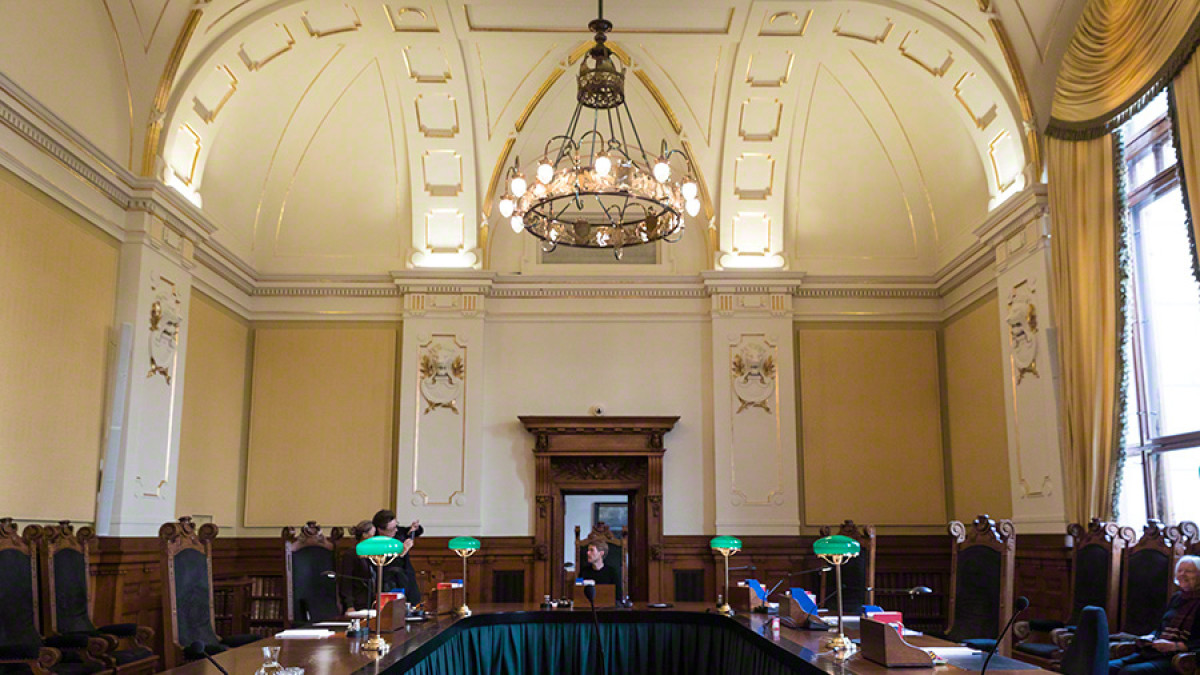
The courtroom of the Supreme Court of Norway – archive photo.
Tore Sætre / Flickr / CC BY-SA 2.0, kadr
The dispute over what happens to oil after it is sold
Greenpeace Norden and Natur og Ungdom brought the case against the state, represented by the Ministry of Energy. It concerns projects in the North Sea. Yggdrasil is an area comprising three fields, so reducing the entire case to “three oil fields” does not reflect its full scope.
The key issue is the distinction between two types of emissions. The first arise during the construction of installations and extraction. The second occur later, when the sold oil and gas are burned. It is this latter stage that became the focus of the dispute.
The judges unanimously found that, before approving a plan for development and operation, known by the abbreviation PDO, emissions from combustion must also be assessed. This follows from the EU directive on the assessment of the effects of projects, which has been incorporated into Norwegian law. The assessment must also describe the anticipated impact of these emissions on global warming.
Read also: ORLEN signed an agreement with Equinor. Up to one quarter of the oil it needs may come from Norway
A 6–5 majority: the broader picture must be considered
The split among the eleven-member panel concerned the scope of the required analysis. A majority of six judges found that the emissions from a given project must be assessed together with emissions from other existing and approved projects on the Norwegian continental shelf.
Later analyses already took the combustion of oil and gas into account, but they did not consider this cumulative perspective. The majority therefore found that they had not remedied the earlier procedural errors. The other five judges assessed the required scope of the review differently and considered the later additions sufficient.
The court did not grant all the demands of the environmental organisations. It did not establish an obligation to examine specific consequences of the projected temperature increase or to relate emissions to the remaining carbon budgets in the manner advocated by the claimants.
What happens next to permits and production?
In its official summary of ruling HR-2026-2428-S, the Supreme Court clearly notes that the companies holding rights to the fields were not parties to these proceedings. Therefore, declaring the decisions invalid in a dispute between the organisations and the state does not in itself cause the companies’ permits to lapse.
However, the ministry must reconsider the cases, this time following the correct procedure. For people working in the industry and monitoring investments, this distinction is crucial: the ruling concerns the required climate assessment, not an automatic order to halt all Norwegian production.
Read also: Equinor nearly doubled its result. $12.35 billion in three months
Source: Supreme Court of Norway, ruling and summary of 13 November 2026. The courtroom photograph comes from the archive: Tore Sætre / Flickr, CC BY-SA 2.0, editorial crop.
How do you rate this article?