Russian drone hit the locomotive of a Kyiv–Warsaw train. Strike 2 km from the Polish border
On September 13, a Russian drone struck the locomotive of a passenger train in western Ukraine, around 2 km from the Polish border. According to Ukrainian Railways, the crew had been warned of the threat beforehand, and no one was injured in the incident. In connection with Russian attacks in western Ukraine, Poland deployed military aircraft and activated air defence systems.
Norway's Police Security Service (PST) had previously pointed to the possibility of Russian sabotage activities in Norway, including against infrastructure linked to support for Ukraine.
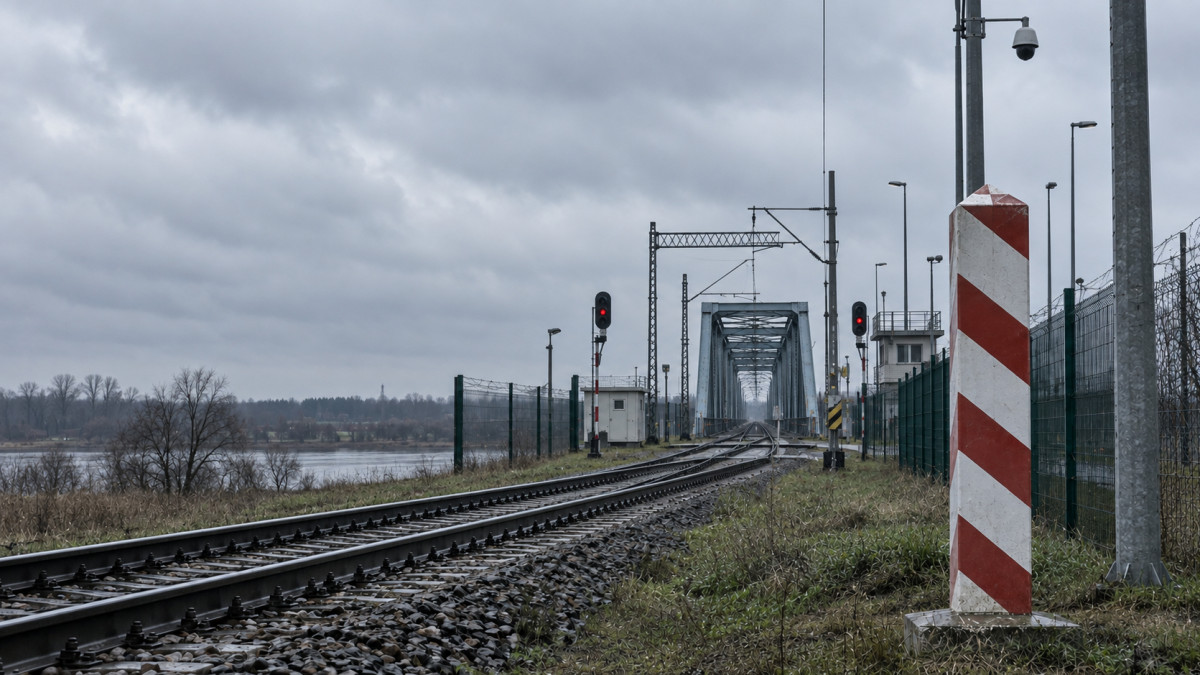
Fot. Ai stalowy most kolejowy nad Bugiem
In brief
<ul>
<li>A Russian drone hit the locomotive of a Kyiv–Warsaw train around 2 km from the Polish border.<\/li>
<li>No one was injured in the strike because the crew had been warned beforehand.<\/li>
<li>Poland deployed aircraft and activated air defence systems, but no violation of Polish airspace was recorded.<\/li>
<li>The CHARLIE, BRAVO and BRAVO-CRP alert levels had already been in force before the events of September 13.<\/li>
<li>Norway's PST had previously pointed to threats related to the activities of Russian services.<\/li>
<\/ul>
The strike took place in Volyn Oblast, near the Yahodyn–Dorohusk border crossing. The locomotive of a train operating on the Kyiv–Warsaw route was hit.
Ukrainian Railways reported that its air-threat monitoring team had managed to warn the train crew in advance. No one was injured in the strike on the locomotive.
Poland deployed aircraft and air defence
The Russian attacks were carried out very close to the border of the European Union and NATO. Due to the activity of Russian unmanned aerial vehicles over western Ukraine, military aircraft were operating in Polish airspace.
Ground-based air defence and radar reconnaissance systems were also on standby.
Residents of the Lublin and Subcarpathian voivodeships received early-morning alerts from the Government Security Centre in connection with the Russian air attack on Ukraine and the operations of Polish aircraft. The warning was later withdrawn.
After the operations ended, the Operational Command of the Polish Armed Forces stated that no violation of the airspace of the Republic of Poland had been recorded.
This is an important distinction. The strike on the locomotive took place on Ukrainian territory, although very close to the Polish border. There is no confirmation that the Russian drone used in this attack entered Polish airspace.
CHARLIE alert level on railways was already in force before the attack
Since September 1, the third CHARLIE alert level has been in force in the areas of railway lines managed by PKP Polish Railway Lines and PKP Broad-Gauge Metallurgy Line.
The second BRAVO alert level and the second BRAVO-CRP alert level concerning cyberspace are also in force throughout Poland.
The current period during which these alert levels apply began on September 1 and will last until November 30. The decisions were made in August, so they are not a response to the events of September 13.
Elevated alert levels mean additional security procedures and increased vigilance by the services and institutions responsible for protecting infrastructure.
What does Norway have to do with this?
For Poles living in Norway, the event has two different dimensions.
The first is direct: many people have family in Poland, travel regularly between Poland and Norway, and follow the security situation in the country.
The second concerns Norway as a NATO member state.
In its 2026 threat assessment, Norway's Police Security Service (PST) points to the continuing threat associated with the activities of Russian intelligence and security services. PST assesses that Russian intelligence may consider it advantageous to carry out sabotage against targets in Norway.
PST considers properties and logistics infrastructure linked to support for Ukraine to be the most likely targets of such activities. At the same time, the service notes that civilian infrastructure may also be at risk.
Russian services are also interested in military and allied activity in Norway, critical infrastructure, and Norwegian support for Ukraine.
However, this is an earlier threat assessment published by PST, not a new warning issued after the attack near the Polish border. It should not be presented as Norway's direct response to the events of September 13.
Attack in Ukraine, with no violation of Polish airspace
The strike on the locomotive around 2 km from Poland's border shows how close to the territory of European Union and NATO member states Russian attacks on Ukraine are being carried out.
In such events, it is necessary to distinguish between an attack on a target located in Ukraine, a violation of a NATO state's airspace, and a direct attack on its territory.
In the case of the events of September 13, the Polish military reported that no violation of Polish airspace had been recorded.
How do you rate this article?