A Turnaround After a Record-Breaking 2023: How Attitudes Toward Immigrants in Norway Have Changed
The latest survey on attitudes toward immigrants and immigration in Norway shows a third consecutive decline in positive assessments. The 2026 report results are less favorable than the previous year, although most respondents still express a positive outlook. The authors point out that after the peak in 2023, the results are shifting toward pre-Ukraine war levels.
Assessments of immigrants are generally positive, though not as favorable as in 2023.
Fot. MN
The 2026/25 report was published on June 23, 2026. Its authors are Frøydis Strøm, Rebekka Arnesen, and Erling Kvalø. The study covers changes from 2002 to 2026, and its main findings show both a long-term improvement in attitudes and a less positive trend over the past three years.
The Shift in Sentiment Continues. The Peak Was in 2023
Positive attitudes have weakened. The report's authors state that this year's results are generally less positive than last year's survey. This is the third consecutive decline. At the same time, since 2002, there has been a long-term trend toward more favorable assessments of immigrants and immigration.
The highest level was recorded in 2023. This was a year after Russia's full-scale invasion of Ukraine, and the results can be interpreted, among other things, as an expression of sympathy toward Ukrainian refugees. In 2022 and 2023, a larger share of respondents believed that refugees and asylum seekers should find it easier to obtain residency in Norway. In 2025 and 2026, more people now indicate that it should be more difficult, and a similar level of this view was previously seen in the 2016 survey.
The highest level was recorded in 2023. This was a year after Russia's full-scale invasion of Ukraine, and the results can be interpreted, among other things, as an expression of sympathy toward Ukrainian refugees. In 2022 and 2023, a larger share of respondents believed that refugees and asylum seekers should find it easier to obtain residency in Norway. In 2025 and 2026, more people now indicate that it should be more difficult, and a similar level of this view was previously seen in the 2016 survey.
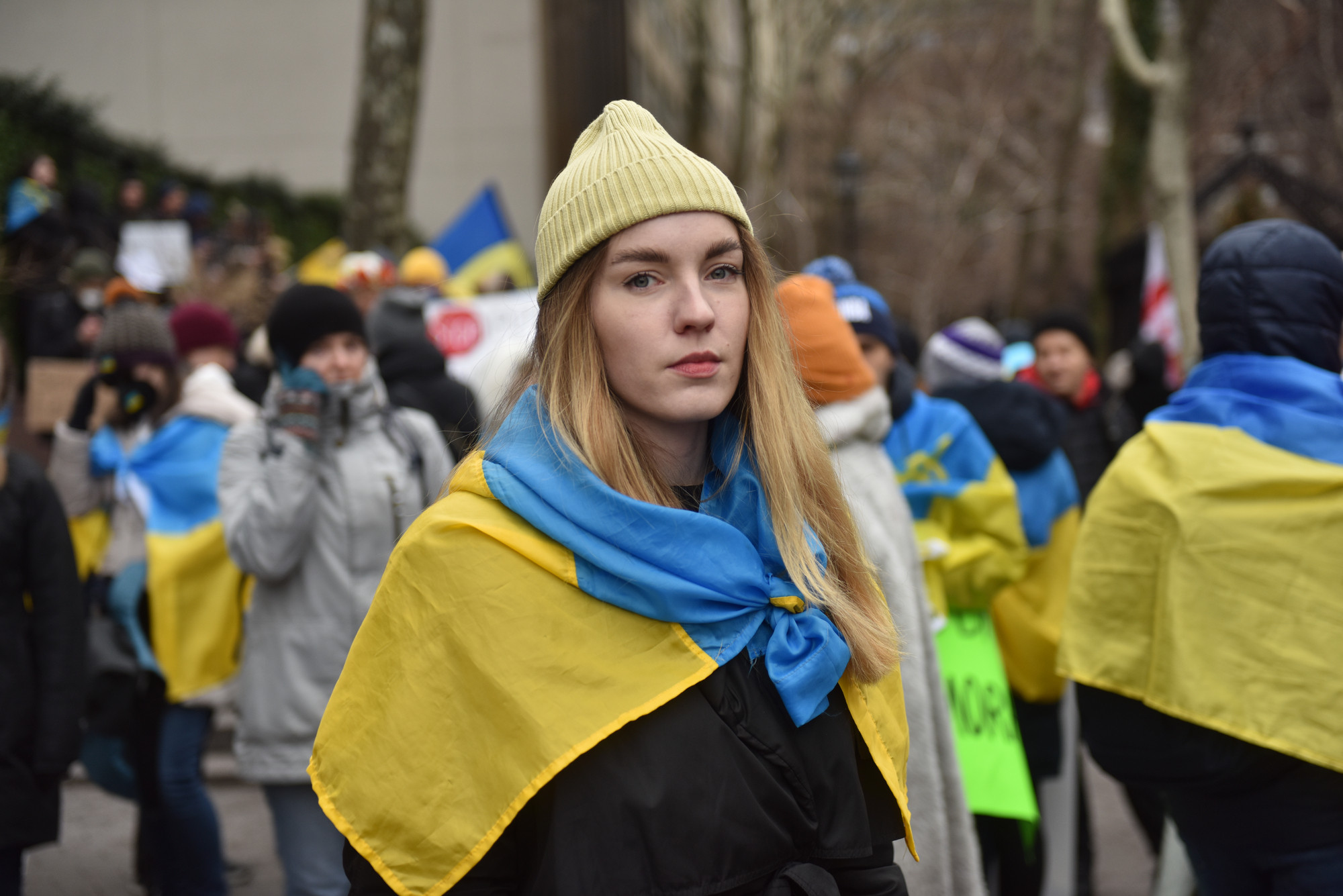
The influx of refugees from Ukraine contributed to more positive views on migration.Photo: JANIFEST, Depositphotos
Most Still Positive. Contact With Migrants Matters
Most responses remain favorable. Respondents more often indicate that immigrants make a positive contribution to society, both in professional and cultural life. The majority also disagree with negative statements, including the view that immigrants are a source of insecurity or abuse the welfare system.
Contact with immigrants is increasing. The report's authors point out that more and more people have contact with immigrants in one or several areas of daily life. Most often, this happens at work, among acquaintances and friends, and in the neighborhood. The contact is usually daily or weekly, and most respondents rate it as mainly positive.
Contact with immigrants is increasing. The report's authors point out that more and more people have contact with immigrants in one or several areas of daily life. Most often, this happens at work, among acquaintances and friends, and in the neighborhood. The contact is usually daily or weekly, and most respondents rate it as mainly positive.
Attitudes differ depending on gender, age, and education level. Women are more likely than men to give more positive answers, and students are more favorable than those who are employed or receiving benefits or pensions. The authors note that any differences in the sample due to non-responses were adjusted using weights based on gender, age, and education.
How do you rate this article?