Violence, threats, and harassment at work. Norwegian report leaves no illusions
One in six people employed in Norway has experienced violence, threats, sexual harassment, or bullying at work in the past 12 months. The data comes from the "2025 Working Environment Living Conditions Survey" prepared by Statistics Norway (SSB). Primary school teachers, care workers, and security personnel are the most at risk.

Healthcare workers are among the professions particularly at risk.
CC0
SSB reports that 17 percent of all employees have experienced such incidents. That’s about 459,000 people. The most commonly reported issues were hate or threats, affecting 9 percent of workers, followed by violence, sexual harassment, and bullying or mobbing. Kristina Strand Støren from SSB points out that the scale of the phenomenon corresponds to one in six working people.
Teachers at risk. Violence in schools is rising
Among primary school teachers, 41 percent reported violence, threats, sexual harassment, or bullying at work. This is one of the highest rates in the survey. SSB states that teachers are among the professional groups particularly vulnerable to such incidents, alongside care and security professions. The results are consistent with previous analyses.
28 percent of primary school teachers experienced violence—the highest rate among all occupational groups. In teaching-related professions, the share of people reporting violence increased from 12 percent in 2022 to 18 percent in 2025. SSB also notes that 11 percent of primary school teachers and healthcare workers experience violence monthly or more often.
28 percent of primary school teachers experienced violence—the highest rate among all occupational groups. In teaching-related professions, the share of people reporting violence increased from 12 percent in 2022 to 18 percent in 2025. SSB also notes that 11 percent of primary school teachers and healthcare workers experience violence monthly or more often.
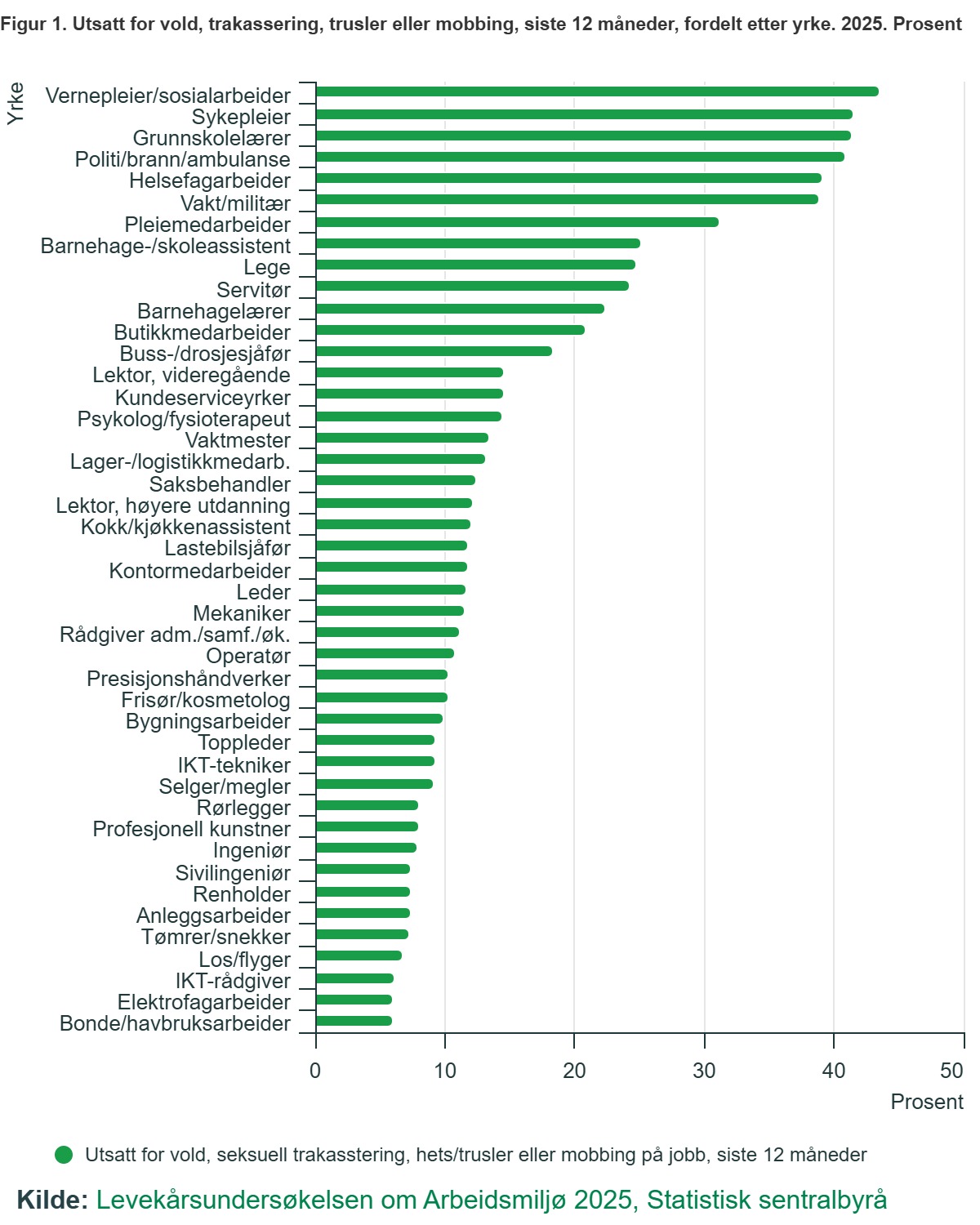
Exposure to violence, harassment, threats, or intimidation in the past 12 months, by profession. 2025.Ill. SSB
Threats target emergency services. Nurses report harassment
The highest levels of hate and threats were recorded among police officers, firefighters, and ambulance workers. More than one-third of them reported such incidents in the past 12 months. In this group, 10 percent experience them monthly or more often, and 5.5 percent indicated that at least one incident was so serious it caused fear. Among security and military personnel, three out of ten employees reported similar experiences.
Sexual harassment was most frequently reported by nurses, affecting 20 percent of people in this group. SSB reports that among security and military personnel, the rate was 18 percent, and among healthcare workers, 16.5 percent. In the combined security professions group, 32 percent of women and 8 percent of men experienced sexual harassment.
Women are more at risk than men. In the past year, 23 percent of employed women and 12 percent of employed men experienced violence, sexual harassment, threats, or bullying. The biggest difference was in sexual harassment, reported by less than 2 percent of men and 9 percent of women.
SSB also points to age differences. Employees aged 18 to 24 are the most at risk, especially for sexual harassment. In this group, 14 percent reported such incidents, and among women aged 18 to 24, the rate was 24 percent.
Sexual harassment was most frequently reported by nurses, affecting 20 percent of people in this group. SSB reports that among security and military personnel, the rate was 18 percent, and among healthcare workers, 16.5 percent. In the combined security professions group, 32 percent of women and 8 percent of men experienced sexual harassment.
Women are more at risk than men. In the past year, 23 percent of employed women and 12 percent of employed men experienced violence, sexual harassment, threats, or bullying. The biggest difference was in sexual harassment, reported by less than 2 percent of men and 9 percent of women.
SSB also points to age differences. Employees aged 18 to 24 are the most at risk, especially for sexual harassment. In this group, 14 percent reported such incidents, and among women aged 18 to 24, the rate was 24 percent.
Perpetrators of violence, threats, and sexual harassment were most often people from outside the workplace. These could be clients, patients, students, or other individuals in contact with employees. In cases of bullying, however, coworkers and supervisors were most often indicated.
How do you rate this article?