The Most Expensive Countries in Europe. Norway Has No Reason to Celebrate
Norway remains one of the most expensive countries in Europe. In 2025, it had the sixth highest prices for households. The gap to the European Union average has increased even further.
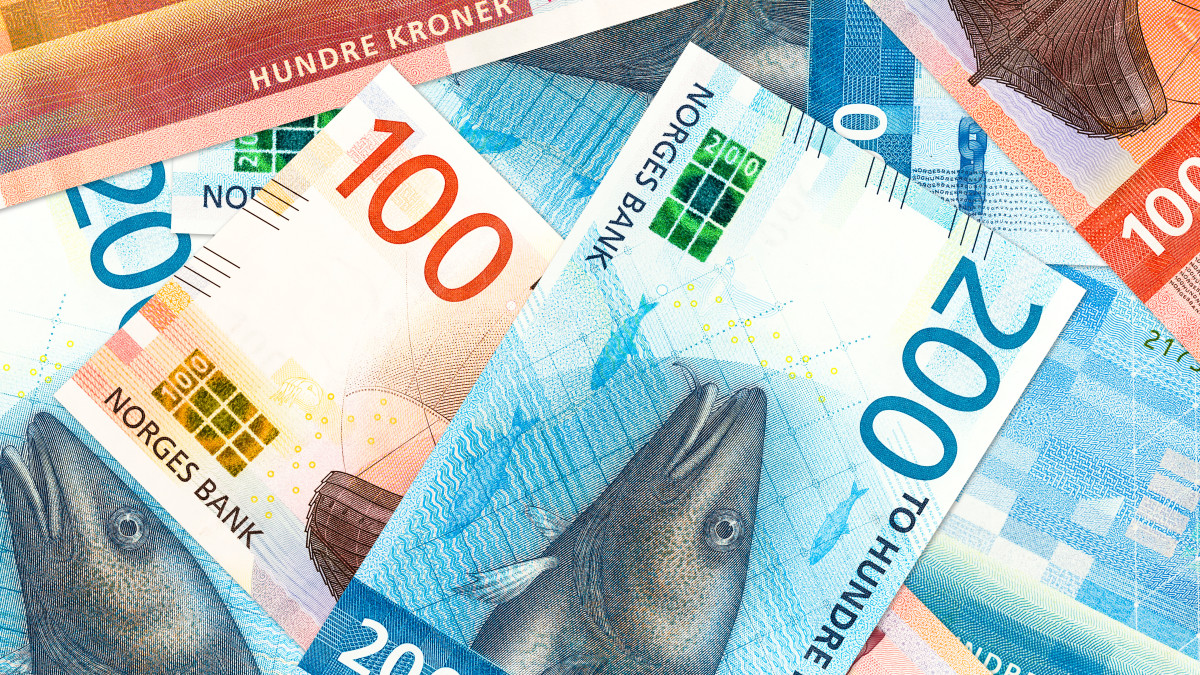
Norway is among the most expensive countries in Europe.
Fot. stock.adobe.com/standardowa/Henning Marquardt
The data was published by the Statistical Office of the European Union (Eurostat) in cooperation with 37 European countries. The report shows the relative price levels in individual countries and in selected groups of goods and services. According to Statistics Norway (SSB), prices in Norway in 2025 were 28.6% higher than the EU average. The year before, the difference was 27.2%. Espen Kristiansen from SSB pointed out that higher inflation than in EU countries and the strengthening of the NOK had an impact.
Norway Still High. There’s a Huge Gap Between Countries
Norway maintained its sixth place. It held the same position in the previous two years as well. According to Eurostat, countries ranked higher include Iceland, Switzerland, Denmark, Ireland, and Luxembourg. Iceland has overtaken Switzerland.
In Iceland and Switzerland, prices are more than 70% higher than the EU average. In Denmark, it’s about 40% more expensive. SSB points out that Iceland recorded a strong increase in its index, partly due to inflation at 3.7% and a stronger Icelandic krona. In Switzerland, the impact was due to very low inflation, at just 0.1%.
Sweden has narrowed the gap with Norway. In 2024, prices there were on average about 8.5% lower than in Norway. In 2025, the difference dropped to just under 6%. The price level in Sweden rose from just over 16% above the EU average to 21%.
SSB links this increase, among other things, to the strengthening of the Swedish krona. This was a more significant change than in Norway. In the entire ranking, 14 out of 36 countries had price levels above the average. The United Kingdom will provide data later and is not included in the current preliminary results.
In Iceland and Switzerland, prices are more than 70% higher than the EU average. In Denmark, it’s about 40% more expensive. SSB points out that Iceland recorded a strong increase in its index, partly due to inflation at 3.7% and a stronger Icelandic krona. In Switzerland, the impact was due to very low inflation, at just 0.1%.
Sweden has narrowed the gap with Norway. In 2024, prices there were on average about 8.5% lower than in Norway. In 2025, the difference dropped to just under 6%. The price level in Sweden rose from just over 16% above the EU average to 21%.
SSB links this increase, among other things, to the strengthening of the Swedish krona. This was a more significant change than in Norway. In the entire ranking, 14 out of 36 countries had price levels above the average. The United Kingdom will provide data later and is not included in the current preliminary results.
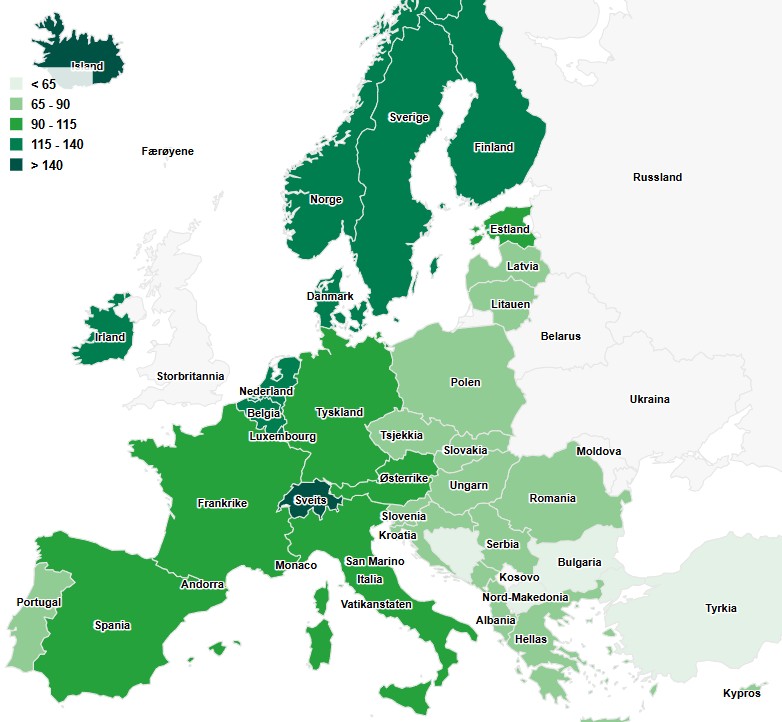
Overall price level in Europe in 2025.Ill. SSB
Cheaper in the South. The Balkans Are the Cheapest in Europe
The cheapest country in the ranking is North Macedonia. Its price level is just above half the EU average. The difference between North Macedonia and Norway is 57%, the same as in 2024. The second cheapest country is Bosnia and Herzegovina, but its price level is 7.5% higher than in North Macedonia.
Turkey no longer has the lowest prices. It remains inexpensive compared to the rest of Europe, but a sharp price increase in the country, amounting to 35% in 2025, has raised its position in the ranking. Its price level is about 60% of the EU average, the third lowest result in the ranking.
Alcohol and tobacco are particularly expensive in Norway. Their prices are more than twice the EU average. SSB points out that high excise taxes play a major role. However, prices are even higher in Iceland, where these products are almost 12% more expensive than in Norway.
Food and non-alcoholic beverages are also expensive. In Norway, they cost 33% more than the EU average. However, Switzerland and Iceland have food and beverage prices almost 15% higher than Norway. Grocery shopping in Sweden is about 17.5% cheaper for Norwegians, and in Denmark almost 10% cheaper.
Turkey no longer has the lowest prices. It remains inexpensive compared to the rest of Europe, but a sharp price increase in the country, amounting to 35% in 2025, has raised its position in the ranking. Its price level is about 60% of the EU average, the third lowest result in the ranking.
Alcohol and tobacco are particularly expensive in Norway. Their prices are more than twice the EU average. SSB points out that high excise taxes play a major role. However, prices are even higher in Iceland, where these products are almost 12% more expensive than in Norway.
Food and non-alcoholic beverages are also expensive. In Norway, they cost 33% more than the EU average. However, Switzerland and Iceland have food and beverage prices almost 15% higher than Norway. Grocery shopping in Sweden is about 17.5% cheaper for Norwegians, and in Denmark almost 10% cheaper.
One category in Norway stands out from most of the market. Electricity for households remains cheaper than the European average. According to SSB, its price level is almost half of what the average European consumer pays.
How do you rate this article?