Norwegian inflation on the rise. Residents have little reason to be pleased
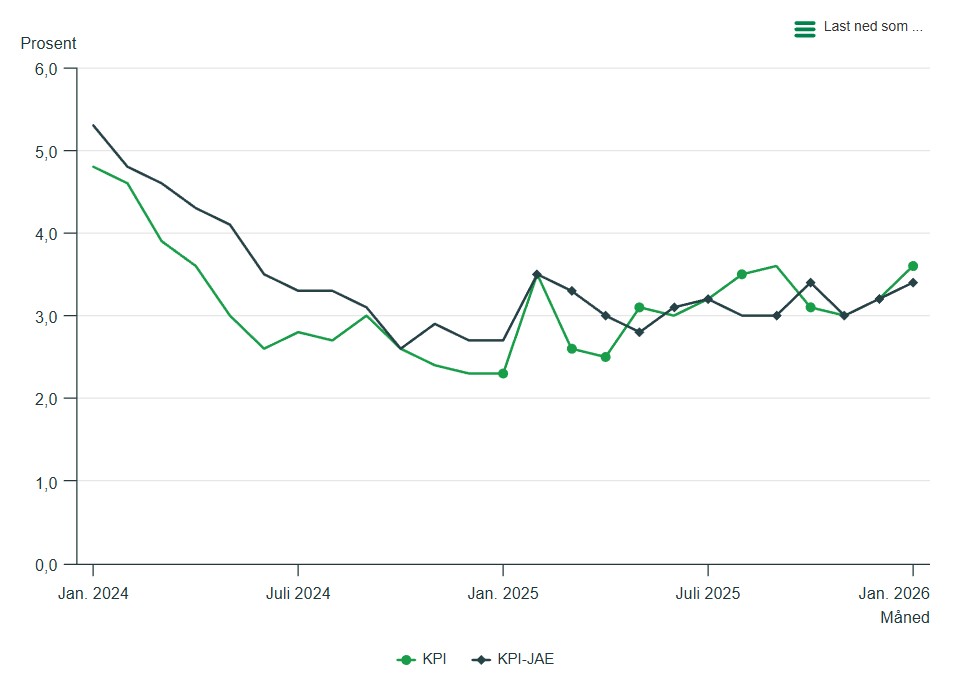
The inflation rate (CPI) rose to 3.6 percent year-on-year in January 2026. The pace of growth was higher than in December. The data was influenced by rents, car prices, and energy. Part of the increase was limited by food prices.

January's CPI reading showed an acceleration in price growth.
Fot. Wygenerowano przy pomocy AI
The annual growth rate was 0.4 percentage points higher than in December. The data was published by Statistics Norway (SSB). The CPI-JAE index, which is the consumer price index excluding energy and adjusted for tax changes, reached 3.4 percent.
Rents and energy as main drivers of growth
Rents increased by 0.6 percent in January. This was a larger rise than in the same period last year. Year-on-year, rents were 3.8 percent higher. The changes were related to indexation and rising costs for landlords.
January remains the month of annual rent adjustments. This results from regulations allowing increases in line with the CPI. From 2026, rents have a greater impact on the calculation of the price index. The adjustment is based on updated national accounts data.
The index was also pushed up by electricity prices. Electricity, including grid fees, rose by 5.0 percent compared to December and was 9.4 percent more expensive in January than a year earlier.
January remains the month of annual rent adjustments. This results from regulations allowing increases in line with the CPI. From 2026, rents have a greater impact on the calculation of the price index. The adjustment is based on updated national accounts data.
The index was also pushed up by electricity prices. Electricity, including grid fees, rose by 5.0 percent compared to December and was 9.4 percent more expensive in January than a year earlier.
Ill. SSB
Cars, services, and tax changes
Car prices rose by 3.5 percent compared to December. This was influenced by changes in the taxation of electric vehicles. Year-on-year, cars were 4.1 percent more expensive. The price increase in this category significantly raised the CPI.
Service prices excluding rents increased by 0.6 percent. Last year, the same period saw a decrease. Year-on-year, services were 4.1 percent more expensive. The strongest increase was seen in insurance, which was 16.6 percent higher than a year ago.
Service prices excluding rents increased by 0.6 percent. Last year, the same period saw a decrease. Year-on-year, services were 4.1 percent more expensive. The strongest increase was seen in insurance, which was 16.6 percent higher than a year ago.
Food slows price growth
Clothing prices fell by 5.5 percent, and air transport prices by 6.9 percent. Smaller declines than last year increased the annual growth rate in these categories.
Food and non-alcoholic beverage prices rose by 1.4 percent month-on-month and by 4.2 percent year-on-year, limiting the overall CPI increase. "We often see food prices rise in January after December offers and holiday promotions. However, this year prices increased less between December and January than last year," emphasizes Espen Kristiansen from SSB.
Food and non-alcoholic beverage prices rose by 1.4 percent month-on-month and by 4.2 percent year-on-year, limiting the overall CPI increase. "We often see food prices rise in January after December offers and holiday promotions. However, this year prices increased less between December and January than last year," emphasizes Espen Kristiansen from SSB.
The increase in energy prices affected all price zones.Photo generated with AI
Price changes were visible in many groups of goods and services. The data shows that the pace of price changes in January varied between categories and depended on several parallel factors. Subsequent readings will show whether the elevated pace of price growth will continue in the coming months. Among other things, Norges Bank's decision on interest rates depends on these statistics.
How do you rate this article?