Climate is changing Norwegians' lives. Report shows who pays the highest price
A new report from the Norwegian Institute of Public Health indicates that climate change is deepening social inequalities in Norway. Those most affected are people with low incomes, seniors, and people with disabilities.
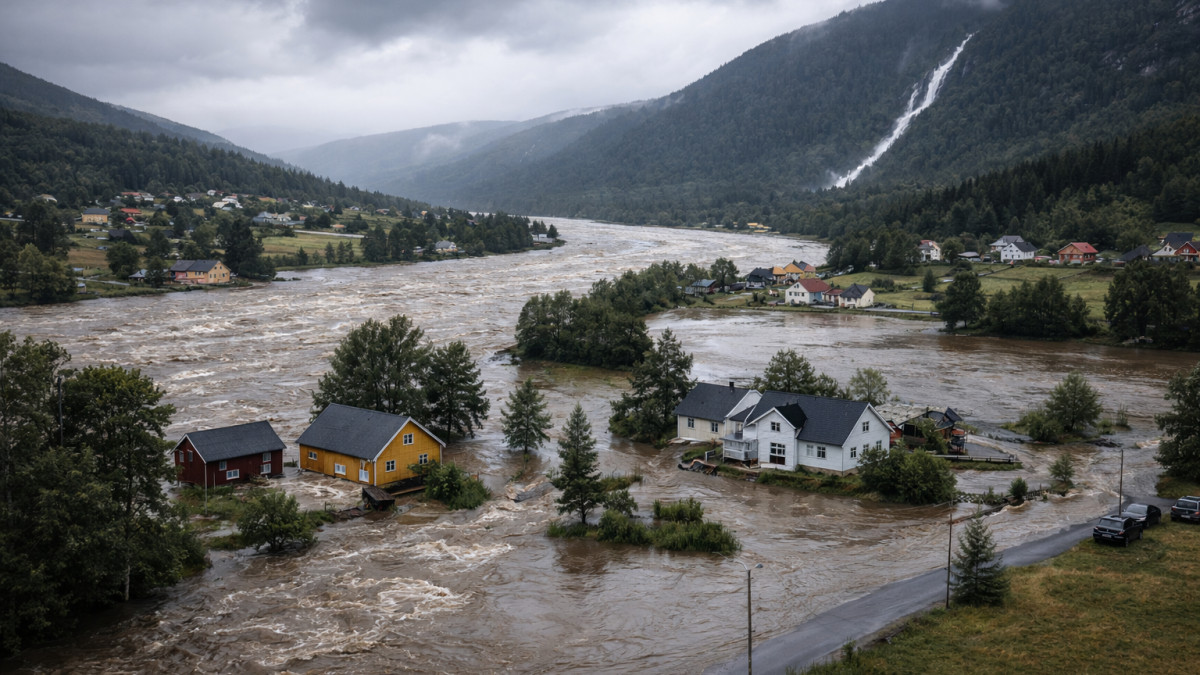
Floods hit neighborhoods inhabited by lower-income people the hardest.
Fot. Wygenerowano przy pomocy AI
The document was prepared at the request of the Directorate for Children, Youth and Family Affairs and the Norwegian Environment Agency. The analysis concerns the effects of heatwaves, floods, and storms. It points to the uneven distribution of social impacts. The organization "The Future in Our Hands" has commented on the report's findings.
Climate change and social exclusion
The Norwegian Institute of Public Health report shows that extreme weather events do not affect everyone equally. Those most at risk are people with low incomes. They are more likely to live in areas prone to flooding. They also have limited resources to protect their property.
Seniors and people with disabilities are particularly vulnerable. Heatwaves increase the risk of health problems. Limited mobility makes it harder to respond to sudden events. Lack of access to information exacerbates the scale of threats.
Seniors and people with disabilities are particularly vulnerable. Heatwaves increase the risk of health problems. Limited mobility makes it harder to respond to sudden events. Lack of access to information exacerbates the scale of threats.
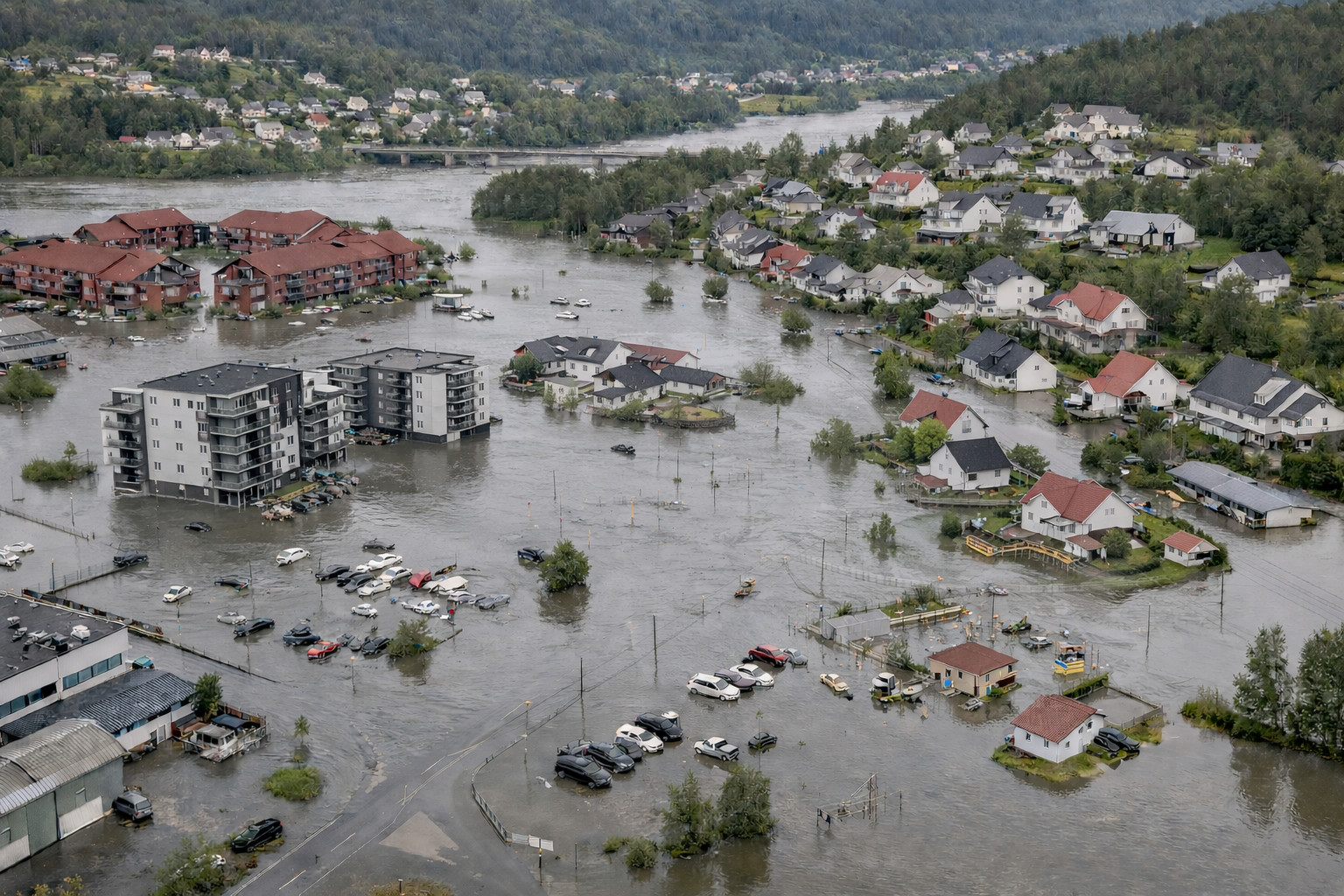
Extreme weather events are becoming more frequent.Photo generated with AI
The voice of social organizations
The organization "The Future in Our Hands" considers the document as confirmation of previous observations. Its chairwoman, Tale Hungnes, points to the close link between climate policy and social policy. According to the organization, the effects of the climate crisis are systemic. They concern both safety and public health.
It was noted that those least responsible for emissions bear the greatest consequences of extreme weather. Limited financial resources reduce the ability to respond to threats. Insufficient adaptation measures deepen existing social disparities. The problem is growing as weather events intensify.
It was noted that those least responsible for emissions bear the greatest consequences of extreme weather. Limited financial resources reduce the ability to respond to threats. Insufficient adaptation measures deepen existing social disparities. The problem is growing as weather events intensify.
The report's findings are to be included in the national climate vulnerability analysis, scheduled for publication in 2026. The document will indicate directions for further adaptation measures. Social organizations expect that social aspects will also be taken into account. This is important in the context of increasingly frequent extreme weather events. The results of the report serve as a reference point for future administrative decisions.
You can find the link to the report >>HERE<<<.
You can find the link to the report >>HERE<<<.
How do you rate this article?