Benefits for Migrants in Norway. Officials Present Concrete Figures
More than half of newly arrived refugees in Norway rely on social assistance. The data reveals the scale of support during the first years of residence. A detailed report was presented by the Central Bureau of Statistics in cooperation with the Ministry of Labour and Social Inclusion.
The data shows in detail what percentage of migrants receive benefits in Norway.
Fot. Fotolia (zdjęcie poglądowe)
The number of people receiving social assistance in Norway has clearly increased over the past decade. In 2024, 161,000 people aged 18–66 received benefits. This is an increase of over 30 percent compared to 2014. A large part of this growth concerns migrants, especially refugees.
Migrants Increasingly in the Support System
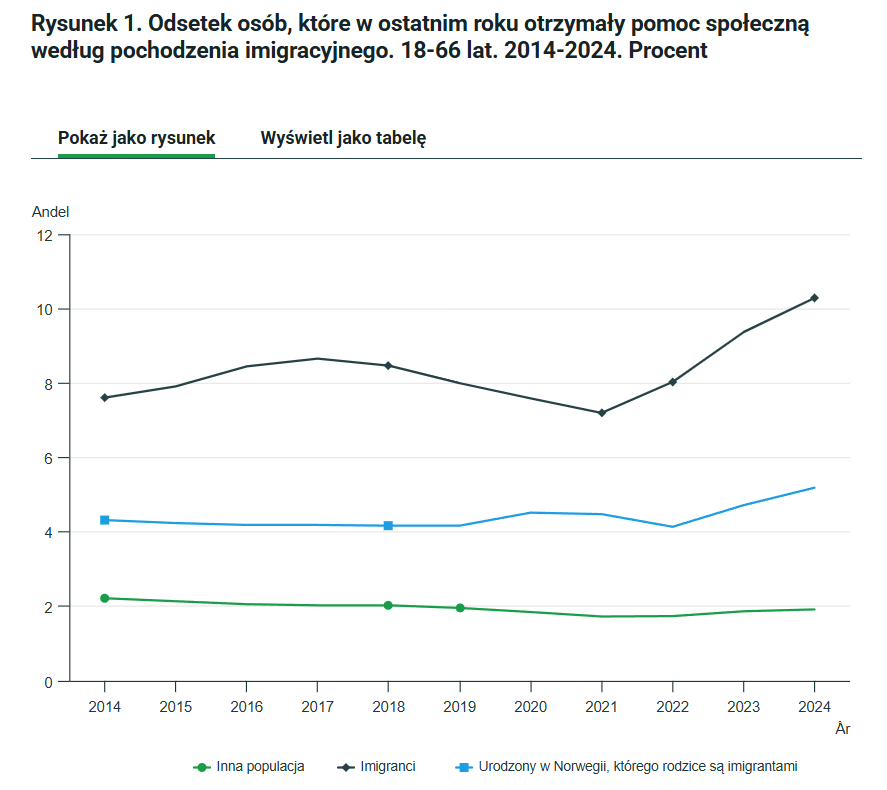
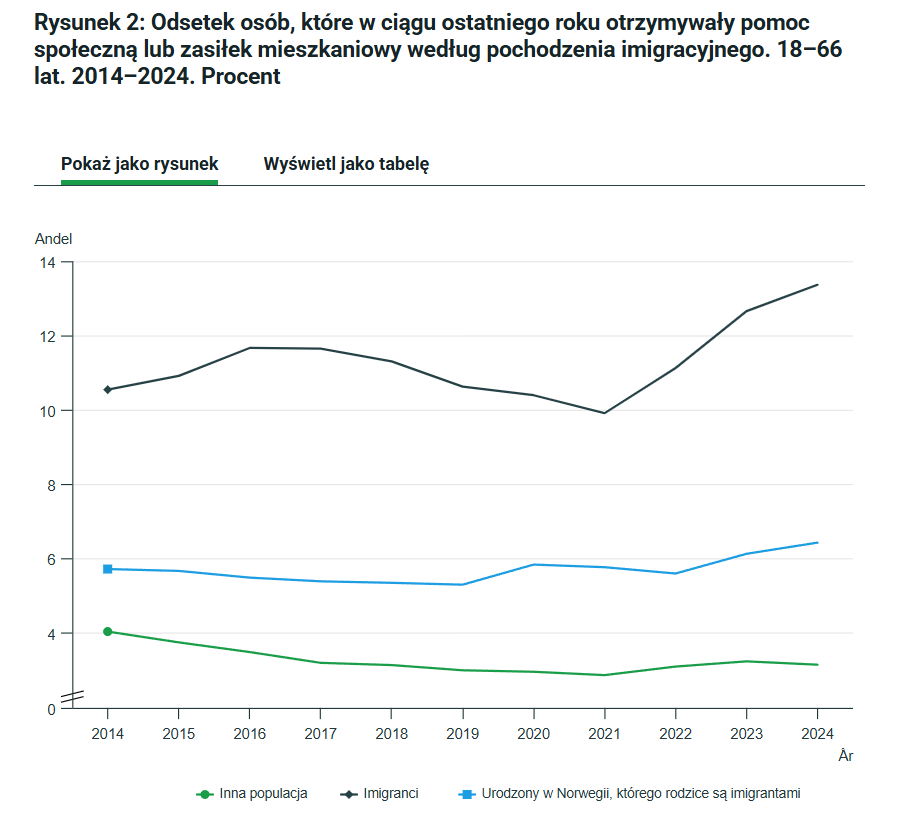
Between 2014 and 2024, the percentage of migrants receiving social assistance rose from 8 to 10 percent. During the same period, their share of the 18–66 age group increased from 16 to 23 percent. In 2024, 13 percent of migrants received social assistance or a housing supplement.
Among people born in Norway to migrant parents, the percentage of beneficiaries rose from 4 to 5 percent. This is still clearly lower than among the broader group of immigrants. In the rest of the population, the share of people using assistance remained stable at around 2 percent.
Among people born in Norway to migrant parents, the percentage of beneficiaries rose from 4 to 5 percent. This is still clearly lower than among the broader group of immigrants. In the rest of the population, the share of people using assistance remained stable at around 2 percent.
Ill. SSB
Three Quarters of Expenditures Go to Immigrants
Total spending on social assistance for people aged 18–66 remained relatively stable until 2022. In 2024, there was a marked increase. Payouts reached NOK 11.6 billion.
The structure of expenditures has changed. In 2014, immigrants received about half of the funds. By 2024, their share had risen to 74 percent. The share of people born in Norway to immigrant parents also increased, from about 1 to 2 percent.
The structure of expenditures has changed. In 2014, immigrants received about half of the funds. By 2024, their share had risen to 74 percent. The share of people born in Norway to immigrant parents also increased, from about 1 to 2 percent.
Higher Amounts for Migrants
The median amount of social assistance for migrants has increased in recent years. In 2024, it reached NOK 61,000. In the previous decade, it hovered around NOK 50,000.
For the rest of the population, the median fell. In 2014, it was NOK 26,000, and in 2024, NOK 22,000. One factor behind the increase in spending among migrants is the longer duration of benefit receipt.
For the rest of the population, the median fell. In 2014, it was NOK 26,000, and in 2024, NOK 22,000. One factor behind the increase in spending among migrants is the longer duration of benefit receipt.
Ill. SSB
Refugees Most Dependent on Assistance
In 2024, 31 percent of refugees aged 18–66 received social assistance. This is clearly more than in other immigrant groups. Among labor migrants, the percentage was 2 percent, and among family migrants, 7 percent.
Even when including the housing supplement, the differences remain significant. Refugees are decidedly overrepresented among benefit recipients.
Even when including the housing supplement, the differences remain significant. Refugees are decidedly overrepresented among benefit recipients.
Syria and Ukraine at the Center of Statistics
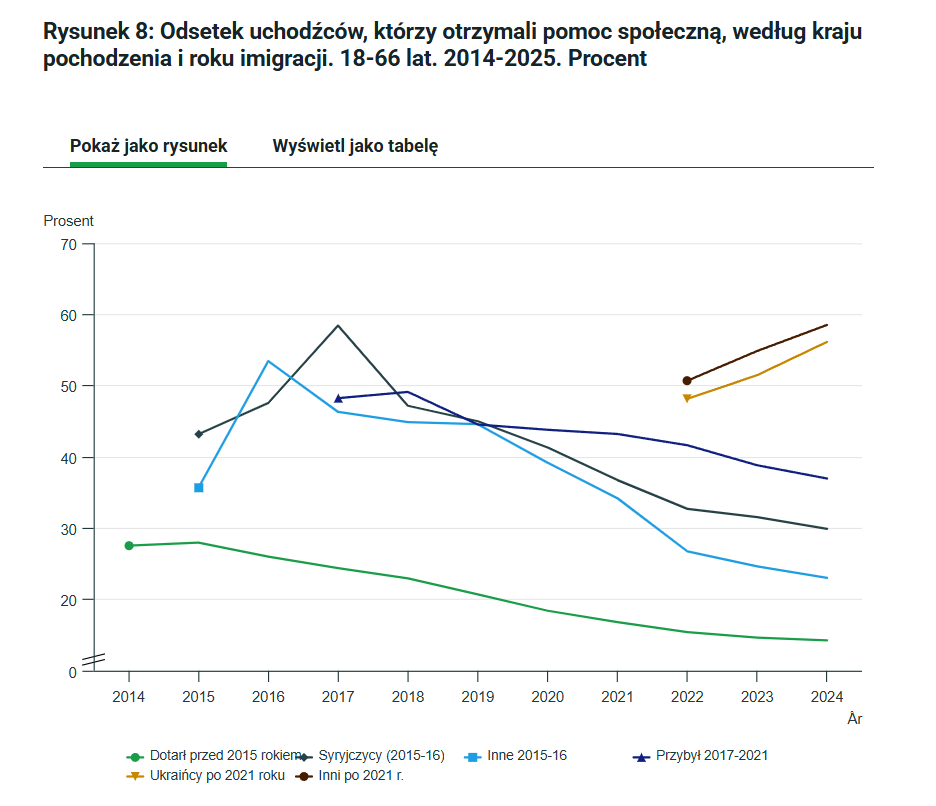
The largest waves of refugees occurred in 2015–2016 and after 2021. Refugees from Ukraine, covered by temporary protection, in 2024 received social assistance in almost 60 percent of cases. A similar level was recorded at the peak of the influx of refugees from Syria.
Officials point out, however, that the percentage of beneficiaries decreases with the length of stay. Among refugees who arrived before 2015, 14 percent received social assistance in 2024. This is still higher than in other groups.
Officials point out, however, that the percentage of beneficiaries decreases with the length of stay. Among refugees who arrived before 2015, 14 percent received social assistance in 2024. This is still higher than in other groups.
Ill. SSB
Highest Rates Among Single Parents
Refugees who are single parents are the most frequent recipients of assistance. In 2024, over 70 percent of single parents who arrived after 2021 received social assistance. High rates also apply to people living alone.
The data also shows that many refugees combine social assistance with other benefits. Some simultaneously use the integration program, housing supplement, or other forms of support.
The data also shows that many refugees combine social assistance with other benefits. Some simultaneously use the integration program, housing supplement, or other forms of support.
How do you rate this article?