Update on hantavirus outbreak on cruise ship. Risk to European residents assessed as very low
European and international public health institutions continue to monitor the hantavirus outbreak detected on board the Dutch cruise ship Hondius.
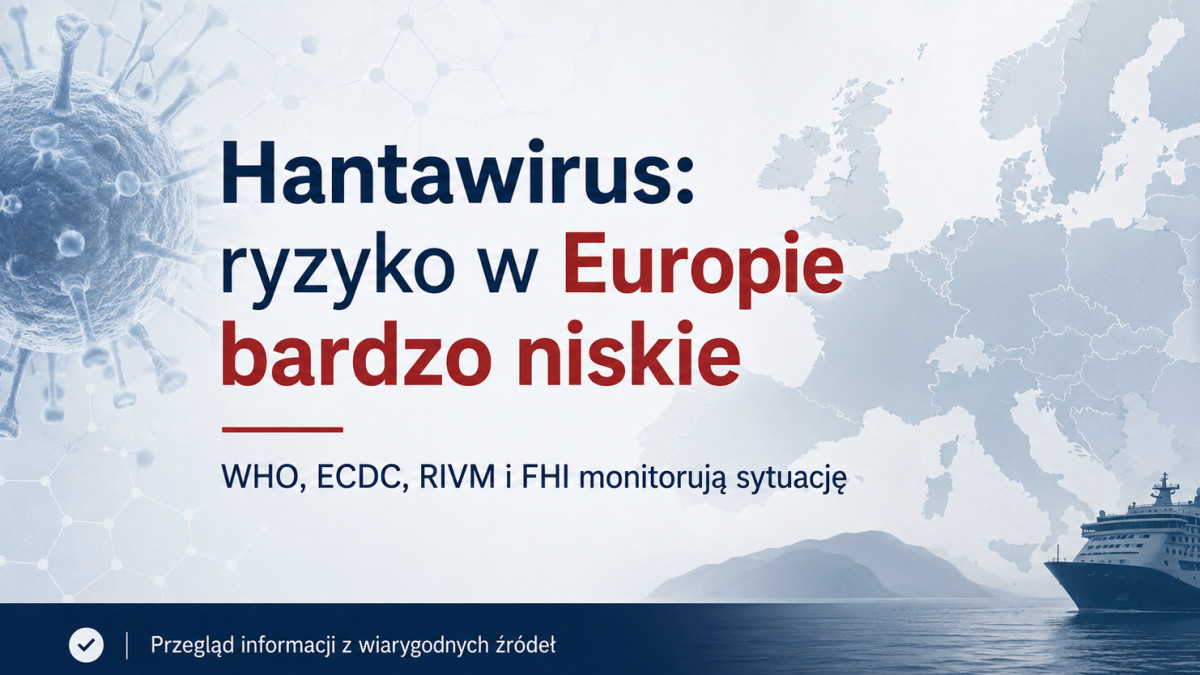
Hantavirus on a cruise ship
MojaNorwegia
We already reported on this issue yesterday in the article: Stewardess hospitalized after contact with hantavirus. Should Europeans be concerned?
According to the ECDC, the virus has been identified as Andes hantavirus — a variant mainly found in North and South America.
Seven symptomatic cases, three deaths
According to the latest ECDC data, as of May 7, seven people have developed symptoms of the disease. Three people have died.
Some patients experienced rapid deterioration of health, including pneumonia, acute respiratory failure, and shock.
Authorities reassure: risk is very low
The ECDC emphasizes that the current risk to the general population of the EU/EEA is assessed as very low.
Andes hantavirus can, in rare cases, be transmitted between humans, but—as indicated by the ECDC and RIVM—this usually requires very close and prolonged contact.
How does infection occur?
The main route of hantavirus infection remains contact with the excreta of infected rodents, for example, by inhaling contaminated dust.
Therefore, preventive recommendations mainly concern avoiding contact with rodent droppings, urine, and saliva, as well as exercising caution when cleaning areas where mice or rats may have been present.
New information from the Netherlands
On May 8, the RIVM reported that three symptomatic individuals tested for Andes virus received negative results.
This means that, at this time, infection with this virus has not been confirmed in these individuals.
What does the Norwegian FHI say?
The Norwegian FHI reminds that hantaviruses found in Europe, including variants present in Scandinavia, are primarily associated with rodents.
FHI also notes that European hantaviruses are not transmitted from person to person.
Authorities are monitoring the situation
At this time, health authorities are conducting epidemiological investigations and preventive measures.
MojaNorwegia presents information available from official sources. The topic will be updated if WHO, ECDC, RIVM, or FHI publish new statements.
Sources: WHO, ECDC, RIVM, FHI.
How do you rate this article?