Such a January hasn't happened in years. Cold records broken in Norway
December was warm, but January brought a sudden change in weather across Scandinavia. Norwegian meteorologists have just reported the end of an almost two-year streak of record-high temperatures. Residents in the north had to face conditions not seen in over a decade.
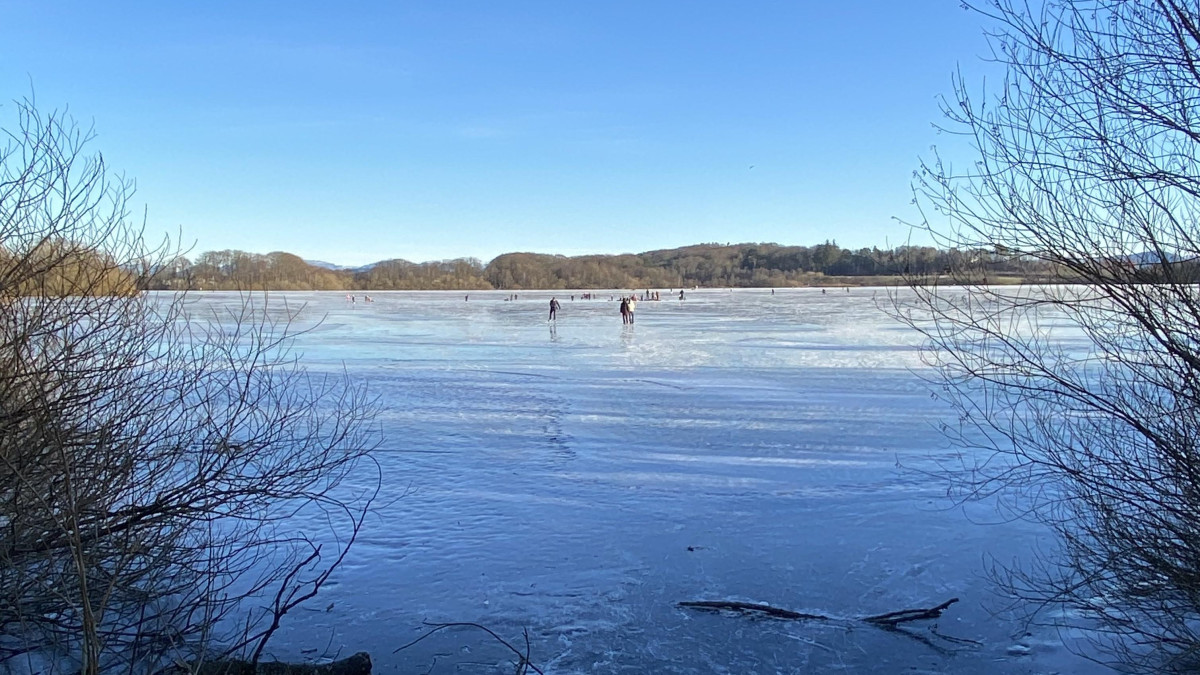
For most of January, western Norway was cold, clear, and dry. In the photo: Lake Mosvannet in Stavanger.
Fot. Anne-Gerd Rosnes, za: Instytut Meteorologiczny
The beginning of 2026 turned out to be exceptionally harsh for Norway's residents. Instead of another warm anomaly, mercury levels dropped well below the long-term average. Experts from the Meteorological Institute point out that the phenomenon was caused by specific air masses coming in from the east. It turns out that the 20-month series of above-average temperatures has been broken.
Winter shows its face. Historic cold records broken
January 2026 was officially recognized as the coldest such month in Norway since 2010. The average temperature across the country was 4.4 degrees Celsius below normal. Conditions were especially harsh around Karasjok, which saw its coldest January since 1976.
Extreme cold is confirmed by data from measurement stations. The lowest temperature of the month, -41.5 degrees Celsius, was recorded on January 11 in Karasjok. In Folldal, a local station record was set with -39.3 degrees. In total, 35 new monthly minimum temperature records were set across the country.
Extreme cold is confirmed by data from measurement stations. The lowest temperature of the month, -41.5 degrees Celsius, was recorded on January 11 in Karasjok. In Folldal, a local station record was set with -39.3 degrees. In total, 35 new monthly minimum temperature records were set across the country.
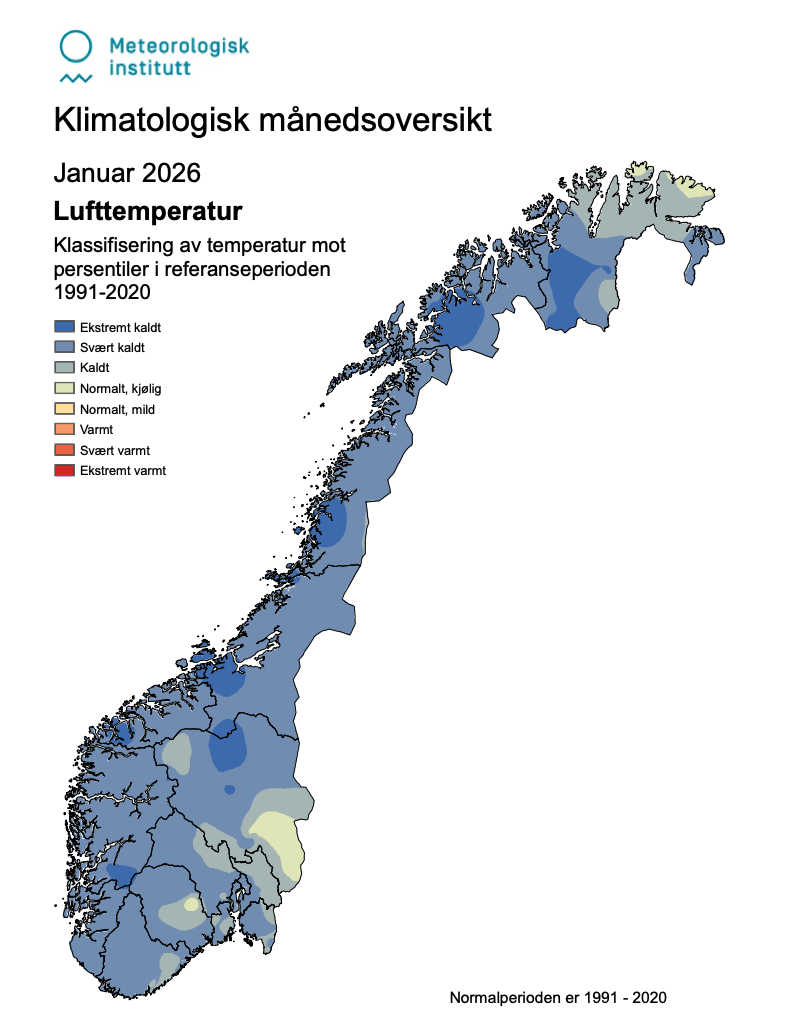
January temperature classification in percentiles for the period 1991–2020. The darkest shade of blue indicates extreme cold.Ill. Lars Grinde, Meteorological Institute
Precipitation was rare. The climate is still warming
The frosty weather was accompanied by an exceptional drought that affected most of Norway. It was the ninth driest January since systematic measurements began in 1901. Precipitation was 50 percent lower than usual, and snow cover in many places was thinner than normal.
Climate researcher Jostein Mamen strongly emphasizes, however, that one cold month does not negate the fact of global warming. Long-term trends still point to rising average temperatures worldwide, and cold spells will become less frequent. In contrast to the mainland, the Arctic archipelago of Svalbard saw a January that was 3.8 degrees warmer than normal.
Climate researcher Jostein Mamen strongly emphasizes, however, that one cold month does not negate the fact of global warming. Long-term trends still point to rising average temperatures worldwide, and cold spells will become less frequent. In contrast to the mainland, the Arctic archipelago of Svalbard saw a January that was 3.8 degrees warmer than normal.
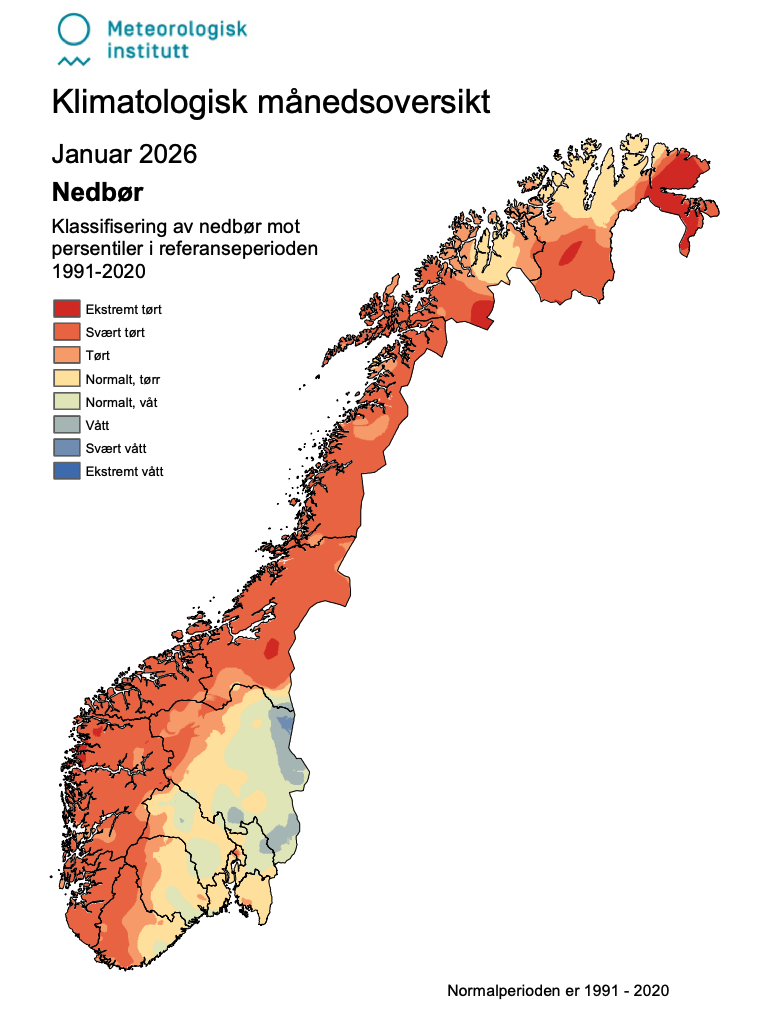
Classification of atmospheric precipitation in percentiles for the period 1991–2020. The darkest shade of red indicates extreme drought.Ill. Lars Grinde, Meteorological Institute
Extreme frosts will occur less frequently in the future and will statistically be less severe than in the pre-industrial era. However, January 2026 will remain in the statistics as an exceptionally cold and dry month. Climate change does not mean the complete disappearance of harsh winters in our part of the world.
How do you rate this article?