Oil Prices Surge Sharply. Tankers Turn Back in the Red Sea
The price of Brent crude oil exceeded $100 per barrel on Thursday. Around 4 p.m., it stood at $100.5, marking a 7.3 percent increase since midnight. The surge was driven by escalating tensions in the Middle East.
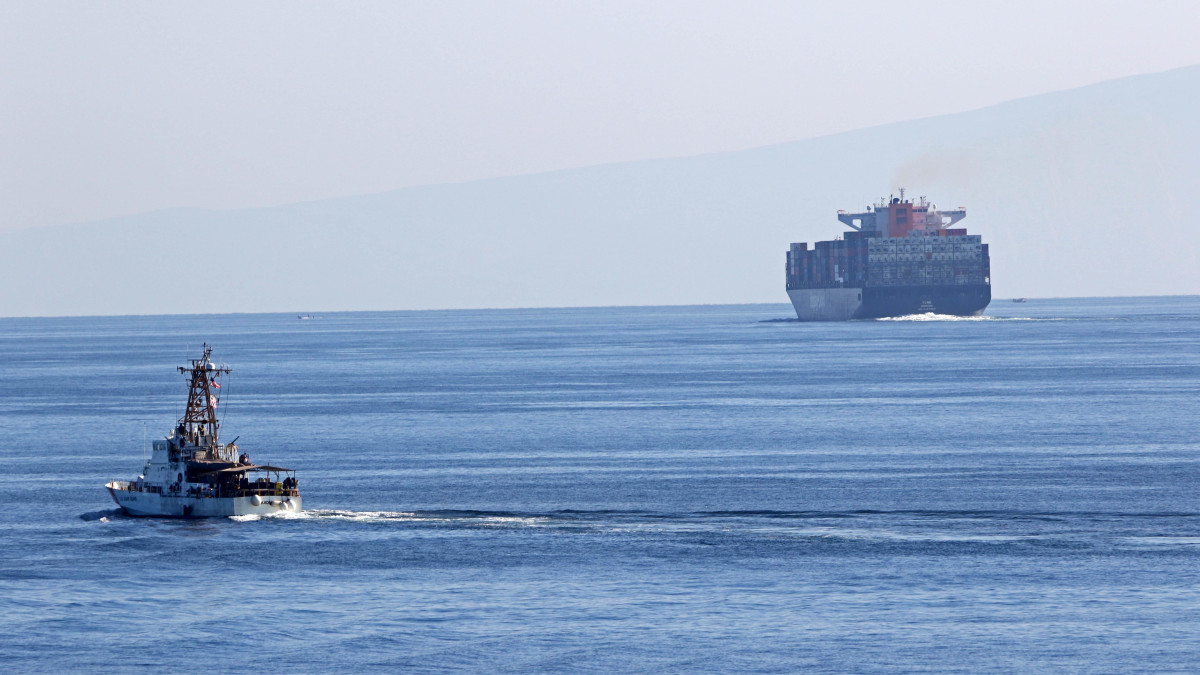
The situation in the Strait of Hormuz is analyzed almost daily by commodity market experts.
Fot. MC2 Indra Beaufort, Public domain, via Wikimedia Commons
This is the first time since May 2026 that prices have reached this level. At the end of February, before the United States and Israel attacked Iran, oil was trading at around $73 per barrel. Afterwards, prices soared. At their peak following the attacks, they surpassed $119, before dropping to as low as $70.
Oil Prices Rise Again. Stock Markets React with Declines
The last time oil approached $100 was on May 26. Afterwards, prices steadily declined, but July's attacks and rising regional tensions reversed the trend. On Thursday, the increase accelerated significantly. Data from Infront showed the psychological barrier of $100 being breached.
Higher oil prices also impacted stock markets. Exchanges in Europe and the United States recorded significant declines as investors reacted to the risk of supply disruptions. The Oslo stock exchange behaved differently, with its index—supported by oil companies—rising by nearly 1 percent.
Higher oil prices also impacted stock markets. Exchanges in Europe and the United States recorded significant declines as investors reacted to the risk of supply disruptions. The Oslo stock exchange behaved differently, with its index—supported by oil companies—rising by nearly 1 percent.

Higher commodity prices mean, among other things, increased fuel prices.Photo: Pexels
Straits Under Pressure. Tankers Change Course
On Monday, Yemen's Houthi militia announced an immediate maritime blockade targeting Saudi Arabia in the Bab al-Mandab Strait area. This is a key route connecting the Red Sea with the Gulf of Aden, also used for transporting oil from Saudi Arabia's western coast. The route serves as an alternative to shipping through the Strait of Hormuz. On Thursday, Iran-backed Houthis attacked two Saudi tankers in the Red Sea.
Daniel Hynes, senior commodity strategist at ANZ Group, called the attack a serious escalation of the conflict. He pointed out that disruption of this route could further limit oil availability on the market. Jorge León from Rystad Energy reported that Saudi Arabia increased exports from the Yanbu port to about 4 million barrels per day in an attempt to bypass the Strait of Hormuz. According to the Financial Times, some tankers carrying Saudi oil turned back this week after receiving radio warnings from the Houthis.
Daniel Hynes, senior commodity strategist at ANZ Group, called the attack a serious escalation of the conflict. He pointed out that disruption of this route could further limit oil availability on the market. Jorge León from Rystad Energy reported that Saudi Arabia increased exports from the Yanbu port to about 4 million barrels per day in an attempt to bypass the Strait of Hormuz. According to the Financial Times, some tankers carrying Saudi oil turned back this week after receiving radio warnings from the Houthis.
The attacks could threaten the four-year ceasefire between the Houthis and Saudi Arabia. In recent weeks, the United States has repeatedly attacked Iran, and Iran has responded by striking American targets in the region. Saudi Arabia has announced it will take all necessary measures to protect shipping in the Red Sea.
How do you rate this article?