Norway Approaches a Turning Point. Oil and Gas Production May Soon Decline
Norwegian oil and gas production is approaching a significant decline. The Norwegian Petroleum Directorate (Sokkeldirektoratet) indicates that without new major discoveries, this change could begin around 2030. In the base scenario, production by 2050 is expected to decrease by more than half.
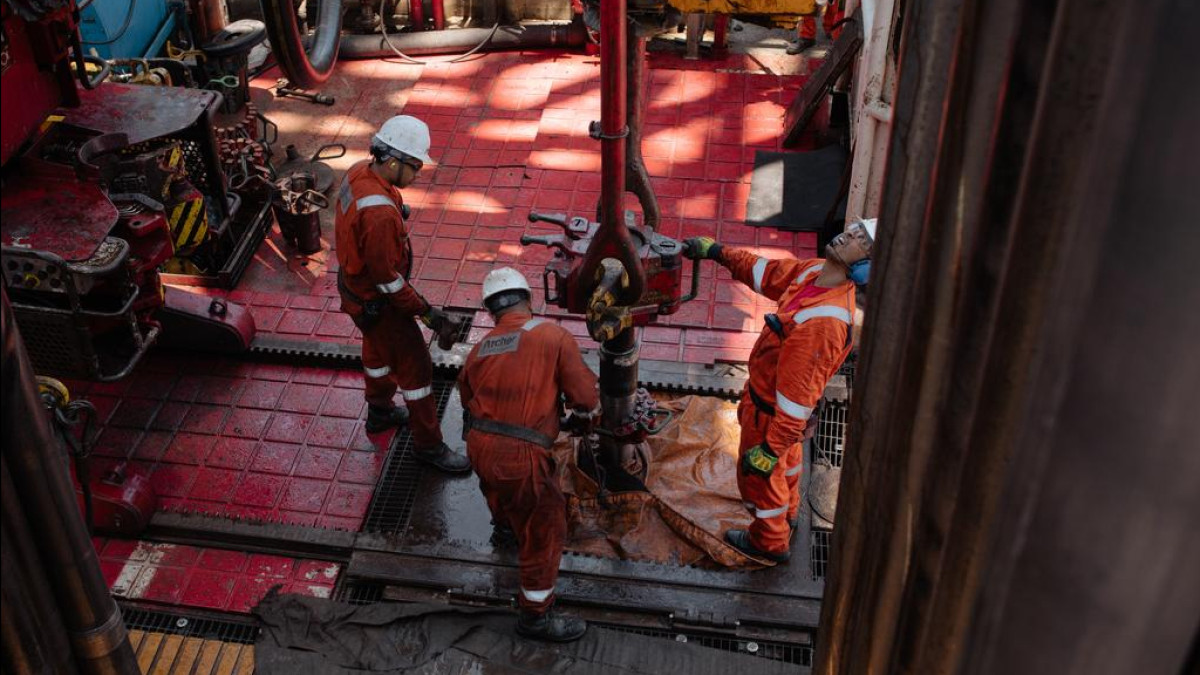
It is becoming increasingly difficult to maintain a situation where the extraction industry is the foundation of the Norwegian economy.
Fot. Ole Jørgen Bratland, materiały prasowe Equinor
The Norwegian continental shelf still holds large reserves. However, the Sokkeldirektoratet reports that over the past ten years, the increase in new resources has been too small to maintain the current scale of production in the long term. Director Torgeir Stordal speaks of a new situation for the industry. According to him, the decline could be postponed by a few years thanks to the rapid development of new fields, but without major discoveries, it cannot be avoided.
The Decline Is Getting Closer. After 2030, Production Will Begin to Weaken
Production on the Norwegian shelf is expected to remain high for the next few years. However, the Sokkeldirektoratet assumes that around 2030, the trend may reverse, with the exact timing depending, among other things, on how quickly new discoveries are brought online. In 2035, oil and gas production may be around 2.8 million barrels per day. The previous year, the production level indicated in the report was 4.1 million barrels per day. Stordal emphasizes that the industry's task will be to limit the pace of this decline.
The differences between possible scenarios are significant. In the base scenario, production in 2050 is expected to be more than half lower, while in the high scenario, it may reach about 65% of the current level. In the low scenario, it could fall to about 5% of today's production. The Sokkeldirektoratet estimates that the difference in present value between the high and low scenarios is NOK 3,200 billion, assuming the same oil and gas prices. The authority points out that the scale of the discrepancy shows the importance of decisions made in the coming years.
The differences between possible scenarios are significant. In the base scenario, production in 2050 is expected to be more than half lower, while in the high scenario, it may reach about 65% of the current level. In the low scenario, it could fall to about 5% of today's production. The Sokkeldirektoratet estimates that the difference in present value between the high and low scenarios is NOK 3,200 billion, assuming the same oil and gas prices. The authority points out that the scale of the discrepancy shows the importance of decisions made in the coming years.
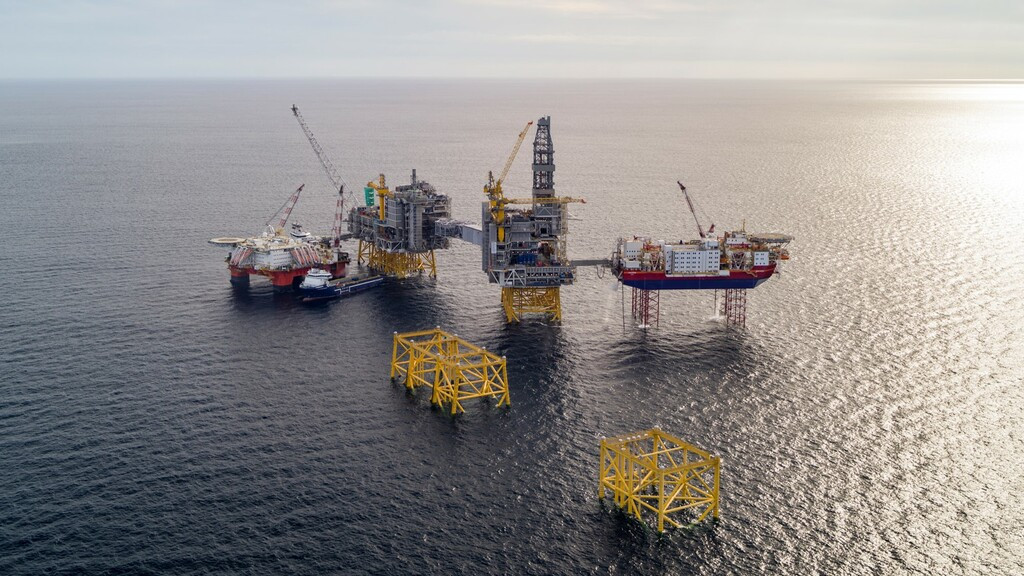
Norway extracts oil and gas faster than it discovers new sources of raw materials.Photo: Equinor press materials
There Are Still Plenty of Resources. New Discoveries Are Coming Too Slowly
Norway has so far extracted about 56 billion barrels of oil and gas. According to the Sokkeldirektoratet, there may still be around 44 billion barrels left in the fields, but roughly half of these resources have not yet been discovered. The problem is the pace at which they are being replenished. In the past ten years, the annual increase in resources has been about 300 million barrels. Meanwhile, current production on the shelf is about 1.5 billion barrels per year.
So far, production has been maintained by large projects such as Johan Sverdrup and Johan Castberg. The Sokkeldirektoratet notes that after 2026, production from large fields such as Troll and Johan Sverdrup is also expected to gradually decline. At the same time, the nature of new investments will change. Instead of large standalone platforms, subsea installations connected to existing infrastructure will play an increasingly important role. According to Stordal, this means greater demand for subsea equipment and less for new platforms.
So far, production has been maintained by large projects such as Johan Sverdrup and Johan Castberg. The Sokkeldirektoratet notes that after 2026, production from large fields such as Troll and Johan Sverdrup is also expected to gradually decline. At the same time, the nature of new investments will change. Instead of large standalone platforms, subsea installations connected to existing infrastructure will play an increasingly important role. According to Stordal, this means greater demand for subsea equipment and less for new platforms.
The Sokkeldirektoratet points to three areas that could slow the pace of decline: further exploration, development of about 90 discovered but unused fields, and increasing production from about 100 operating fields. The sector remains significant, as it directly and indirectly provides 210,000 jobs, and in 2026 is expected to account for 22% of the value created in Norway and 47% of export value. This year's investments in oil and gas are estimated at NOK 275 billion.
How do you rate this article?