More and more children are being born in Norway. New data shows a clear increase
In the first half of 2026, 29,200 children were born in Norway. That's 1,600 more than in the same period of 2025. The data shows the third consecutive year of growth in the number of births.
Although the number of births is rising, it remains at a historically low level.
Fot. adobe stock/licencja standardowa
The number of births began to rise after reaching a temporary low in 2023. New data from Statistics Norway (SSB) shows that this trend continued in the first six months of 2026. The increase is significant. However, SSB senior advisor Espen Andersen points out that fertility remains low from a historical perspective.
More children across the country. No county recorded a decline
Since 2023, the number of births has increased across all six levels of centrality used in the statistics. However, the scale of change was not the same everywhere. In 2026, a slight decrease was recorded in the least centrally located municipalities. Despite this, in the longer term, the number of births has increased in all centrality categories.
Changes are also visible at the fylke (county) level. SSB reports that between the first half of 2025 and 2026, no fylke recorded a decline in the number of births. In Troms, the number remained unchanged. The same was true in Finnmark. In the other fylke, there were more births than a year earlier.
Changes are also visible at the fylke (county) level. SSB reports that between the first half of 2025 and 2026, no fylke recorded a decline in the number of births. In Troms, the number remained unchanged. The same was true in Finnmark. In the other fylke, there were more births than a year earlier.
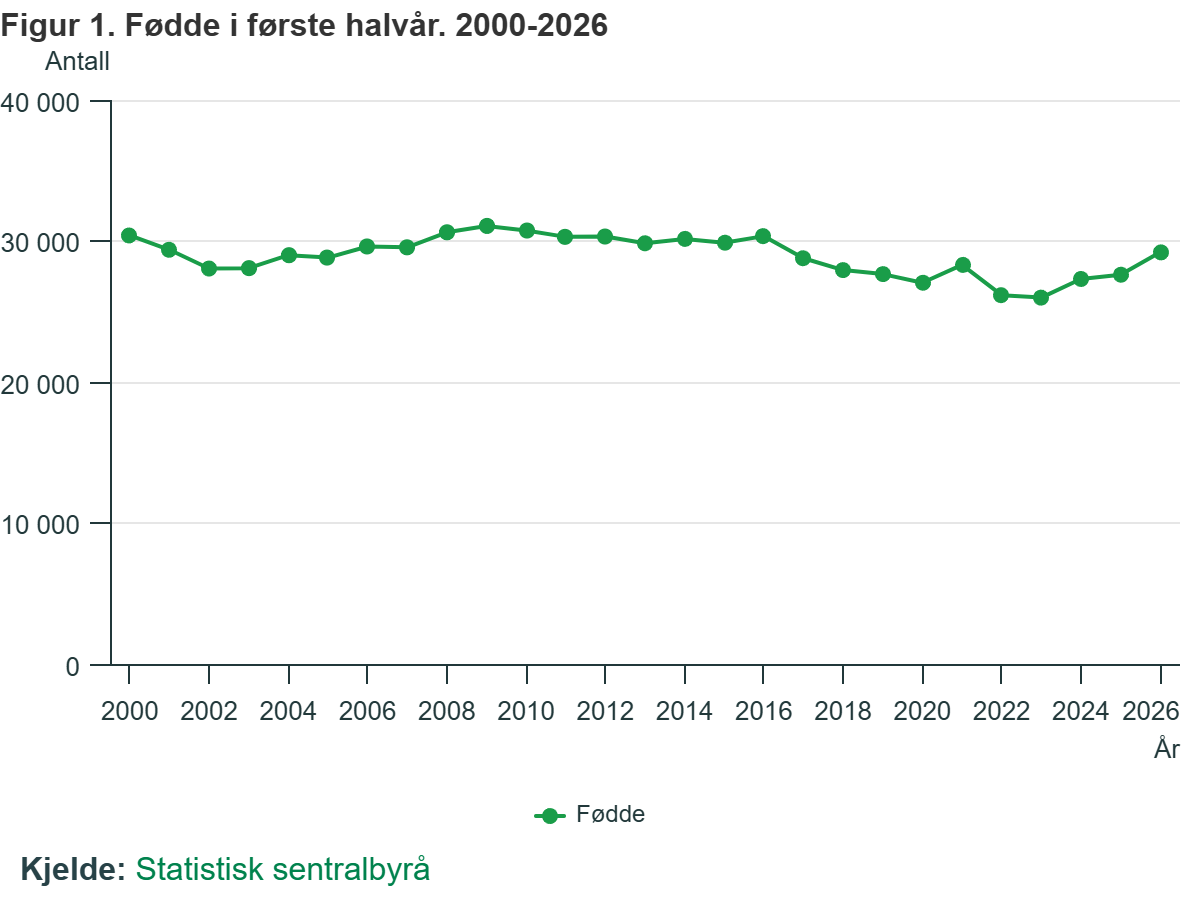
Figure 1. Births in the first half of the year, 2000-2026.Ill. SSB
Population is growing slowly. Migration data has an impact
Despite the higher number of births, Norway's population growth remained low. In the second quarter of 2026, the population increased by 3,100 people. At the end of the quarter, the country had 5,636,900 inhabitants. The result was mainly influenced by migration statistics, which showed negative net migration during this period.
This means that, according to the statistics, more people left Norway than arrived. However, the data requires additional context. In the second quarter, the population register was cleaned up, removing people who had not shown any signs of residing in the country for a long time. SSB points out that many of the departures recorded in this quarter actually took place earlier.
This means that, according to the statistics, more people left Norway than arrived. However, the data requires additional context. In the second quarter, the population register was cleaned up, removing people who had not shown any signs of residing in the country for a long time. SSB points out that many of the departures recorded in this quarter actually took place earlier.
Corrections in the population register therefore affected the picture of population changes in the second quarter. Some of the registered emigration did not concern departures that actually took place during this period. The birth data, on the other hand, show a continuation of the increase that began after 2023.
How do you rate this article?