It Has Never Been This Bad. A Tenfold Decline in 25 Years
In 2025, the lowest salmon catch in the history of Norwegian marine fisheries was recorded. A total of 70 tons of fish were caught, which is 5 tons less than in 2024.
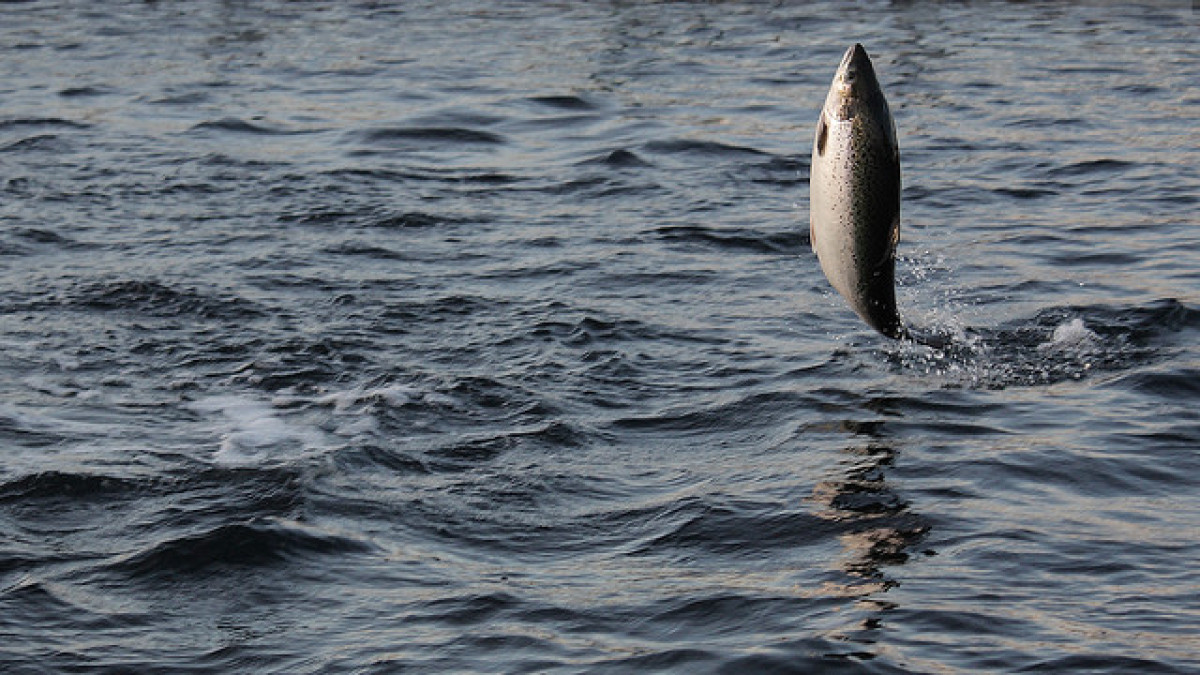
The year 2025 saw the lowest salmon catch in the history of Norwegian marine fisheries.
Fot. flickr.com/Thomas Bjørkan
In 2001, almost ten times more salmon were caught at sea than in 2025. Since then, annual catches have steadily declined.
The Norwegian salmon population has reached a historically low level. The influx of fish into rivers has clearly decreased in recent years. These are the findings presented by the Scientific Council for Salmon Conservation and Management.
The Norwegian salmon population has reached a historically low level. The influx of fish into rivers has clearly decreased in recent years. These are the findings presented by the Scientific Council for Salmon Conservation and Management.
The Strictest Fishing Regulations
In response to the situation, the Norwegian Environment Agency introduced the strictest fishing rules in history in 2025. These covered both rivers and marine fisheries.
In many regions, a total fishing ban was in place. The scientific council points to the impact of fish farming, the presence of salmon lice, and climate change. Other human interventions are also mentioned.
In many regions, a total fishing ban was in place. The scientific council points to the impact of fish farming, the presence of salmon lice, and climate change. Other human interventions are also mentioned.
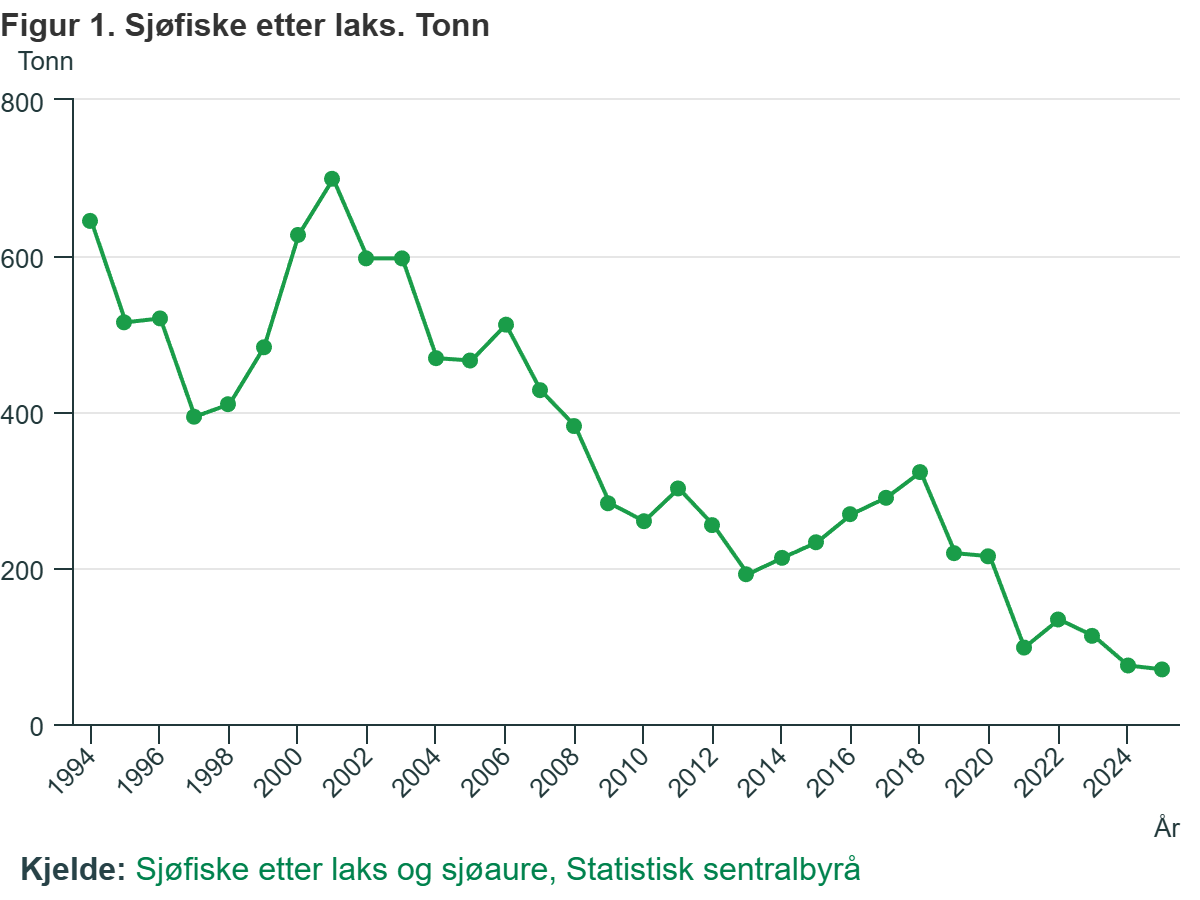
Salmon catches at sea.Ill. SSB
Regional Differences
In Finnmark in 2025, fishing was only allowed in the western part of the region and in the Porsanger fjord. There, 14.8 tons of salmon were caught compared to 47.5 tons the previous year.
In Trøndelag, which had the largest catch in the country, 44.7 tons were obtained. In 2024, it was 18.8 tons. Nearly half of the total catch came from the Namsos area and amounted to 33 tons.
In Trøndelag, which had the largest catch in the country, 44.7 tons were obtained. In 2024, it was 18.8 tons. Nearly half of the total catch came from the Namsos area and amounted to 33 tons.
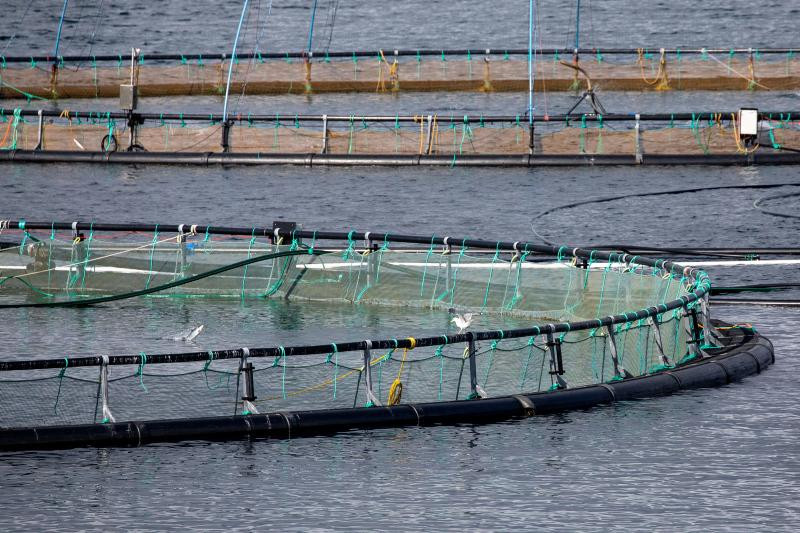
The indicated causes of the decline include, among others, fish farming.Photo: Eivind Senneset, Veterinærinstituttet
Lower Pink Salmon Catch
The catch of pink salmon was also significantly lower. In 2025, 10,100 specimens were caught in marine fisheries compared to 98,800 in 2023.
At the same time, organized removal campaigns for this species were carried out in rivers and along the coast. As part of these, 161,000 fish were removed, while two years earlier it was 249,000.
At the same time, organized removal campaigns for this species were carried out in rivers and along the coast. As part of these, 161,000 fish were removed, while two years earlier it was 249,000.
How do you rate this article?