English
|
We współpracy z kancelarią Advokatfirma Nierzwicki & Bluszko AS
|
19.08.2026 07:30
Automatic Fine, Parking Fee or Bompenger. When Is It Worth Appealing?
A letter with a fee arrives. The photo shows the car, license plate number, date, time, and the amount to be paid. Sometimes it's about a speed camera, sometimes parking, sometimes bompenger, which is a road toll. The amount is not always very high, but it can be frustrating—especially when the driver is convinced they did nothing wrong.
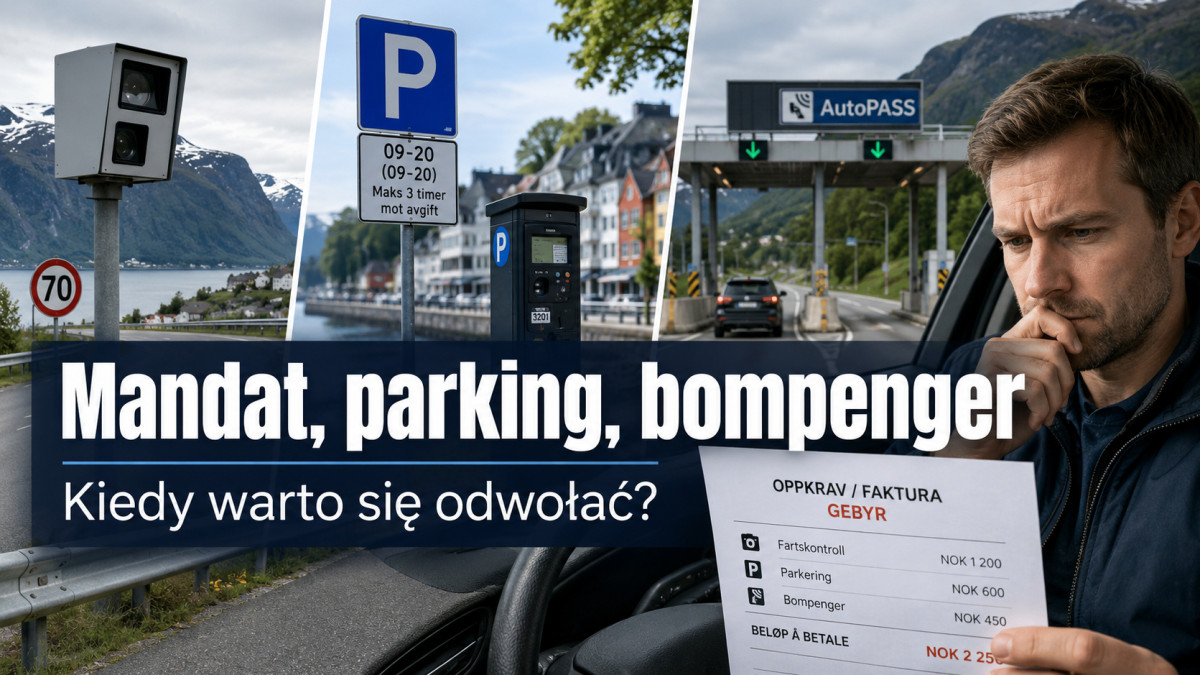
Fine in Norway
MojaNorwegia
In Norway, many such matters are handled automatically. Cameras record passages, parking systems log license plate numbers, and invoices arrive by mail or electronically. This is convenient, but it does not mean the system is never wrong.
When is it worth paying immediately, and when should you look into the matter more closely? And what should you do to prevent a small fee from ending up in debt collection?
Not Every Fee Means the Same Thing
To start, it's worth distinguishing between three situations.
Speed camera fine relates to a violation of traffic regulations, most often speeding. Such cases are handled by the police. This is not a regular invoice, but a matter involving the driver's responsibility.
Parking fee may concern, for example, lack of a ticket, exceeding parking time, incorrectly entered license plate number, parking outside a designated spot, or lack of a visible permit.
Bompenger is a fee for passing through a road toll gate, bridge, tunnel, ferry, or a toll area. In most cases, the system automatically records the car's number.
Each of these cases has different rules, deadlines, and ways to appeal.
A common mistake is that drivers treat every fee the same. However, a speed camera fine, parking control, and a bompenger invoice are different legal situations. The responsibility, deadlines, and ways to contest such a fee are different.~Tomasz Nierzwicki, lawyer, Advokatfirma Nierzwicki & Bluszko AS
Speed Camera Fine: The Driver Is Responsible, Not Just the Car Owner
If a car is photographed by a speed camera, the letter usually goes to the vehicle owner. However, this does not automatically mean the owner must be penalized. In the case of a traffic violation, what matters is who was driving.
In practice, this means the car owner should not automatically accept the fine if they were not driving. In the letter from the police, check the response deadline—usually, for a simplified speed camera fine, the driver has 7 days from receiving the letter to state whether they accept the fine. If you disagree with the fine or were not the driver, do not delay your response.
The problem especially arises when several people use the car: a partner, employee, friend, family member, or someone to whom the car was lent. In such cases, you need to determine who was actually behind the wheel.
It is important to read the letter from the police very carefully. If the driver disagrees with the fine, they should not accept it 'just for peace of mind' without understanding the consequences.
In such cases, the following may be important:
- photo from the speed camera,
- date and time of the incident,
- location of the measurement,
- information on who was driving,
- possible data from work, schedules, GPS, or travel,
- whether the letter was sent to the correct person.
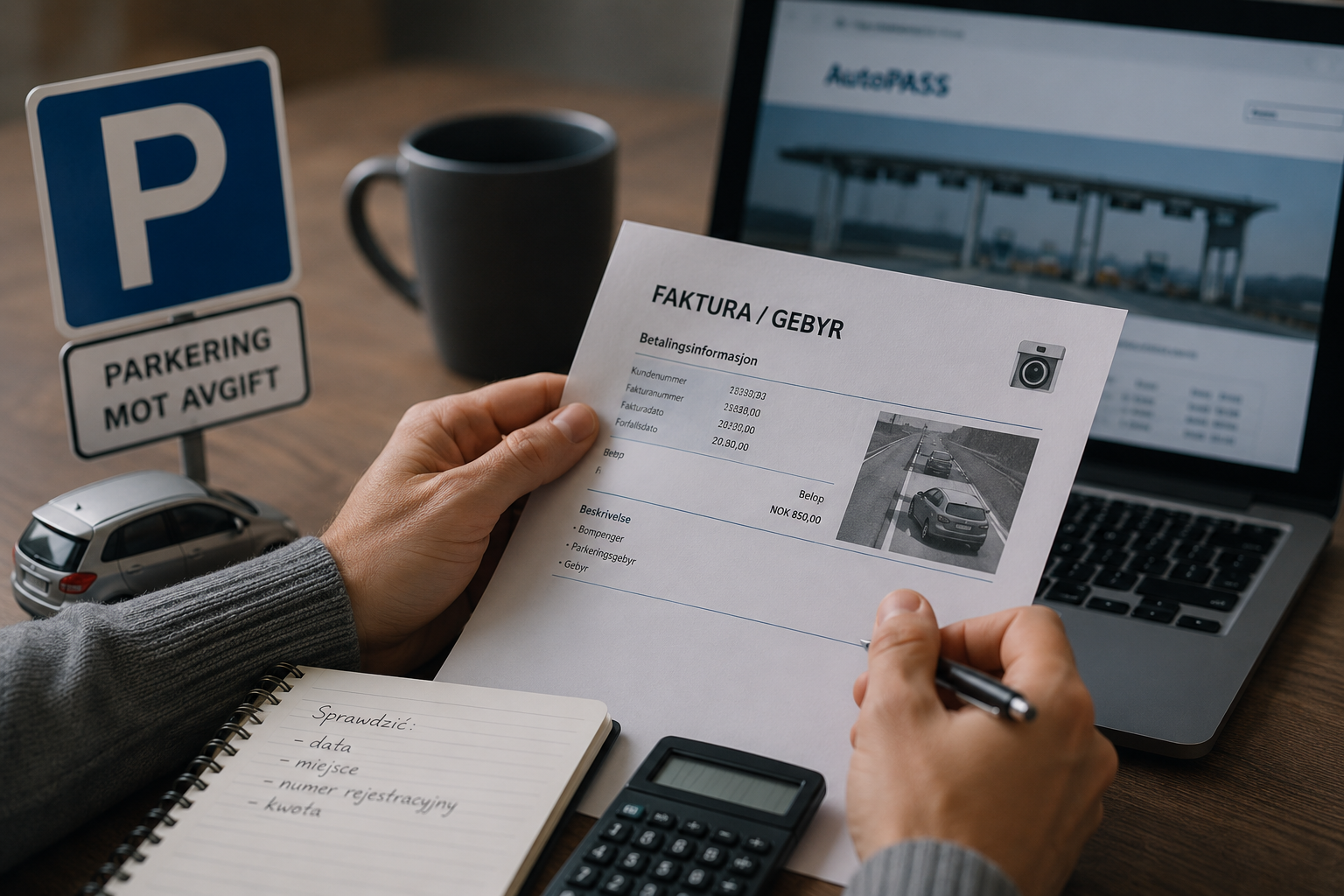
Speed camera fineMojaNorwegia
If the case concerns a driving license, penalty points, or risk of losing your license, extra caution is advised.
Parking Fee: When Is It Worth Appealing?
Parking fines and fees are among the most common everyday disputes for drivers in Norway. Sometimes the driver genuinely forgot to pay. However, sometimes the problem is due to a system error, an incorrectly entered license plate number, unclear signage, or a situation the parking company did not consider.
An appeal may make sense if:
- you paid for parking, but the system did not register it,
- you entered the license plate number with a minor mistake,
- the sign was unclear, covered, or misleading,
- the machine was not working,
- the parking app malfunctioned,
- the fee concerns a vehicle you no longer owned,
- parking was related to an exceptional situation,
- the parking company charged the fee against the rules.
However, remember that a sense of injustice alone is not always enough. In Norway, evidence is very important: photos of signs, payment confirmations, app screenshots, correspondence, and dates.
In parking cases, details often decide. If the driver claims the sign was invisible or the machine was not working, they should take photos immediately. After a few days, the sign may be fixed, the machine repaired, and proving the situation becomes much harder.~Tomasz Nierzwicki, lawyer, Advokatfirma Nierzwicki & Bluszko AS
Bompenger: An Invoice You Shouldn't Ignore
Bompenger is an everyday reality in Norway. Road tolls are charged automatically, often without stopping the car. If the driver has an AutoPASS agreement and a tag, the fees usually go to the operator. If there is no agreement, the invoice may be sent based on the license plate number.
Problems especially arise when:
- the car was sold, but the system still charges the old owner,
- the car has foreign plates,
- the invoice arrived very late,
- the driver does not recognize the passage,
- additional costs have appeared,
- the fee has gone to debt collection,
- someone else was using the car.
In such a situation, do not put the letter aside. Check the date of passage, license plate number, fee operator, and payment deadline. If something does not add up, contact the invoice issuer immediately.
Bought or Sold a Car? Watch Out for Old Fees
Many Poles in Norway buy cars privately. After the transaction, not only technical problems may arise, but also fees related to the previous or new owner: bompenger, parking, fines, insurance, administrative fees.
Therefore, when selling a car, it is important to take care of the documents and the date of transfer of ownership. If the invoice concerns a period after the sale, proof of sale can be crucial.
Do You Have to Pay If You Appeal? Watch Out for the 3-Week Deadline
It depends on the type of case. For parking fees, one rule is important, which many drivers do not know: simply filing a complaint does not always exempt you from paying on time. According to Statens vegvesen, the parking fee must be paid within three weeks, even if you have filed a complaint. If the complaint is accepted, the money should be refunded.
This is a surprise for many people. Drivers assume that if they appeal, they can wait with payment. However, in some cases, failure to pay may result in additional costs or the case being passed on.
Therefore, always check:
- payment deadline,
- appeal deadline,
- whether the appeal suspends the obligation to pay,
- who to send the complaint to,
- which documents to attach,
- whether the case may go to debt collection.
If the letter is in Norwegian and you do not understand all the consequences, do not guess.
Debt Collection After Unpaid Fee: Small Amount, Big Problem
In Norway, even a small fee can quickly grow if ignored. The original amount can be increased by reminder fees, administrative charges, and debt collection costs.
If you disagree with the claim, you should not simply remain silent. It is better to write that you dispute the fee, explain why, and attach evidence. It is important to do this in writing and keep a copy of the correspondence.
Silence often works against the driver. From the perspective of the parking company, fee operator, or debt collector, it may look like the debtor simply does not want to pay.
What Evidence Should You Collect?
When appealing, specifics matter. Prepare:
- a copy of the fine, fee, or invoice,
- photos of parking signs,
- photo of the parking spot,
- payment confirmation,
- app screenshot,
- document confirming sale of the car,
- information on who was driving,
- correspondence with the parking company, operator, or police,
- documentation of app, machine, or system failure,
- dates and times of events.
The sooner you collect evidence, the better. Over time, it is harder to reconstruct the situation, and signage or app data may change.
An appeal should be specific. It is not enough to write that the fee is unfair. You need to state exactly what is wrong, present evidence, and keep track of deadlines. This often determines whether the case has a real chance.~Tomasz Nierzwicki, lawyer, Advokatfirma Nierzwicki & Bluszko AS
When Should You Consult a Lawyer?
Not every parking fee requires a lawyer's help. Sometimes it is cheaper and faster to pay, especially if the error is obvious. However, there are situations where it is worth checking the matter more thoroughly.
Legal assistance may be needed when:
- the amount is high,
- the case has gone to debt collection,
- it concerns multiple fees,
- you were not driving, but the letter came to you,
- you sold the car but still receive invoices,
- the fine may affect your driving license,
- the parking company rejects the complaint despite evidence,
- you do not understand the letter or deadlines,
- the case may end up in court.
It is worth reacting early, before a small fee turns into a bigger problem.
It is also worth reading texts that show how small decisions, documents, and deadlines can matter in the Norwegian legal system:
Do You Need Legal Help in Norway?
Matters related to speed camera fines, parking fees, bompenger, debt collection, or appeals against decisions and fees in Norway often seem simpler than they really are. The problem may not only be the amount to pay, but also the response deadline, the way to file a complaint, evidence, the responsibility of the driver or vehicle owner, and the consequences of not reacting.
Norwegian law allows you to contest certain fees and decisions, but it is important to act quickly and correctly. In these types of cases, letters, photos, payment confirmations, car sale documents, correspondence with the operator, parking company, police, or debt collector, and keeping deadlines are important.
If you have doubts about a speed camera fine, parking fee, bompenger, invoice after selling a car, a case sent to debt collection, or an appeal against a fee in Norway: contact the law firm
Advokatfirma Nierzwicki & Bluszko AS.
The law firm specializes in helping Poles living in Norway with legal matters related to life, work, property, transport, and financial disputes. They combine knowledge of the Norwegian legal system with an understanding of the realities and needs of Polish clients, who often do not know whether a given fee should be paid, appealed, or treated as a matter requiring legal action.
Contact us to discuss your situation, secure evidence, and check what steps you can take to protect your rights and avoid unnecessary costs in Norway.

Advokatfirma Nierzwicki & Bluszko ASAdvokatfirma Nierzwicki & Bluszko AS
How do you rate this article?