A Pole to Another Pole in Norway… Support or Competition?
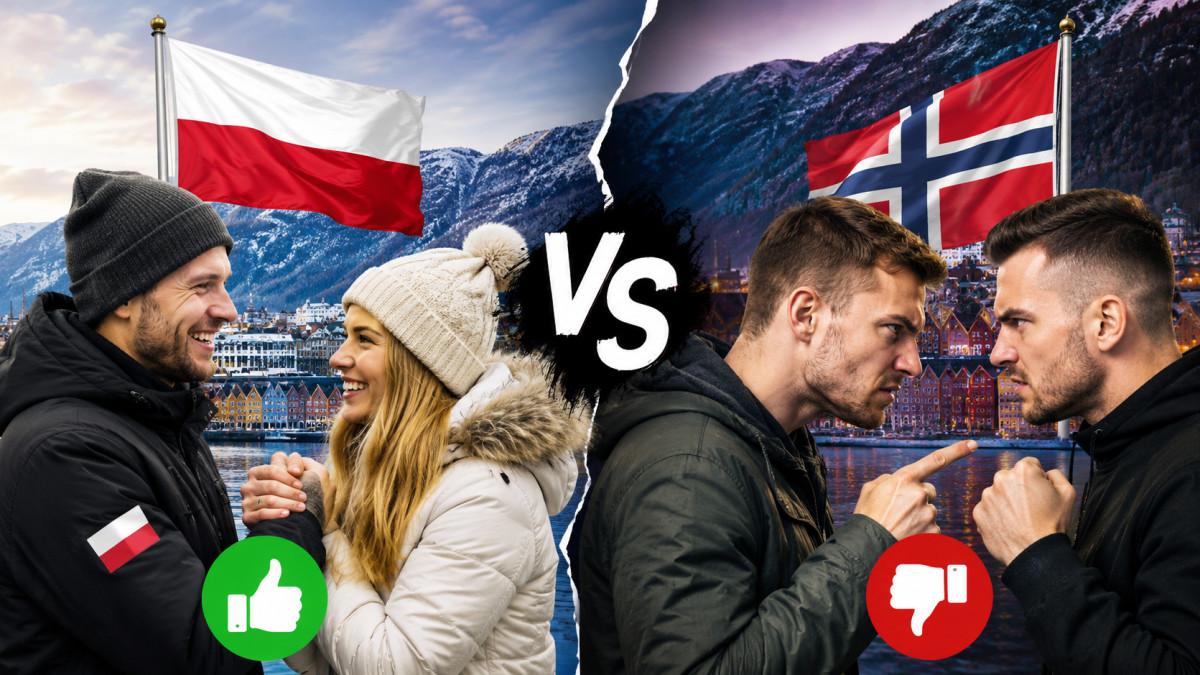
Some say that abroad, it was another Pole who helped them the most. Someone advised them on how to handle documents, recommended a job, helped with housing, translated a letter from the authorities, or simply invited them for coffee when loneliness became overwhelming.
Poles in Norway
MojaNorwegia
Others have completely different experiences. They’ve heard spiteful comments, encountered jealousy, judgment, reluctance, or the attitude: “Figure it out yourself, I had to as well.” That’s why this topic keeps coming back: do Poles in Norway really stick together, or do they more often keep an eye on each other?
Poles in Norway Are No Longer a Small Group
According to data from Statistisk sentralbyrå, in 2026 there were over 129,000 people with a Polish immigrant background living in Norway, counting both immigrants and those born in Norway to Polish immigrant parents. This is one of the largest immigrant communities in the country.
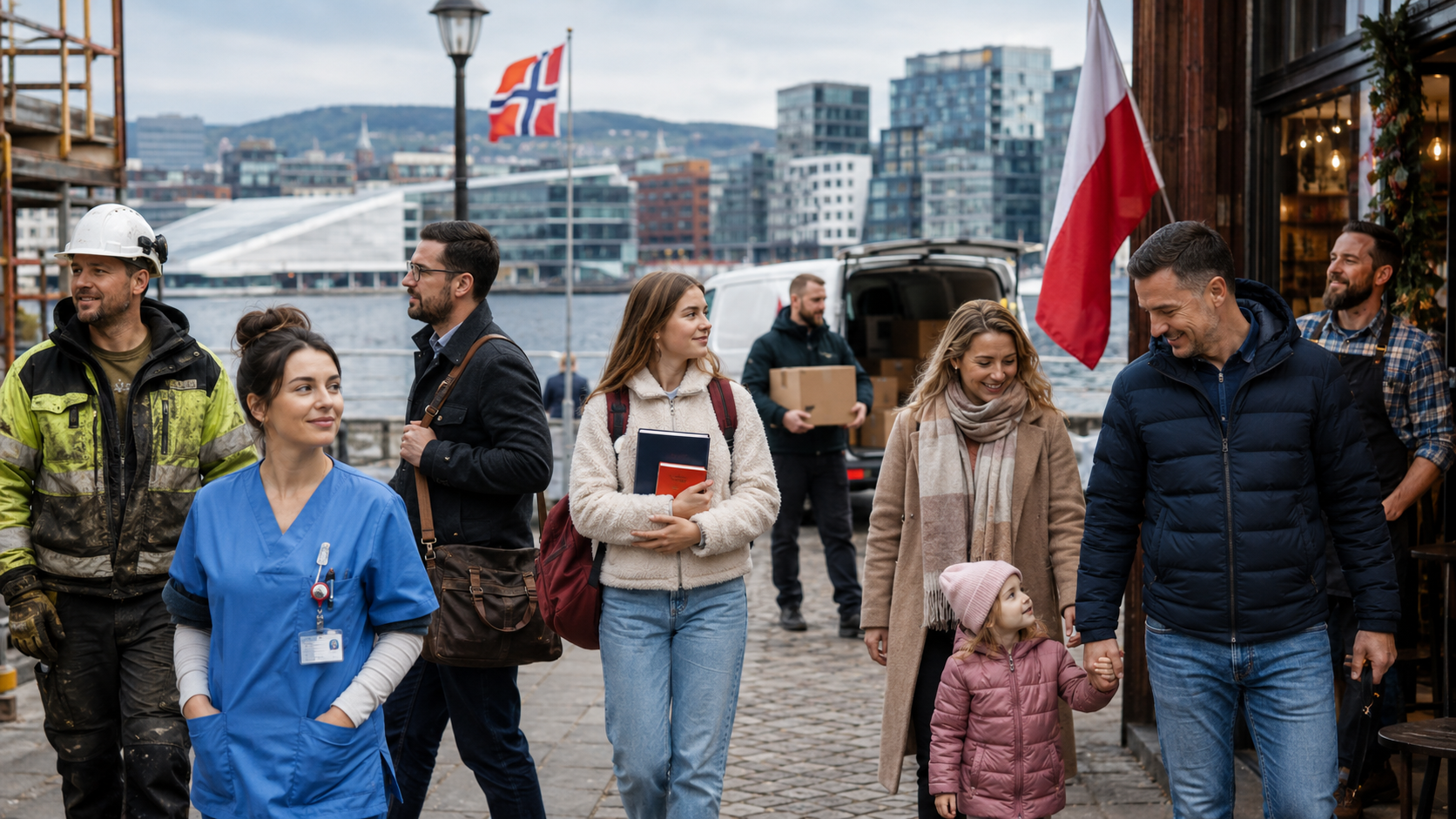
Such a large group cannot be homogeneous. Among Poles in Norway, there are people who came for a few months to work, families who have lived here for years, entrepreneurs, construction workers, drivers, caregivers, IT specialists, doctors, students, single people, and those raising children here. There are people who have just moved and those who now speak Polish mainly at home or online.
That’s why it’s hard to talk about a single “Polish community” in Norway. It’s more like many small circles, groups, acquaintances, organizations, schools, parishes, and online communities that sometimes complement each other well, and sometimes don’t connect at all.
Where Can You See Polish Solidarity?
Contrary to the popular complaint that “a Pole is a wolf to another Pole,” there are many Polish and Polish-Norwegian initiatives in Norway that show the other side of the story. There are organizations supporting integration, education, culture, social assistance, workers’ rights, and mental health.
An example is the project “Polish Dialogue – Active Poles in Norway,” run by the Mangfold i Arbeidslivet foundation. The project emphasizes that it is aimed at Poles because for many years they have been the largest group of immigrants in Norwegian society. The initiative has been co-financed by the Norwegian Directorate of Integration and Diversity since 2019.
There is also the organization Pomoc Polakom (Help for Poles), which supports Poles living in Norway in areas such as integration, mental health, education, and social functioning. The organization provides support, psychoeducation, integration, information, and assistance.
Another example is the Beatus Cras Association, which describes its mission as creating space for development, integration, and building community. The organization operates locally in various regions of Norway, including Oslo, Arendal, Grimstad, and Vestlandet, running educational, informational, and integration projects.
There are also initiatives related to workers’ rights. Solidaritet Norge presents itself as the first Polish trade union in Norway, established by Poles to help foreign workers who have been treated unfairly. The organization claims to represent workers throughout Norway, supporting them in matters of discrimination, workplace harassment, legal assistance, and employment conditions.
In addition, there are Polish schools, local groups, cultural events, family gatherings, volunteering, and informal initiatives. The Polish Saturday School of St. John Paul II in Oslo has been operating since 1988 and was established to promote Polish culture among children living in Norway.
In Trondheim, there is BLI MED! Polish Integration Center, a Polish non-profit association that organizes themed meetings, workshops, free Norwegian language courses, and sports activities.
All this shows that Polish solidarity in Norway exists. It is often quiet, local, and practical. It may not always be visible in online comments, but it becomes apparent when someone needs help.
So Why So Many Bitter Opinions?
Despite many good examples, among Poles in Norway the phrase “It’s best to keep away from your own” often comes up in conversation. For some, it’s an exaggeration; for others, a painful experience.
Where does this attitude come from?
Some people come to Norway under a lot of pressure: to earn money, support their family, pay off debts, save for a house, survive the high cost of living. In such tension, it’s easy to compare yourself to others. Who has a better job? Who bought a house? Who learned the language faster? Who has a Norwegian contract, and who still works through an agency? Who “made it,” and who is just pretending?
Then there’s the internet. In Facebook groups, conflict is more visible than help. Someone asks a simple question, and instead of an answer, they get: “It’s been asked a hundred times,” “learn Norwegian,” “if you don’t know, why did you come?” Such comments stick in memory more than ten kind responses.
But there’s another side: many people really do help. They send links, explain procedures, warn about dishonest employers, recommend a doctor, mechanic, kindergarten, or language course. But such help often happens in private messages, small groups, or local acquaintances, not in public discussion.
Poles in NorwayMojaNorwegia
Support or Competition? Often Both
Poles in Norway can be a huge support for each other. Especially at the beginning of emigration, when everything is new: D-number, skattekort, BankID, renting an apartment, first job, contact with NAV, child’s school, doctor, language, regulations, taxes.
Then another Pole can be more than just an acquaintance. They can be a guide through the system.
But in the same community, competition also appears. Especially where people work in the same industries, look for similar contracts, run businesses in the same market, or compete for better conditions. In small circles, gossip, jealousy, and judgment are common.
Norway itself also changes relationships. Emigration often means a smaller circle of friends, more loneliness, and a stronger attachment to those who “understand what it’s like.” But the more someone settles in, the more they get caught up in their own routine: work, home, kids, bills, responsibilities. There’s not always time left for community.
Organizations Show That Community Is Still Needed
If Poles in Norway really didn’t want to support each other, there wouldn’t be Polish schools, associations, integration projects, support groups, cultural events, or workers’ organizations. Yet such initiatives exist and are developing in many places.
The Central Statistical Office maintains a database of Polish and Polish diaspora organizations and institutions abroad. According to the CSO, the tool includes data on Polish diaspora organizations and the activities of Poles outside the country, and the latest version contained 8,900 entities in 115 countries.
This is an important signal: the Polish diaspora is not just a group of people living outside the country. It’s also a network of institutions, schools, projects, and individuals trying to build something. Sometimes on a large scale, sometimes very locally — over coffee, in a gym, in a school room, or at a parents’ meeting.
Maybe the Problem Isn’t a Lack of Solidarity, but Our Expectations?
Maybe what hurts most isn’t that Poles don’t help each other. It’s that we expect more from “our own.”
It’s easier to accept distance from a Norwegian. From a Pole, we expect understanding. Since they speak the same language, know similar problems, and also once started out, they should help, advise, support. When they don’t, the disappointment is greater.
But does every compatriot abroad automatically have to be a friend? Not necessarily. Being Polish doesn’t guarantee good character, shared values, or a similar lifestyle. It connects through language and the experience of emigration, but not always through personality.
So maybe the honest answer is: Poles in Norway can stick together, but not always and not with everyone. As everywhere, there are helpful people, indifferent ones, jealous, kind, envious, engaged, and tired.
So What’s the Reality?
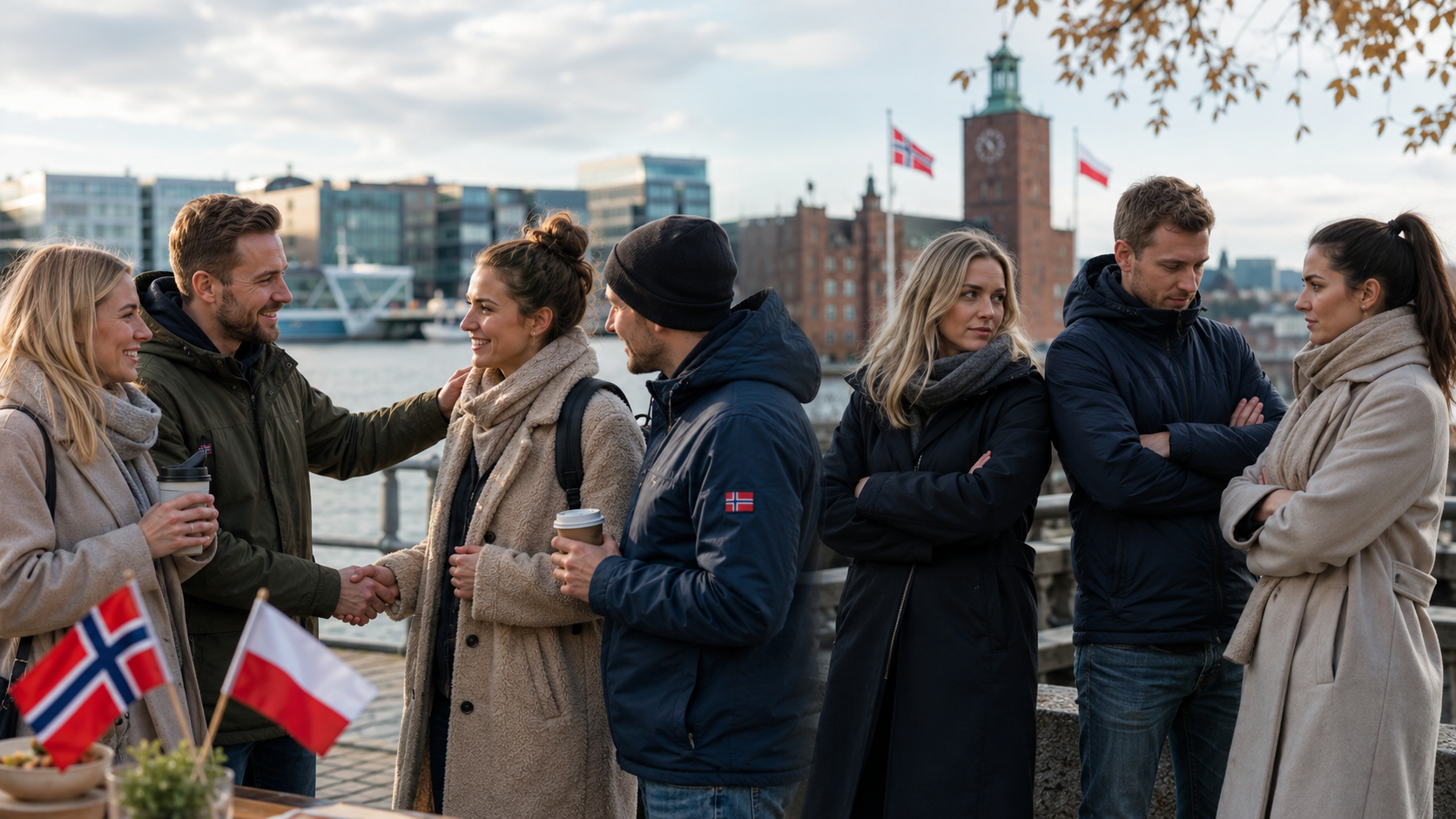
The truth probably lies somewhere in the middle. In Norway, you can meet a Pole who will lend a hand at the toughest moment. And you can meet one who will be the first to stick a pin in you. You can find a group, school, organization, or local community that gives a sense of belonging. You can also get burned by people and come to the conclusion that it’s better to rely only on yourself.
One thing is certain: this topic still stirs emotions because it touches on something very personal. Emigration is not just about work, money, and documents. It’s also about the question of whether, far from home, we still have “our own people.”
And what do you think? Do Poles in Norway help each other more often, or do they compete more?
Poles in NorwayMojaNorwegia
How do you rate this article?