87 years since the outbreak of the war. Polish traces in Norway are closer than you think
A Polish ship that, a day before the German invasion, exposed the transport of soldiers heading to Norway. Podhale soldiers fighting near Narvik. Sailors who died in a Norwegian fjord. Prisoners and forced labourers building fortifications, roads and railway lines. The Polish history of World War II was also written along the fjords — often much closer to our homes than we think.
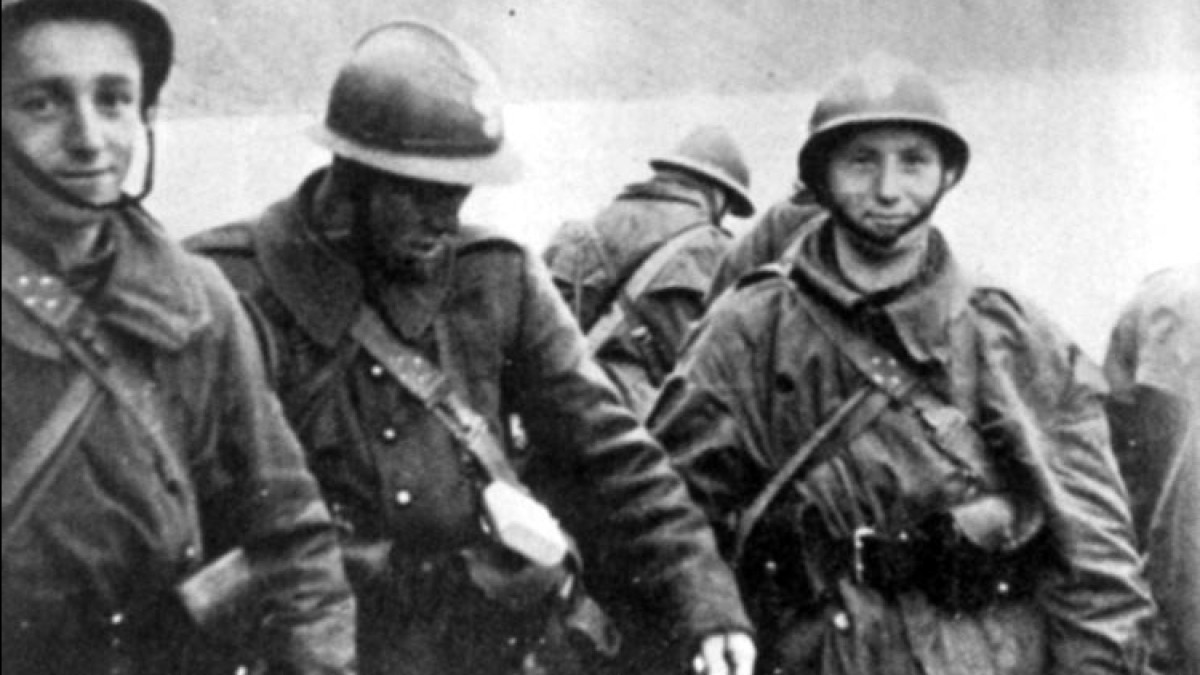
Poles fought in Narvik and were the last among the Allied forces to leave Norway. /Pictured: soldiers of the Independent Podhale Rifle Brigade during the fighting in Narvik
wikimedia.org/CCO
In brief
<ul>
<li>On 8 April 1940, the ORP “Orzeł” sank a German transport ship carrying soldiers intended for the invasion of Norway.<\/li>
<li>The Independent Podhale Rifle Brigade fought near Narvik.<\/li>
<li>Fifty-nine crew members died when the ORP “Grom” was sunk.<\/li>
<li>More than 5,000 Polish citizens were sent to forced labour in occupied Norway during the war.<\/li>
<li>A total of 167 Polish war graves have been registered in Norway.<\/li>
<\/ul>
1 September marks 87 years since the outbreak of World War II. In Poland, this date is associated above all with Westerplatte, the bombing of Wieluń and the first days of German aggression.
For Poles living in Norway, however, wartime memories do not have to mean only places located in Poland. Polish names can also be found in Norwegian cemeteries. There is a monument to a Polish sailor in Narvik, while the ORP “Grom” lies at the bottom of one of the nearby fjords.
Polish traces can be found from Norway’s southern coast all the way to Narvik.
A day before the invasion, Poland’s “Orzeł” discovered a German transport
The Polish story of the Norwegian campaign began even before German soldiers officially attacked Norway.
On 8 April 1940, the ORP “Orzeł”, patrolling the Norwegian coast, spotted the German ship “Rio de Janeiro”. The vessel was carrying hundreds of soldiers, weapons, ammunition, vehicles and horses. Its task was to deliver forces needed to seize Bergen.
The commander of the Polish submarine ordered the ship to stop and be abandoned. When the Germans began to stall and call for help, the “Orzeł” fired torpedoes. The “Rio de Janeiro” sank off Norway’s southern coast.
The sinking of the ship became one of the clearest signals of the impending German invasion. Rescued survivors admitted that they were soldiers sent to occupy Norway.
The following day, 9 April, Germany launched its attack.
Why was Narvik so important?
Narvik was not a random target of the German attack. A railway line from Sweden’s Kiruna reached its ice-free port. It carried iron ore needed by the German arms industry.
Taking control of the port therefore mattered far more than the size of the town itself might suggest.
Norwegian, British and French forces went into battle against Germany. They were joined by the Independent Podhale Rifle Brigade, numbering just under 5,000 soldiers.
The Podhale soldiers arrived in northern Norway in early May 1940. They fought, among other places, on the Ankenes peninsula, on the opposite side of the fjord from Narvik. They captured German positions in the hills and pushed the enemy towards the town.
On 28 May, Allied forces recaptured Narvik. It was one of the first major Allied victories on land during World War II.
However, the success was not exploited. After the German attack on France, the Allies decided to withdraw their forces from Norway.
Ninety-seven soldiers of the Independent Podhale Rifle Brigade were killed in the fighting near Narvik, and 189 were wounded.
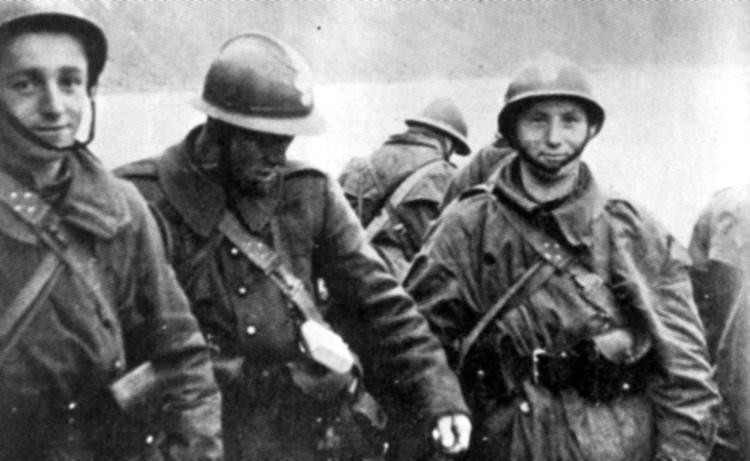
Poles fought in Narvik and were the last among the Allied forces to leave Norway. /Pictured: soldiers of the Independent Podhale Rifle Brigade during the fighting in NarvikSource: wikimedia.org/CCO
In Narvik, Polish history has its own square
Today, evidence of the Polish contribution to the fighting need not be sought only in books.
Narvik has <strong>Groms plass<\/strong> — a square dedicated to the Polish destroyer ORP “Grom”. It features a distinctive monument of a sailor holding a shell.
A few kilometres from the town there is also a cemetery in <strong>Håkvik<\/strong>. A collective grave there holds 116 Poles, including 83 soldiers and officers of the Independent Podhale Rifle Brigade who fell during the fighting for Narvik.
The remains of Polish prisoners and forced labourers who had previously been buried elsewhere in Norway were also transferred to Håkvik.
In nearby <strong>Skjomnes<\/strong>, visitors can see a site commemorating the Allied landing and the participation of Polish Podhale soldiers in the fighting.
People living in this part of Norway, or visiting it as tourists, can visit these places in a single day:
<ul>
<li>Groms plass in Narvik,<\/li>
<li>Narvik Krigsmuseum,<\/li>
<li>the memorial site in Skjomnes,<\/li>
<li>the Polish section of the cemetery in Håkvik.<\/li>
<\/ul>
You do not have to be a history enthusiast. It is enough to stop for a moment and read the names of people who came to fight for a country thousands of kilometres from their homes.
The ORP “Grom” remains at the bottom of a Norwegian fjord
Poles fought near Narvik not only on land.
The destroyers ORP “Grom”, ORP “Błyskawica” and ORP “Burza” took part in the campaign. They patrolled the fjords, shelled German positions and supported units fighting on land.
On 4 May 1940, the ORP “Grom” was attacked by a German bomber in a fjord near Narvik. The ship sank. Fifty-nine members of its crew were killed, while the remaining sailors were rescued.
The wreck remains on the fjord floor. It is not only a historic relic, but above all a war grave.
Polish transport ships were also present in Norwegian waters: the “Batory”, “Sobieski” and “Chrobry”.
The last of these was heavily damaged by German aircraft on the night of 14–15 May while sailing towards Bodø. The crew and transported soldiers were evacuated. The abandoned ship was eventually sunk on 16 May 1940.
Norwegian fjords are therefore also an underwater archive of Polish history.
Not all Poles came here as soldiers
Alongside the story of the fighting near Narvik, there is another, much less well-known account.
More than 5,000 Polish citizens were sent to forced labour in occupied Norway during the war. This group included Polish prisoners of war and civilian forced labourers.
The prisoners included soldiers captured during the September Campaign of 1939. From 1942, they were transported to Norway and placed in camps located, among other places, in Rogaland, present-day Agder, Møre og Romsdal and Nordland.
They worked on the construction of German coastal fortifications, tunnels, roads and other elements of the Atlantic Wall. More than a thousand Polish prisoners were also assigned to work on the construction of the Nordland Line.
Conditions were harsh. People worked beyond their strength and suffered from cold, malnutrition and disease. Some died at work, in captivity or while attempting to escape.
Traces of this history can also be found in places where large Polish communities live today.
167 Polish war graves in Norway
The largest number of Polish memorial sites are in the Narvik area. However, these are not the only points on the map.
A total of 167 Polish war graves have been registered in Norway. They are located, among other places:
<ul>
<li>in Narvik and Håkvik,<\/li>
<li>at Moholt Cemetery in Trondheim,<\/li>
<li>at Eiganes Cemetery in Stavanger,<\/li>
<li>in Jørstadmoen,<\/li>
<li>at Vestre Gravlund in Oslo.<\/li>
<\/ul>
Besides cemeteries, there are also places where Polish graves no longer exist, but monuments and plaques remain.
This is the case in <strong>Helland in Sørfold<\/strong>. Eight Polish prisoners murdered after an escape attempt in 1944 were initially buried in this area. In 1953, their remains were transferred to Håkvik. A stone dedicated to them still stands in Helland today.
It is worth looking into the history of your own municipality. Sometimes, just a few kilometres from home, there is a Polish grave, a plaque or the remains of fortifications built by people brought here from Poland.
This history also belongs to Poles living in Norway today
Wartime traces along the fjords reveal two very different paths that brought Poles to Norway.
Some came here as soldiers and sailors fighting on the Allied side. Others were brought here as prisoners and forced labourers.
Today, we live in the same places. We travel on these roads, use the railways, visit the fjords and live in towns where their graves remain.
That is why, on 1 September, we can do more than remember Westerplatte. We can also find out whether Polish history is right next to our home in Norway.
<strong>Do you know of a Polish grave, plaque or another memorial site in your area? Write the name of the locality in a comment or send us a photo. Together, let us create a map of Polish traces of World War II in Norway.<\/strong>
How do you rate this article?