15 years of work in Norway. How much pension can you really receive?
Norway is preparing to gradually raise the retirement age. The subject has also sparked strong emotions among Moja Norwegia readers. However, if you have worked in Norway for 10, 15 or 20 years, it is worth asking one more question: how much pension have you actually earned so far? Your length of service alone does not provide the answer.
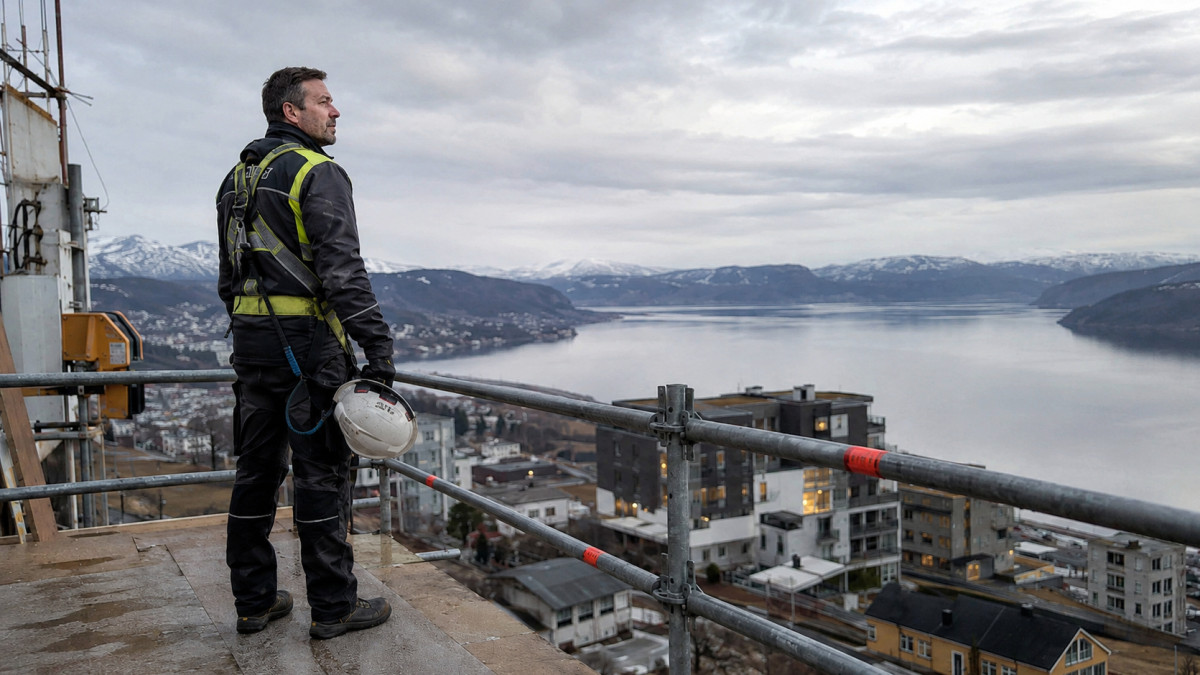
Pension in Norway
MN / fot. ai
In brief
- Length of service in Norway alone does not determine the amount of your future pension.
- The benefit is affected by earnings, insurance periods, age, breaks in employment and occupational pension savings.
- Poland and Norway pay their respective parts of benefits according to insurance periods.
- It is worth checking your own pension forecast before you finish working.
Under our article about the planned increase in the retirement age, a clear majority of voters assessed the idea of working longer negatively. At the time this text was prepared, 76 percent of the 98 survey participants opposed the changes, arguing that in many occupations it is difficult to work until an increasingly later age. Another 7 percent would accept the changes only if people performing physically demanding work received real support.
This is, of course, not a representative opinion poll, but the result clearly reflects the concerns of many Poles working in Norway. Especially those who have spent more than a dozen years working in construction, transport, industry, cleaning or processing.
For such people, the question of retirement age quickly leads to another one: if I have already worked here for so many years, how much pension will I actually get from it?
15 years of work does not mean one fixed amount
Norway has no simple rate for every year worked. Therefore, it cannot be said that 10 years of work gives a specific amount, 15 years another amount, and that everyone is entitled to a similar benefit after 20 years.
Two Poles may work in Norway for exactly 15 years and still have completely different pension forecasts.
The first worked full time throughout that period, had stable employment and regular earnings. The second worked seasonally, had longer breaks, or was covered by the Polish insurance system during part of their stay. Formally, both can say: “I worked in Norway for 15 years,” but their pension situations will be different.
That is why comparing yourself with a colleague who says that they receive a certain amount after more than a dozen years of work is of little use. Their earnings, age, insurance history and the time at which they started drawing benefits may be entirely different.
Earnings and work history matter more than length of service alone
The amount of your future pension depends primarily on how much you earned in subsequent years and how long you were actually covered by the Norwegian system. Your year of birth, breaks in employment, the time you start receiving benefits and an additional employer pension also matter.
Norway uses different methods of calculating benefits for different birth cohorts. People born between 1954 and 1962 are covered by transitional rules. New rules apply to those born in 1963 or later.
Under this system, 18.1 percent of pensionable income, up to a limit of 7.1 G, is recorded toward pension rights each year. This does not mean that this portion of your salary is transferred to a separate account. It is the way the Norwegian system records accrued rights, which are later used to calculate the pension.
That is why every additional year with income matters. A person who works longer and earns regularly can continue increasing their future benefit.
You should not calculate your pension using a simple “15 years out of 40” formula either. The figure of 40 years matters in specific parts of the Norwegian system, including for the full insurance period and the guaranteed benefit. However, it does not mean that a working person can simply divide the “full Norwegian pension” by 40 and multiply the result by their number of working years.
Fifteen years of full-time work with good earnings can produce a completely different result than 15 years of seasonal work or work with long breaks.
Have you worked in Norway for several or more than a dozen years?
Instead of guessing based on length of service or comparing yourself with others, you can check your own forecast.
MultiNOR prepares a calculation of your future pension based on data available in the official system. You can also check whether, under the current rules, it is possible to start drawing a pension earlier.
The retirement age will rise. What does this mean for people working today?
Under the current rules, a NAV pension can normally be received from the age of 67. Some people can start receiving payments from age 62 if their accrued pension rights are sufficiently high.
However, Norway is preparing to gradually raise these thresholds. The first changes are expected to affect people born in 1964 and later. Detailed regulations are still being prepared, so not all calculations currently presented for specific birth cohorts should be treated as final.
For someone who has worked in Norway for years, one more factor is important. The time at which you start receiving benefits affects their monthly amount.
If you start drawing your pension earlier, your accrued rights are spread over a longer period and the monthly payment is usually lower. Working longer and starting to receive benefits later can, in turn, increase the monthly amount.
Therefore, when planning your future, it is better not to limit yourself to the question, “How much will I get after 15 years?” It is more useful to check what my current forecast shows and what another year, three years or five years of work would change.
This can be particularly important for someone over fifty who is considering whether to stay in Norway for a few more years, return to Poland or reduce their working hours.
A Norwegian pension is not only money from NAV
This is another thing that is easy to forget.
The state pension from NAV may be only one part of your future income. A person working in Norway may also have money saved by their employer in an occupational pension scheme. After changing jobs several times, the funds may be held by different providers.
Some employees are also entitled to AFP, an additional pension benefit. It is not automatically available to everyone. Employment conditions and whether the workplace is covered by the appropriate scheme are among the important factors.
Therefore, anyone who wants to know what their situation will look like after finishing work should look beyond just one amount from NAV.
Work in Poland, Norway and the A1 document
Many Poles currently working in Norway previously worked in Poland for more than a dozen or several dozen years. Those periods are not lost.
Poland and Norway are covered by rules coordinating social security systems. In certain situations, insurance periods from different countries may be taken into account when determining entitlement to a benefit. However, this does not mean that NAV will treat Polish earnings as Norwegian earnings.
As a rule, each country calculates and pays its own part. A person who worked, for example, for 20 years in Poland and 15 years in Norway may therefore receive benefits from both systems in the future.
Returning to Poland alone does not result in losing pension rights earned in Norway.
The situation may be somewhat different for people sent to Norway by Polish companies. If an employee had an A1 document and remained covered by the Polish insurance system, that period of work may have built pension rights primarily in Poland.
Therefore, simply saying “I worked in Norway for 15 years” is not always enough. In some cases, you need to check who the employer was, where contributions were paid, and which income and periods are actually visible in the Norwegian system.
You do not have to wait until retirement to check this
You can check your forecast earlier, even if you still have many years left before you finish working.
It provides answers to much more practical questions: whether a few additional years of work will significantly improve the benefit, when you can start drawing it at the earliest, whether there is an occupational pension or AFP, and what the situation looks like after a possible return to Poland.
The calculation is not a final decision by NAV. It shows a forecast based on data currently available in the system. If an employment period or income is missing, further clarification may be needed.
If you are already close to retirement, the calculation alone is not enough. A NAV pension does not start being paid automatically once you reach the relevant age. You still need to submit an application and choose when payments should begin.
MultiNOR also helps prepare an application for a Norwegian pension and determine the documents needed.
If a document from Poland or a letter from NAV comes up while handling matters, MultiNOR also provides Polish-Norwegian translations. The document can be sent online for a quote.
Check your own situation first
The discussion about raising the retirement age is only just beginning and will affect an increasingly large group of workers in the coming years.
However, this does not mean you need to wait for the final form of the reform before taking an interest in your own pension.
If you have worked in Norway for 10, 15 or 20 years, you can already check today which rights you have managed to earn and what your future benefit may look like.
Because ultimately, it is not about how many years your colleague worked. It is about your years, your earnings and your pension.
This article is for informational purposes. Detailed regulations concerning the future raising of retirement-age thresholds are still being prepared. The calculation is a forecast based on data available in the system and does not constitute a final decision by NAV.
How do you rate this article?