moon
English
|
Redakcja
|

10.11.2026 08:23

Poland is growing, while Norway is losing workers. Norwegian newspaper reports major shift
The Polish economy has caught the attention of one of Norway's largest newspapers. „Aftenposten” describes the country as one of Europe's most dynamic economies, approaching the group of the world's 20 largest economies. At the same time, fewer and fewer Poles are choosing Norway as a destination for labour migration.
Copy link
Poland is growing, while Norway is losing workers. Norwegian newspaper reports major shift
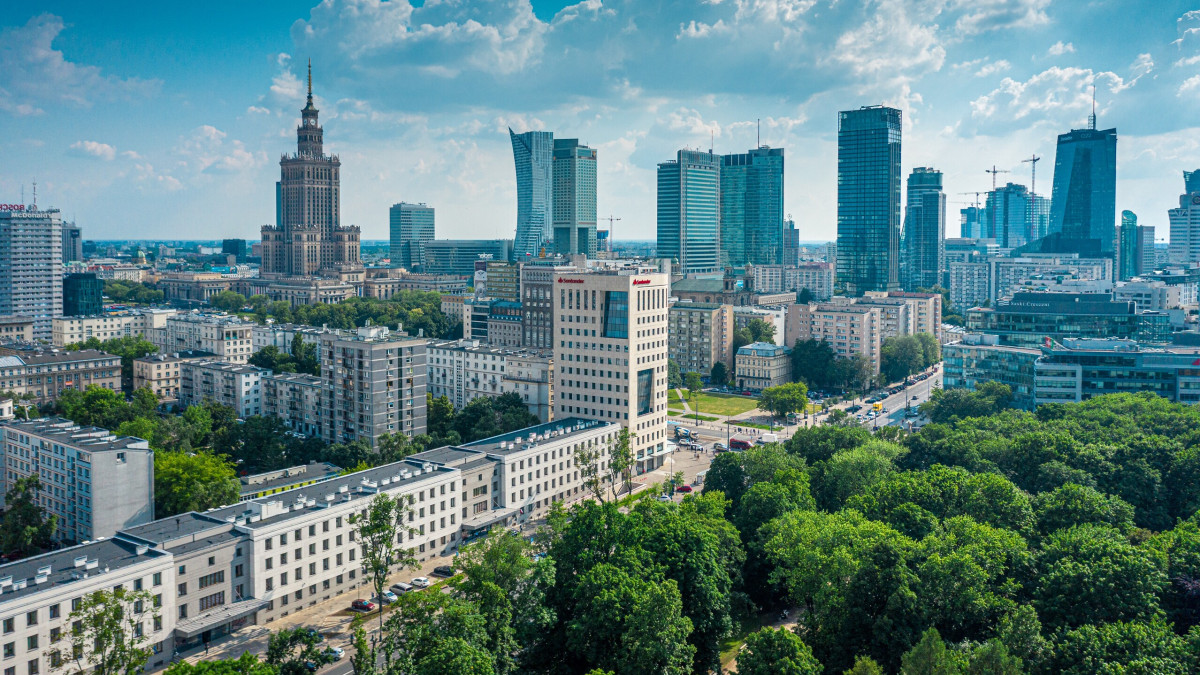
Norwegian media once again draw attention to Poland's major economic leap. stock.adobe.com/standardowa/Aleksander
Until recently, Poland was associated in Norway with communism, poverty and mass labour migration. Now, „Aftenposten” points out that the country is undergoing a period of rapid development, while some European economies are struggling with stagnation and industrial problems. Economic indicators have also changed. Poland has overtaken Japan in GDP per capita calculated by purchasing power parity, while income inequality is lower than in Sweden.

Poland is experiencing a golden age. Norwegians describe the sources of its success

Professor Marcin Piątkowski speaks of Poland's „golden age”. The economist from Kozminski University in Warsaw told „Aftenposten” that economic growth over the past 40 years has been exceptional compared with similar countries. He identified several reasons for this process, including the education of society, entrepreneurship and relatively low income inequality.

Economic decisions and European integration also played an important role. Piątkowski pointed to the pragmatism of economic elites and Poland's membership in the European Union, while stressing that the country's development took place without significant natural resources. In his view, the scale of these changes remains largely unnoticed beyond Poland's borders. However, „Aftenposten” shows that Poland is increasingly becoming a place where foreigners do business as well.

Poland attracts entrepreneurs. Norway is losing workers

The newspaper cited the example of 26-year-old Ukrainian woman Yaryna Samotys. Within two years, she developed a frozen pizza production company in Poland that now employs 30 people and generates annual revenue of EUR 3.5 million. This is one of the cases of foreign entrepreneurs described by „Aftenposten”. Economic changes are also affecting Poland's relations with Norway.

Just over a decade ago, the number of Polish immigrants in Norway was growing by as many as 13,000 people annually. According to Norway's national statistical office, however, in 2025 it increased by only 360 people, the lowest figure since Poland joined the European Union. Rising wages in Poland and a weak NOK are making labour migration to Norway less attractive. For the Norwegian economy, this means a change in one of its previous sources of workers.
Norwegian Finance Minister Jens Stoltenberg warned that the number of working-age people in Norway has stopped growing. He identified the shortage of labour as the greatest threat to the economy. For years, some of these shortages were filled by workers from Poland, whose inflow is now significantly weaker.
How do you rate this article?
0
0
0
0
0
Facebook Messenger YouTube Instagram TikTok
This website uses cookies

Our website uses cookies to optimize performance, analyze traffic, and customize content and advertisements to your preferences. In accordance with Google requirements, we use consent mode, which allows you to control what data is collected and processed. You can consent to all cookie categories or manage your preferences. More information can be found in our Privacy Policy.

Necessary

These cookies are essential for the website to function and cannot be switched off in our systems. They are set in response to actions made by you, such as privacy settings, logging in, or filling in forms. These cookies do not store any personally identifiable information.

Analytics

Analytical cookies allow us to measure website traffic and analyze how users interact with it. This helps us improve the website's functionality and adapt its content to user needs. We use Google Analytics in Consent Mode, which operates according to your preferences. If you do not consent, Google Analytics will limit data collection and processing.

Marketing

Marketing cookies are used to personalize the ads you see on our website and on third-party sites. They ensure that ads are more relevant and match your interests. Google Ads operates in accordance with consent mode, which adjusts the level of ad personalization to your settings. You can decide whether you want your data to be used for personalized advertising.

Manage preferences
Reject all
Confirm selection
Accept all