Norwegian Place of Shame: People Dump Trash and Relieve Themselves in the Bushes
At the Digernes parking lot on the island of Stord, waste is collected daily. Despite this, the bins regularly overflow, and trash ends up outside the designated areas. The Norwegian Public Roads Administration (Statens vegvesen) points out that some people leave their private household waste there.
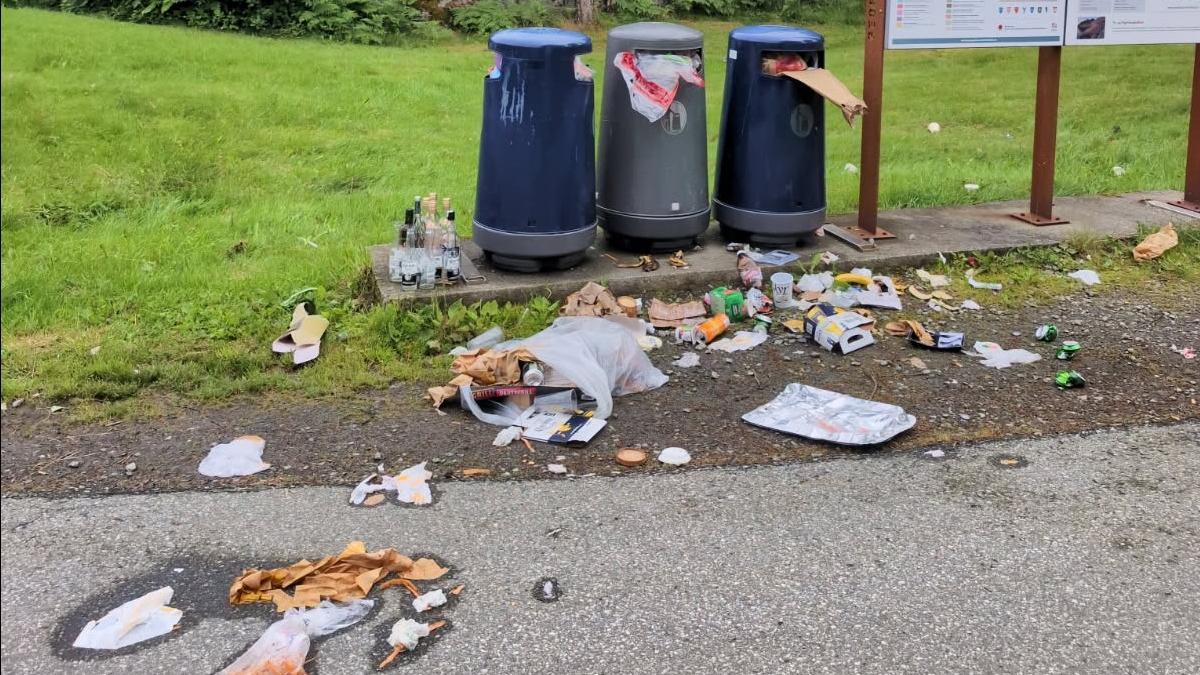
This is what the Digernes rest area in Stord looks like.
Fot. materiały prasowe Statens vegvesen
Digernes is located north of the Stord Bridge on the E39 route. In summer, the amount of trash increases so quickly that the previous waste collection several times a week proved insufficient. Daily emptying of the bins was introduced. Despite this, Statens vegvesen continues to receive complaints about the mess and overflowing bins.
Bins are emptied daily. The waste keeps piling up
The containers at the parking lot are intended for tourists. According to Gunn K. Skjærbekk from the Public Roads Administration, many people, however, throw away private municipal waste that should go into the home collection system. The bins fill up quickly. Statens vegvesen has therefore decided to place larger containers at the site.
The problem also occurs at other roadside rest areas. Statens vegvesen reports an excess of waste at, among others, Toskatjørn in Haugesund and in Austrheim in the village of Vats, in the Vindafjord municipality. Similar situations also happen in Suldal. In summer, contractors check these places more often and remove the left-behind trash.
The problem also occurs at other roadside rest areas. Statens vegvesen reports an excess of waste at, among others, Toskatjørn in Haugesund and in Austrheim in the village of Vats, in the Vindafjord municipality. Similar situations also happen in Suldal. In summer, contractors check these places more often and remove the left-behind trash.
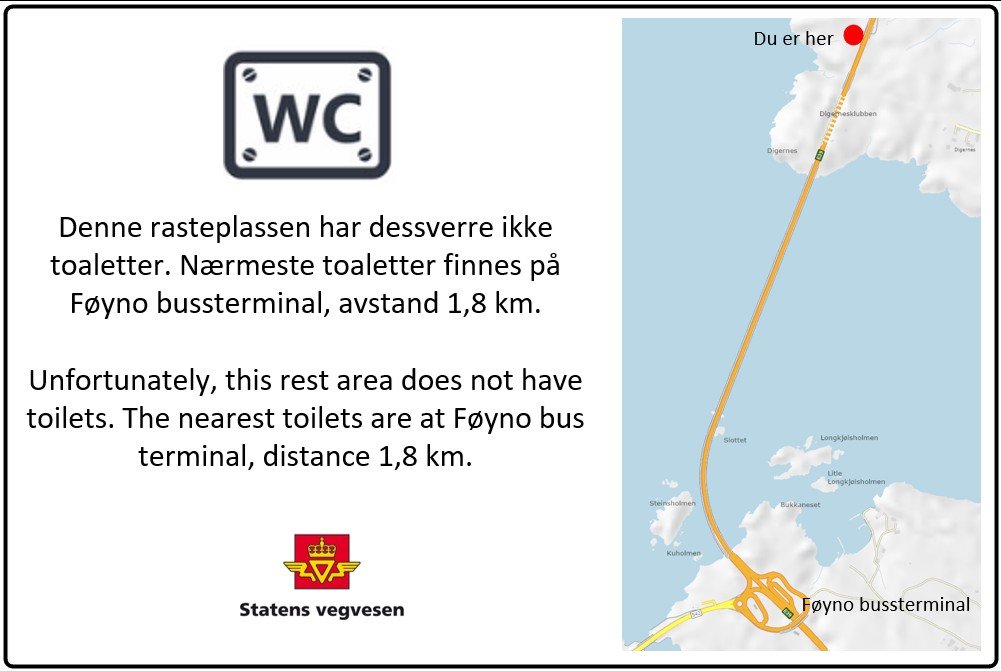
In August, this sign will be placed at the Digernes parking lot, north of Stordabrua, on the E39 road.Photo: press materials Statens vegvesen
Not just trash. The administration will indicate the nearest toilet
At Digernes, waste is not the only problem. Human feces are also found near bushes, shrubs, and the path, which then have to be removed by contractor staff. There is no information on site about the nearest toilet. This is set to change in August, when Statens vegvesen will install an appropriate sign.
The administration urges parking users to take their waste with them when the bins are full. Contractors clean rest areas more frequently in summer, but cannot be present at every parking lot all the time. Trash can be taken to the next rest area. Statens vegvesen emphasizes that parking areas are meant to allow drivers to rest, have a coffee, and stretch their legs.
The administration urges parking users to take their waste with them when the bins are full. Contractors clean rest areas more frequently in summer, but cannot be present at every parking lot all the time. Trash can be taken to the next rest area. Statens vegvesen emphasizes that parking areas are meant to allow drivers to rest, have a coffee, and stretch their legs.
Overflowing bins can be reported by calling 175. The call goes to the nearest traffic management center, which passes the information to the contractor responsible for that section. This way, a team can be dispatched to the site after receiving the report.
How do you rate this article?