Norway between drought and downpours. Data reveals the scale of July's contrasts
July brought Norway extremely varied weather conditions. In some parts of the country, it barely rained, while other regions received more than twice as much rain as usual. The south also experienced a heatwave, and Svalbard recorded its highest temperature of the year.
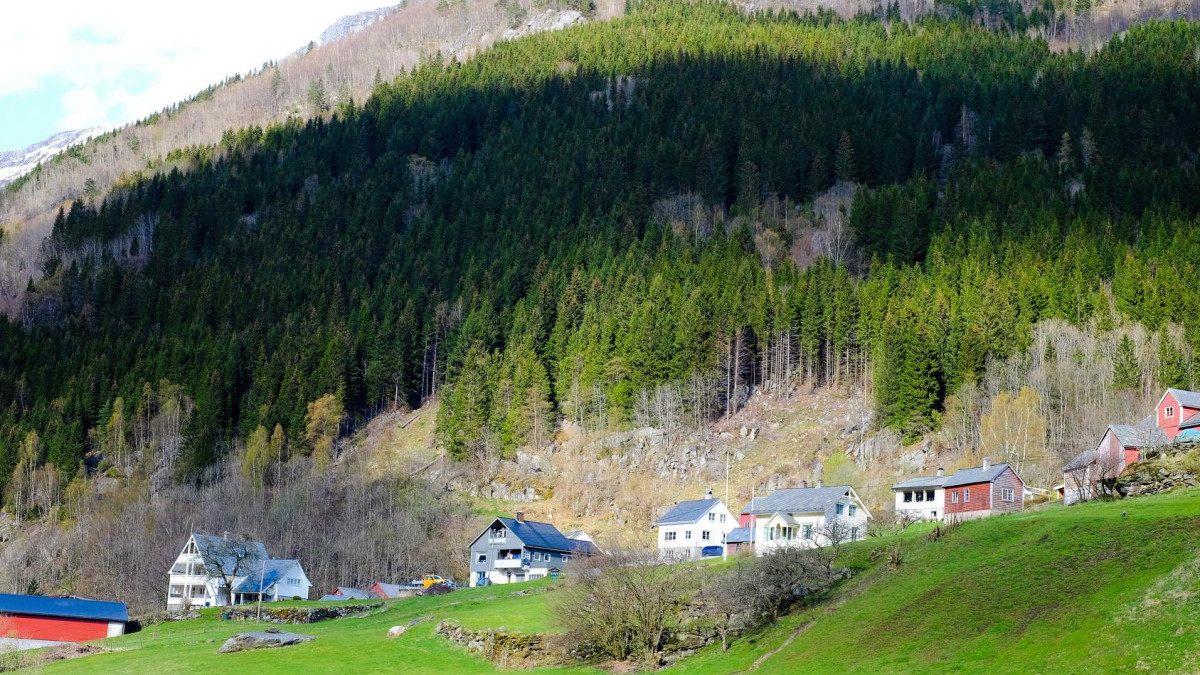
The scale of weather contrasts in Norway is enormous.
Fot. Fotolia
The Norwegian Meteorological Institute (MET) indicates that the total precipitation for the whole country was close to the norm. However, the average does not reflect the large differences between regions. Innlandet, Telemark, and Agder had significantly less rain than usual, while parts of Nordland and Møre og Romsdal ended the month with high rainfall totals. Temperatures also clearly divided the country.
Rain divided the country. Skjåk broke the drought record
The most rain fell in Lurøy in Nordland. The station recorded 349.7 mm, while Gullfjellet in Vestland received 337 mm of precipitation. In Samnanger II, 309.9 mm was measured. In some northern and western regions, July was therefore clearly wetter than usual.
At the other end of the spectrum was Skjåk II. Only 5.5 mm of rain fell there, and in Hjartdal and Bjorli, 7.9 and 9.2 mm respectively. Skjåk recorded the driest July since measurements began more than 85 years ago. The previous record was from 1946.
At the other end of the spectrum was Skjåk II. Only 5.5 mm of rain fell there, and in Hjartdal and Bjorli, 7.9 and 9.2 mm respectively. Skjåk recorded the driest July since measurements began more than 85 years ago. The previous record was from 1946.
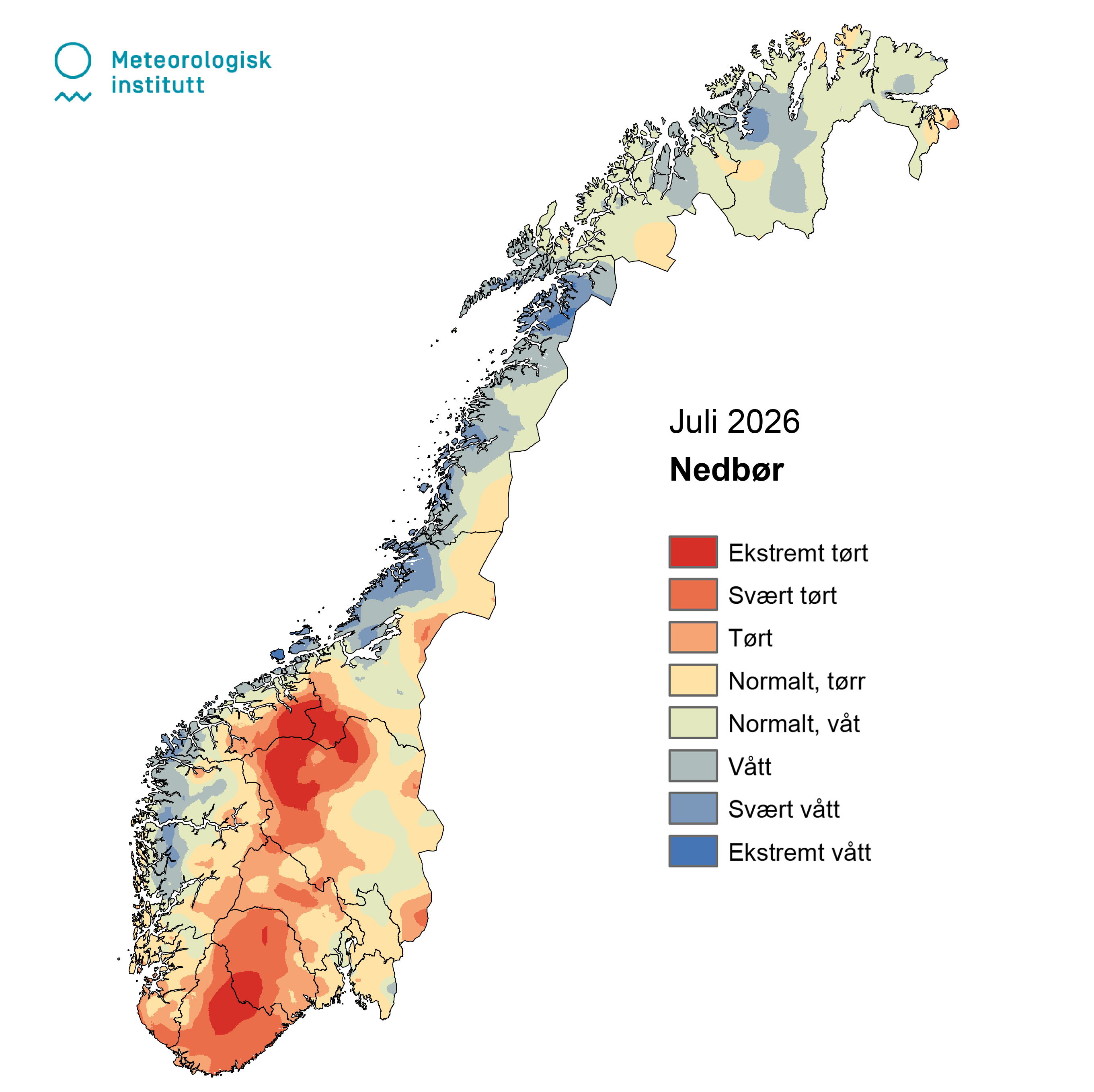
Moisture map in Norway in July 2026. Red indicates extreme drought, dark blue indicates extreme moisture.Ill. Helga Therese Tilley Tajet/MET
The south got a heatwave. Svalbard ended the month with a record
Southern and eastern Norway, as well as Finnmark, were warmer than normal. At the same time, much of the western, central, and northern parts of the country, from Rogaland to Troms, had a cooler July. Drammen recorded the highest average temperature among cities. It was also the only station in the country where the temperature exceeded 20°C every day in July.
The largest positive deviation from the norm was measured in Vågsli and amounted to 3.4°C. In Mo i Rana, the temperature was 2.6°C lower than average. At Svalbard Airport, 13.6°C was recorded on July 30, and 15.4°C the next day. This was the highest result on the archipelago since the beginning of the year, higher that day than, among others, in Tromsø, Molde, Kristiansund, and at Flesland Airport.
The largest positive deviation from the norm was measured in Vågsli and amounted to 3.4°C. In Mo i Rana, the temperature was 2.6°C lower than average. At Svalbard Airport, 13.6°C was recorded on July 30, and 15.4°C the next day. This was the highest result on the archipelago since the beginning of the year, higher that day than, among others, in Tromsø, Molde, Kristiansund, and at Flesland Airport.
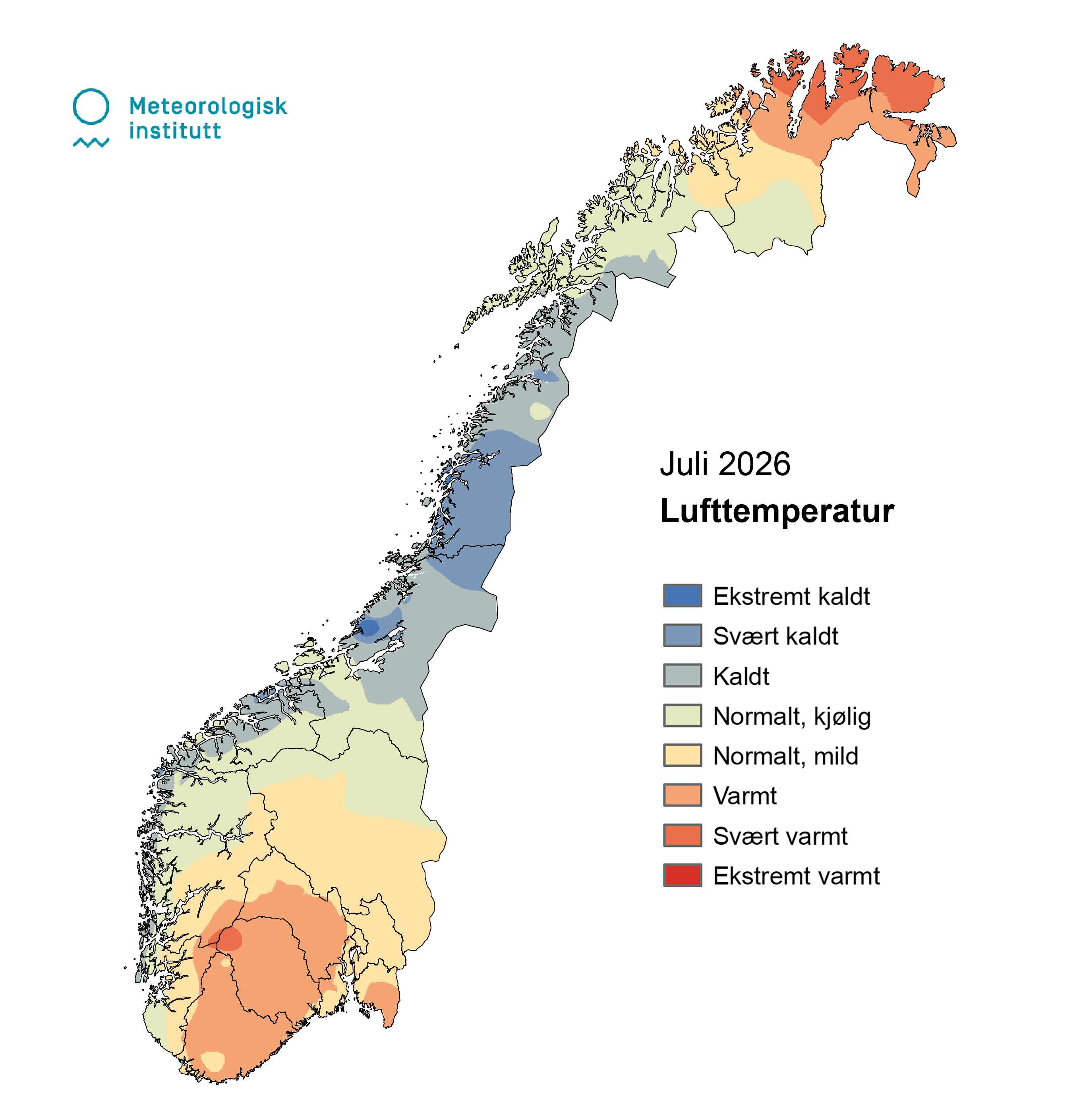
Temperature scale in Norway at the turn of July 2026.Ill. Helga Therese Tilley Tajet/MET
At the same time, much of Europe was experiencing prolonged heatwaves, drought, and forest fires. There were also intense storms and downpours, and a precipitation system from Central Europe reached Troms and Finnmark at the end of the month. MET explains that a warmer atmosphere increases evaporation and can deepen drought, but at the same time retains more moisture, which favors more intense rainfall.
How do you rate this article?