Are you registered with a church without your knowledge? Check it in the Norwegian register
In Norway, you can check for yourself whether a church, mosque or another religious or life-stance community has registered you as a member. Simply log in via ID-porten on the Brønnøysundregistrene website. In 2026, a community can receive NOK 1,611 in state funding for each eligible member.
<!--
Category: News / Life in Norway
Publication date: 2026-09-24
Meta title: Are you registered with a church without your knowledge?
Meta description: The Norwegian register shows which community has registered you as a member. Check your details via ID-porten and find out what to do if there is an error.
Alternative title 1: Who registered you as a member? Check the Norwegian register
Alternative title 2: NOK 1,611 in funding per member. Check whether your details are on the list
-->
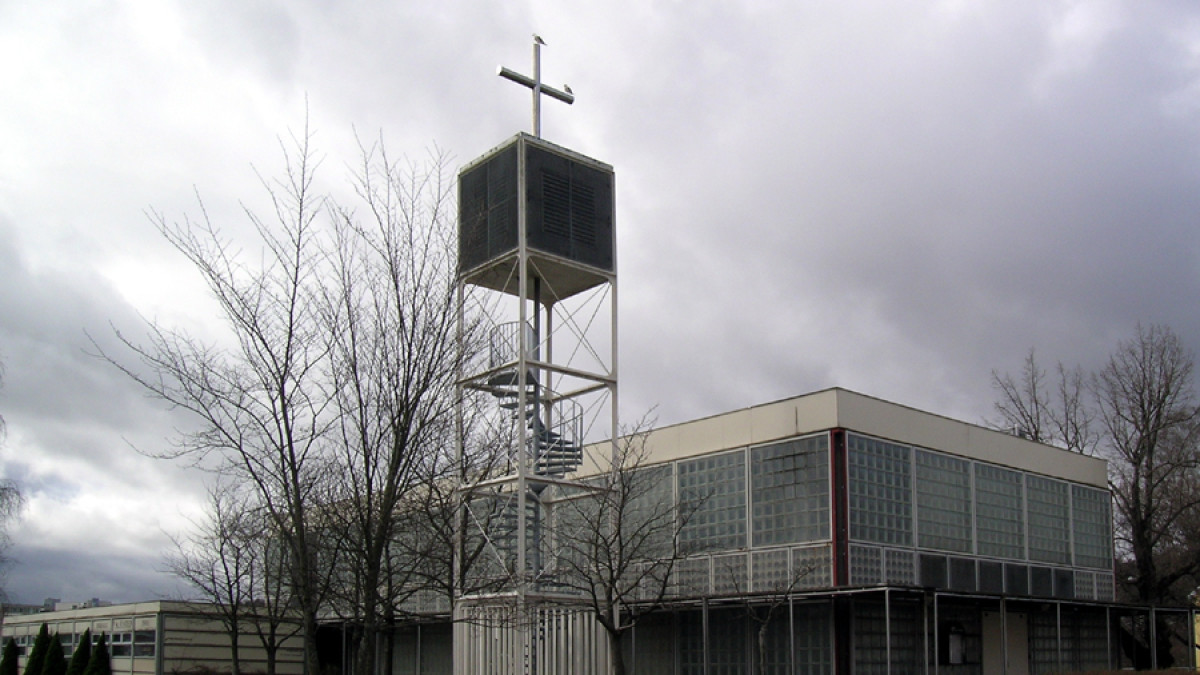
St. Olav Church in Trondheim
wikipedia.org
The issue returned after an article by the newspaper „VG”. Two people discovered that they were listed as members of Marokkansk Trossamfunn in Oslo, even though, as they claim, they had never joined the community. One of them appeared on lists used as the basis for calculating funding in 2025 and 2026. The community stated that it is now unable to document how this particular registration came about. Older paper forms were reportedly destroyed after the register was digitised in 2020. Statsforvalteren has begun reviewing the case, and this year’s funding payment to the community has been suspended pending the inspection. After the publications, Norwegians began checking their details in large numbers. From Monday until Wednesday morning, the Brønnøysundregistrene service recorded nearly 100,000 logins. This does not mean 100,000 different people – the statistic concerns the number of system visits.
The register checks the personal identity number, but does not confirm consent
Religious and life-stance communities, except for the Church of Norway (Den norske kirke), submit lists each year of people for whom they wish to receive funding. The lists contain Norwegian personal identity numbers (fødselsnummer), and the data must reflect the situation as of 1 January of that year. Brønnøysundregistrene compares the numbers with the National Population Register (Folkeregisteret), the register of Den norske kirke and the lists of other communities. The check makes it possible to determine, among other things, whether a person lives in Norway and whether they have been registered by several organisations at the same time. However, the system has an important limitation: it does not verify whether a person actually joined the community themselves or was properly registered by their parents as a child. The organisation itself must meet this requirement. If a personal identity number appears simultaneously in Den norske kirke or on the lists of several registered communities, none of them will receive funding for that person. Membership in more than one organisation is not prohibited, but such a person is not counted when support is paid out.
A community can receive NOK 1,611 for one member
The funding rate in 2026 is NOK 1,611 per eligible member. It was calculated on the basis of state and municipal spending per member of Den norske kirke. Communities outside the Church of Norway may receive a total of approximately NOK 1.29 billion this year. From 1 January 2026, an organisation must have at least 100 members counted for funding purposes. Previously, 50 people were required. A listing visible on a profile does not in itself determine that the organisation received money specifically for that person. It must also meet other conditions, including those concerning the number of members, reporting and accounts. Minister of Children and Families Lene Vågslid considered registering people against their will unacceptable. After the case was revealed, she announced an analysis of whether the regulations and oversight of communities should be tightened.
How to check membership using BankID
Checking your own details takes just a few minutes:
- Go to Min side at Brønnøysundregistrene.
- Log in via ID-porten, for example using BankID.
- Select the “Tros- og livssynssamfunn” tab.
- Check whether the community you belong to is listed there and whether there is an entry you do not recognise.
How to check a child’s details
A person who has turned 15 must request access to their own information themselves. They can log in to Min side or call Brønnøysundregistrene. In the case of a child under the age of 15, a parent should call 75 00 75 00. The helpline for this matter operates on weekdays from 9:00 a.m. to 12:00 noon. Information about membership will be sent by post to the child’s address registered in Folkeregisteret.
Do you see incorrect membership? Write directly to the community
Brønnøysundregistrene checks lists for funding purposes, but it does not register people with communities and cannot remove them from them. If you see an unknown organisation or membership that should already have ended:
- Keep a record of the community’s name and the date you checked it. You can also take a screenshot.
- Contact the community directly in writing and request that your details be corrected or that you be removed from the register.
- Ask for written confirmation of the change and the date it was made.
- If, after you have been removed, the community still reports you on its funding list, notify the relevant Statsforvalteren.
The change may not appear immediately
The information visible in Brønnøysundregistrene is updated once a year. The register does not show every enrolment and withdrawal in real time, so after your details have been corrected, the old entry may still remain visible for some time. For this reason, it is a good idea to keep the confirmation received from the community. The absence of an organisation on your profile also does not always mean there is no membership. The community may not have applied for funding, may not have reached the required threshold of 100 people, may have registered the member after 1 January, or may not have submitted their correct personal identity number.
Polish surnames had already appeared on lists before
For Poles living in Norway, this is not an entirely new problem. Between 2011 and 2014, the Catholic Diocese of Oslo used the so-called telephone directory method. People were added to the list based on surnames associated with Catholic countries, including Poland, Vietnam, Spain and the Philippines. In this way, approximately 50,000 new members were recorded, and some people did not know they had been registered. The case at the time concerned different rules and a different organisation, but it showed the same problem: checking that a personal identity number is correct does not replace verifying whether a person actually consented to membership. Today, this can be verified independently by logging in to the state service. <!--
SOURCES AND EDITORIAL NOTES — DO NOT PUBLISH
- Brønnøysundregistrene, Tros- og livssynssamfunn, updated 17.12.2025
https://www.brreg.no/andre-tema/tros-og-livssynssamfunn/
- Ministry of Children and Families, Annual verification of membership lists for religious and life-stance communities, updated 07.01.2026
https://www.regjeringen.no/no/tema/tro-og-livssyn/tros-og-livssynssamfunn/arlig-kontroll-av-medlemslister-til-tros-og-livssynssamfunn/id3140717/
- Ministry of Children and Families, funding rate for 2026, 05.05.2026
https://www.regjeringen.no/no/dokumenter/sats-for-berekning-av-statstilskot-til-trus-og-livssynssamfunn-2026/id3158680/
- Ministry of Children and Families, increase in the minimum number of members to 100 from 01.01.2026
https://www.regjeringen.no/no/aktuelt/i-2026-oker-antallskravet-for-tros-og-livssynssamfunn-fra-50-til-100-tilskuddstellende-medlemmer/id3136283/
- SSB, Religious communities and life stance communities, 2026 data
https://www.ssb.no/en/kultur-og-fritid/religion-og-livssyn/statistikk/trus-og-livssynssamfunn-utanfor-den-norske-kyrkja
- VG, the Marokkansk Trossamfunn case and login statistics; information also reconstructed based on reports by iNyheter and Utrop, 21–23.09.2026
https://inyheter.no/21/09/2026/marokkansk-trossamfunn-i-oslo-fikk-tilskudd-basert-medlemmer-som-aldri-har-hort-om-det-eller-meldt-seg-inn/
https://www.utrop.no/nyheter/389617/
- The Catholic Church / press reports concerning the so-called telephone directory method, 2011–2017
https://www.katolsk.no/nyheter/2017/01/dom-i-oslo-tingrett
https://www.newsinenglish.no/2017/01/19/catholics-ordered-to-repay-state-funding/
Notes after verification:
- Nearly 100,000 refers to logins, not the number of unique people.
- Min side is not a complete register of all memberships that is updated in real time; the data is used for the annual verification of funding lists.
- In the event of an error, contact the community first. Statsforvalteren accepts reports when an organisation continues to list a person after they have left or may have improperly claimed funding for them.
-->
How do you rate this article?