English
|
We współpracy z kancelarią Advokatfirma Nierzwicki & Bluszko AS
|
08.10.2026 07:08
Are you on sick leave in Norway? This is what your employer cannot require of you
Sykemelding does not mean completely cutting off contact with the company. An employee is obliged to cooperate in planning a return to work, but the employer cannot demand information about the diagnosis, force the employee to work despite being fully signed off, or threaten dismissal merely because the employee is ill. When pressure, questioning of the sick leave, or a threat of job loss arises, the matter may require legal consultation.
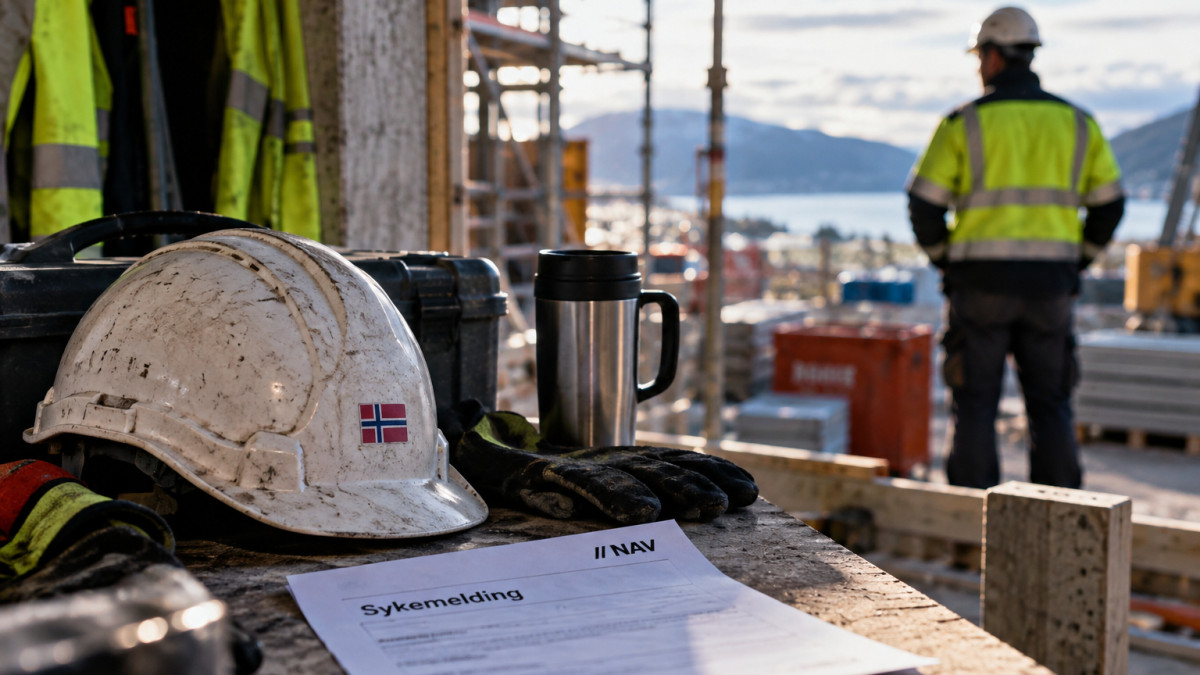
Sick leave in Norway
MojaNorwegia - Ilustracja AI
Sick leave in Norway concerns a huge part of the labour market. According to NAV and SSB data, in the second quarter of 2026, the total sickness absence rate was 6.7 percent, and more than 7.8 million working days were lost due to doctor-certified sick leave.
NAV also indicates that a record 31 percent of sick leaves were partial sick leaves, i.e. gradert sykmelding.
However, there are specific situations behind the statistics. An employee receives a sykemelding, and after a few days the calls begin:
“What exactly is wrong with you?”
“You can surely come in for at least a few hours.”
“If you are on sick leave for that long, we will have to find someone else.”
Not every question from an employer is prohibited. The Norwegian system explicitly assumes dialogue between the parties. The problem begins when oppfølging, meaning proper follow-up of the employee’s situation, turns into pressure.
Sykemelding and sykepenger are not the same thing
Sykemelding is a medical certificate confirming that an employee is fully or partially unable to work.
Sykepenger is a benefit intended to replace lost income during illness.
According to NAV, one of the basic conditions for entitlement to sykepenger is a reduced capacity to work of at least 20 percent of normal working hours.
Sykemelding can be full, for example 100 percent, or partial – for instance 20, 40 or 50 percent.
With gradert sykmelding, the employee performs the part of the work that their health condition allows. This does not mean, however, that the employer can freely determine the scope of duties while ignoring the employee’s limitations.
A common mistake is to treat partial sick leave like an ordinary work instruction. If an employee has gradert sykmelding, the aim is for them to perform the part of their duties that their current work capacity allows. The employer should seek a solution together with the employee.
~Nina Bluszko, attorney, Advokatfirma Nierzwicki & Bluszko AS
Can an employer ask what you are ill with?
This is one of the most important issues.
An employer has no right to demand information from an employee about their diagnosis or complete medical history.
However, the employee should provide information concerning their capacity to work and functional limitations.
In practice, an employer may therefore ask:
“Can you perform lighter duties?”
“Would a shorter working day be possible?”
“What workplace adjustment could help?”
However, they should not require answers to questions such as:
“What exactly is your diagnosis?”
“What medication are you taking?”
“Show me your medical records.”
An employee may voluntarily disclose more, but the employer cannot force them to reveal such information.
The employer should primarily be interested in what activities the employee is currently able to perform and what adjustments could enable a safe return to work. The diagnosis and treatment details, on the other hand, belong to the private sphere.~Nina Bluszko, attorney, Advokatfirma Nierzwicki & Bluszko AS
“You are on sick leave, but come in for a few hours”
The type of sick leave is of primary importance.
If an employee has a 100-percent sykemelding, this generally means that they are completely unable to perform their regular work during the period covered by the sick leave.
The employer may contact them about returning to work or possible workplace adjustments. However, this does not mean they have the right to order the employee to carry out normal duties as if the sick leave did not exist.
With partial sick leave, the situation is different. In that case, part of the work is to be performed, but its scope should correspond to the employee’s actual work capacity.
Norwegian regulations also impose a duty of tilrettelegging, meaning work adjustments, on the employer. This may involve changing working hours, duties, workplace equipment, or temporarily assigning other tasks.
Therefore, the rule cannot be: “Either you return and do everything as before, or we have nothing to discuss.”
The employee also has obligations
Sykemelding does not mean that an employee can completely ignore their employer.
The Norwegian system is based on cooperation. The employee should participate in preparing an oppfølgingsplan, i.e. a follow-up plan and possible return-to-work plan.
As a general rule, the plan should be prepared
within four weeks at the latest and cover, among other things:
- the current ability to perform work,
- possible adjustments to duties,
- measures facilitating a return,
- the further plan of action.
However, it is not a place for a detailed description of the illness.

Sick leave under pressureMojaNorwegia - AI illustration
Dialogmøte – do you have to attend?
In the event of longer-term sick leave, the employer may arrange a dialogmøte 1.
For a person completely absent from work, such a meeting should generally take place no later than seven weeks after the sick leave began, unless it is clearly unnecessary.
The purpose of the meeting is not to check whether the employee is “really ill.”
The discussion should primarily concern what the employee can do, what their limitations are, and whether the position can be adjusted.
With longer-term sick leave, NAV may also become involved. Before 26 weeks have elapsed, NAV may arrange a dialogmøte 2 with the employee and employer.
If communication with the employer no longer leads to a solution, it is worth ensuring that further arrangements are properly documented. In a dispute, what the employer actually proposed and how the employee responded may later be of great importance.
~Tomasz Nierzwicki, attorney, Advokatfirma Nierzwicki & Bluszko AS
After 8 weeks, NAV looks at activity
With longer-term sick leave, the general rule is that a person receiving sykepenger should – if their health condition allows it – undertake work-related activity.
This does not mean an automatic obligation to return to full-time work.
If there are medical contraindications or the employer cannot provide appropriate workplace adjustments, exceptions are possible.
This is why documenting attempts to find a solution is so important.
Can a boss challenge a sykemelding?
They may challenge it, but merely stating, “I do not believe you are ill,” does not make the sick leave cease to be valid.
NAV lists examples of situations that may raise doubts, for example where sick leave occurs directly in connection with a workplace conflict, dismissal or holiday, or where the employee engages in activities suggesting they could work.
One thing is important: a conflict with an employer alone does not automatically entitle a person to sykepenger – on the contrary, a workplace conflict may be grounds for refusing sickness benefits. However, if the conflict leads to an actual deterioration in health and inability to work, the situation may be different.
The wording of Section 8-4 of the National Insurance Act (folketrygdloven) is clear:
Sickness benefit is payable to a person who is unable to work due to an impairment of function that is clearly caused by illness or injury. Inability to work caused by social, economic or similar problems does not entitle a person to sickness benefit.
If an employer refuses to pay sykepenger for the first 16 days, the employee may ask NAV to assess the matter.
Can an employee be dismissed while on sick leave?
You can often hear:
“If you are on sykemelding, they cannot dismiss you.”
This is an oversimplification.
However, the Norwegian Working Environment Act (arbeidsmiljøloven) provides the employee with very strong protection. A person unable to work due to illness or injury cannot be dismissed because of that illness during the first 12 months of incapacity for work.
This does not mean that dismissal is absolutely impossible during sick leave.
The employment contract may be terminated for another justified reason, for example due to a genuine workforce reduction.
The key issue is therefore to establish what the real reason for the dismissal was.
“You have been on sick leave for too long, so we have to dismiss you,”
they should treat the situation very seriously.
The 12-month protection does not mean that termination of employment is absolutely impossible during sick leave. However, it does mean greater protection against dismissal specifically because of illness. If an employer starts talking about ending employment after a longer sick leave occurs, it is worth examining the reason for the dismissal closely.
~Nina Bluszko, attorney, Advokatfirma Nierzwicki & Bluszko AS
Before dismissal takes place
In the case of long-term health problems, the employer should also examine the possibility of adjusting the position.
This may involve changing duties, working hours, how work is organised or – where possible – offering other suitable tasks.
The employer does not have to create a new position especially for the employee, but should genuinely examine the available options.
This may be of great importance later if the conflict ends in dismissal.
Conflict with your boss? Keep records
When the relationship with the employer begins to deteriorate, it is worth keeping:
- the sykemelding and subsequent sick notes,
- the oppfølgingsplan,
- invitations to and summaries of dialogmøte,
- emails and text messages,
- proposals to change duties,
- warnings and meeting requests,
- correspondence with NAV,
- any notice of dismissal or proposed sluttavtale.
Messages showing that the employer pressured the employee despite the sick leave, demanded medical information, or linked sick leave to a threat of job loss may be particularly important.
When is it worth consulting someone?
Disputes during sykemelding often do not begin with dismissal.
First there is a call from a supervisor. Then a suggestion of returning early. Next come questions about the diagnosis, refusal to adjust duties, or information that “the company cannot wait any longer.”
That is why it is worth knowing where proper oppfølging ends and unacceptable pressure begins.
If you are on sykemelding and your employer
challenges your sick leave, refuses sykepenger, pressures you to return to work, demands detailed information about your health, refuses to adjust your position, or threatens dismissal, contact the law firm
Advokatfirma Nierzwicki & Bluszko AS.
The firm assists Poles living and working in Norway, among other things, with matters concerning sykemelding, dismissals, conflicts with employers, the duty of tilrettelegging, and other issues under Norwegian labour law.
In such a case, not only the sick leave itself may matter, but also the manner in which oppfølging was conducted, correspondence with the employer, the course of dialogmøte, proposed adjustments, and the actual reason for any dismissal.
The earlier the documents are secured and analysed, the easier it is to determine what obligations the employee has, where the employer’s powers end, and what steps can be taken to protect the employee’s rights.
Everything begins with a conversationAdvokatfirma Nierzwicki & Bluszko AS