A rare visitor on Norway's beaches. It is not dangerous, though easily mistaken
A rare visitor has appeared on the Norwegian coast. Within a week, eight sightings of the blue jellyfish Velella velella, which usually drifts in the waters of the Mediterranean Sea, were recorded. Since 2008, it has only been registered 37 times in Norway.
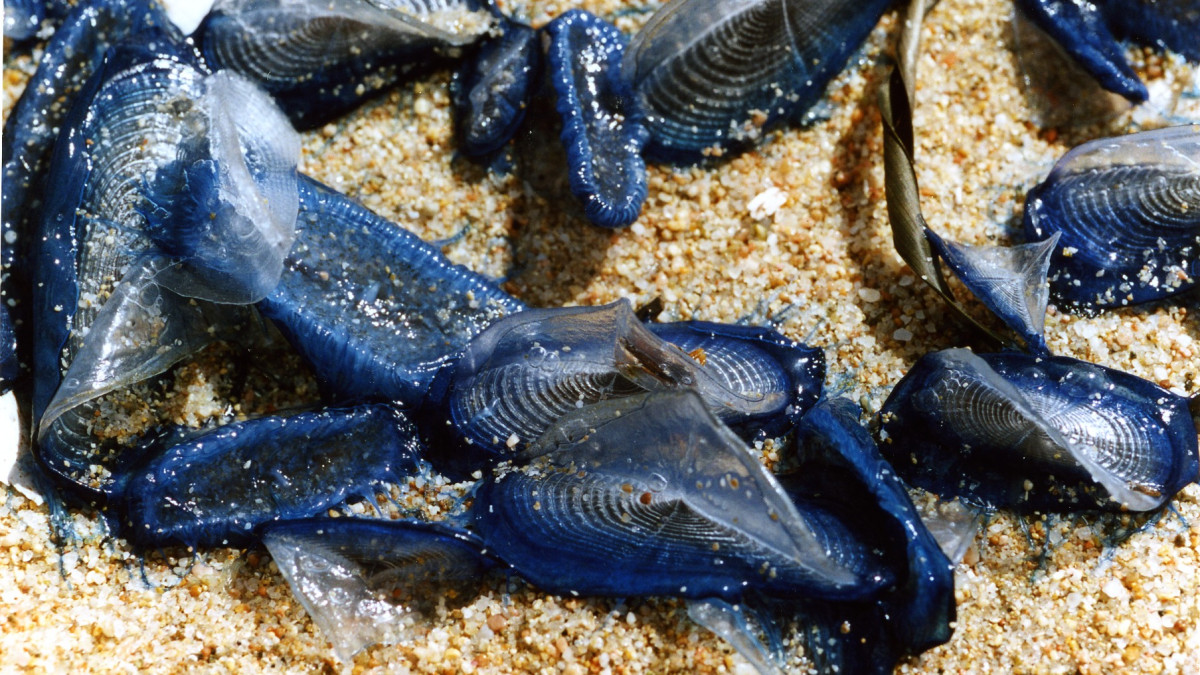
In the photo: Velella velella jellyfish
Fot. CC0
The animal may resemble the dangerous Portuguese man o' war. Both species are blue and related, but Velella velella is smaller and poses no threat to humans. The new finds come from several locations in the southwest of the country. The jellyfish were spotted in Farsund, Orre, Karmøy, Hå, and on Sola beach.
A rare visitor on the coast. Eight reports in a week
Velella velella is a species that prefers warmer waters. It most often drifts in the Mediterranean region, which is why its presence in the north caught the attention of observers. However, it appeared in several locations in Norway almost simultaneously. The portal Artsobservasjoner.no collected eight reports from the turn of July and August 2026. In the entire period since 2008, there have been 37 such records.
One of the finders initially suspected he had come across a Portuguese man o' war. This account was described by the newspaper 'Stavanger Aftenblad.' The similarity comes from the blue color and the relationship between the two organisms. However, the differences are clear. Velella velella is smaller and not dangerous.
One of the finders initially suspected he had come across a Portuguese man o' war. This account was described by the newspaper 'Stavanger Aftenblad.' The similarity comes from the blue color and the relationship between the two organisms. However, the differences are clear. Velella velella is smaller and not dangerous.
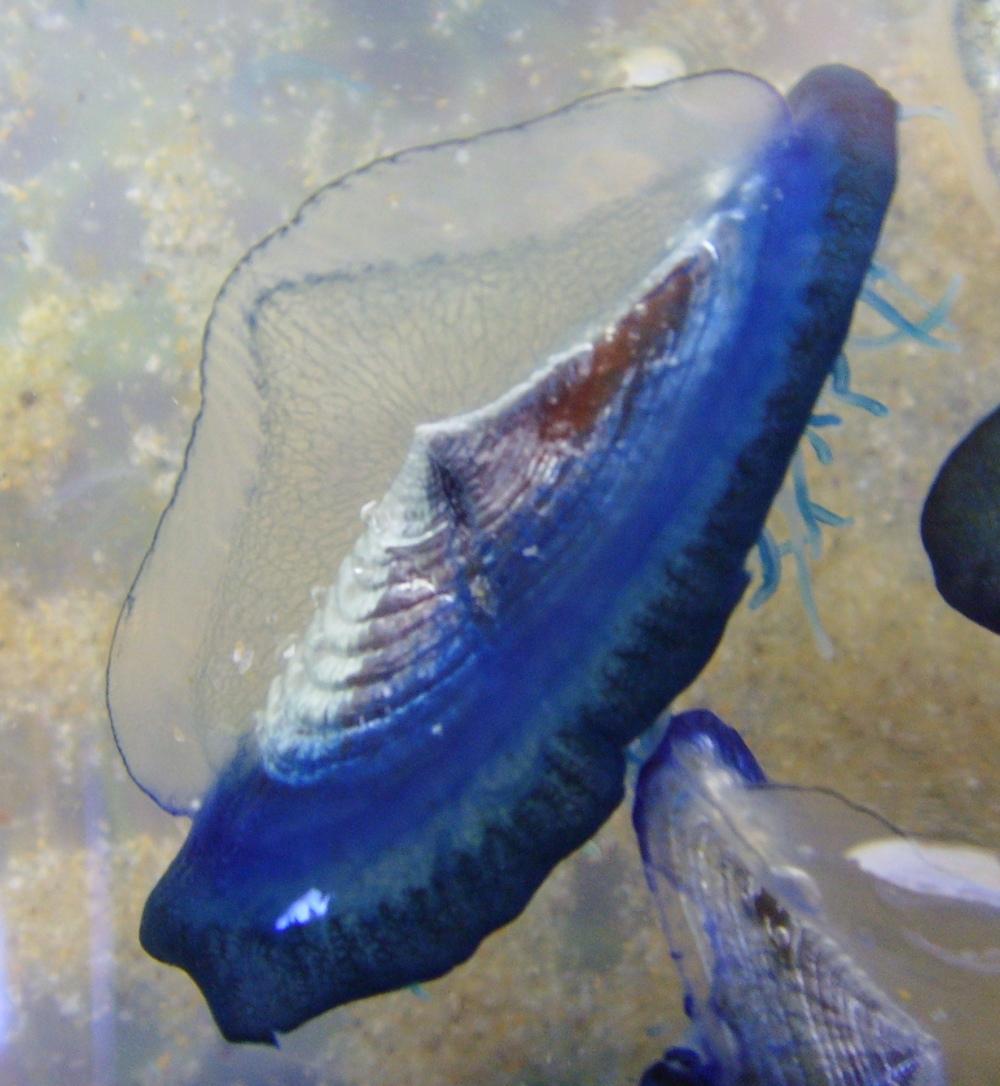
In the photo: Velella velella jellyfishPhoto: CC0
Wind and sea currents. Jellyfish also reached Denmark
A similar find was also recorded in Denmark. A German family came across a small jellyfish while walking on Kandestederne beach in northern Jutland. The information was provided on Tuesday by the North Sea Oceanarium (Nordsøen Oceanarium). The institution described the presence of this species in Denmark as 'very rare.' The discovery surprised the walkers.
Kristina Ydesen, the chief biologist at Nordsøen Oceanarium, pointed to unusual conditions. In her opinion, a special arrangement of wind and sea currents could have carried the jellyfish all the way from the Mediterranean Sea. She called their appearance on the shore spectacular. She also assured that the species is not dangerous. Touching it may at most cause mild irritation and itching.
Kristina Ydesen, the chief biologist at Nordsøen Oceanarium, pointed to unusual conditions. In her opinion, a special arrangement of wind and sea currents could have carried the jellyfish all the way from the Mediterranean Sea. She called their appearance on the shore spectacular. She also assured that the species is not dangerous. Touching it may at most cause mild irritation and itching.
Nordsøen Oceanarium expects that more individuals may now be washing ashore. The institution encouraged residents and tourists to observe the northwestern coast of Jutland, where more jellyfish may be thrown up by the waves. Their appearance may therefore bring further reports in the coming days.
How do you rate this article?