The Start of School in Norway. An Important Appeal to Parents
More than 600,000 children in Norway are preparing for the start of the 2026/2027 school year. Nearly 60,000 six-year-olds will walk the route between home and school for the first time, which means a noticeable change in the situation on the streets around schools. Trygg Trafikk is appealing to parents to limit car traffic near schools.
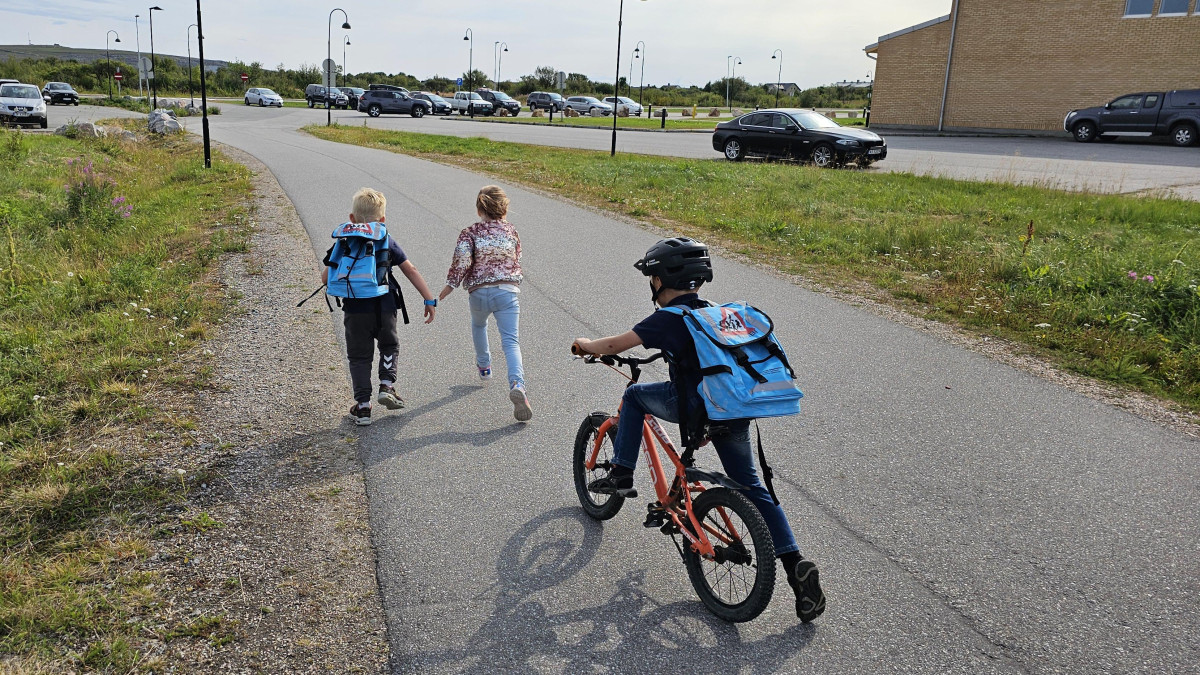
The Norwegian school year usually begins in the 33rd week of the calendar year.
Fot. Espen T. Karlsen/Trygg Trafikk
In most regions and cities in Norway, classes will begin on Monday, August 17, 2026. This includes Oslo, Akershus, Innlandet, and Trøndelag, although the exact school year calendar may vary depending on the municipality or district. There is no single date for the entire country. With the start of classes, more children will appear on the roads, walking and riding bicycles.
More Children on the Roads. Parents Increase Traffic
The Norwegian Road Safety Council (Trygg Trafikk) draws attention to the situation in front of schools during morning drop-offs. According to the organization, many schools struggle with heavy traffic both directly at the buildings and on the roads leading to them. One of the causes is parents' cars. The problem intensifies especially during drop-off and pick-up hours.
Christoffer Solstad Steen from Trygg Trafikk points out that some parents consider the route to school unsafe and therefore choose to drive their children. At the same time, additional cars can lead to further dangerous situations in the school area. Tight and unclear parking lots are a particular problem. Small children are less visible to drivers there.
Christoffer Solstad Steen from Trygg Trafikk points out that some parents consider the route to school unsafe and therefore choose to drive their children. At the same time, additional cars can lead to further dangerous situations in the school area. Tight and unclear parking lots are a particular problem. Small children are less visible to drivers there.

Children in Norway start the school year earlier than in Poland.Photo: Fotolia
Fewer Cars Near Schools. Special Zones to Help
Trygg Trafikk recommends limiting car traffic directly around schools. If driving a child is necessary, the organization suggests parking at a distance and walking the last stretch. This is intended to reduce the number of cars at entrances. In this way, parents can limit traffic in areas where many children are moving at the same time.
One solution is so-called Hjertesoner, or zones around schools with restricted car traffic. These may have designated spots for short stops, drop-offs, or pick-ups. Trygg Trafikk encourages parents to contact the municipality, school, or parent council (FAU) about establishing such a zone. The organization also encourages children, when possible, to walk or bike to school.
One solution is so-called Hjertesoner, or zones around schools with restricted car traffic. These may have designated spots for short stops, drop-offs, or pick-ups. Trygg Trafikk encourages parents to contact the municipality, school, or parent council (FAU) about establishing such a zone. The organization also encourages children, when possible, to walk or bike to school.
Trygg Trafikk points out that preparing for an independent route to school should include joint practice with parents. Special attention should be paid to intersections, driveways, and the rules of moving along the road. The experience gained in this way is intended to help children move safely in traffic in the following years as well.
How do you rate this article?