The “perfect mix” for the NOK. What is behind the strengthening of Norway’s currency?
The NOK is at its strongest since autumn 2022 against a basket of currencies from Norway's trading partners. This lowers the costs of foreign travel and purchases when converted into NOK. Chief strategist Dane Cekov links the currency's strengthening to high energy prices and concerns about public finances in Europe.

1. The euro and dollar cost less in NOK. A change that matters not only to tourists.
Fot. Fotolia (zdjęcie poglądowe)
The change affects many currencies. Since the beginning of 2026, the NOK has gained against the euro, the dollar, and the currencies of Sweden and Denmark. The scale of the strengthening is shown by the I44 index. It tracks the NOK exchange rate against the currencies of 44 of Norway's trading partners and is monitored by the country's central bank.
The euro costs less. Swedish and Danish currency exchange rates have also fallen
Buying euros requires a smaller amount in NOK. According to exchange rates cited by E24, the common currency costs NOK 10.47, compared with NOK 11.84 at the beginning of the year. The dollar is also cheaper. The US currency costs NOK 9.34, while at the beginning of the year it was NOK 10.07.
Cekov points to Sweden as offering the greatest exchange-rate savings. One hundred Swedish kronor cost NOK 94, compared with NOK 109 at the beginning of the year. The Danish currency also costs less. Buying 100 Danish kroner requires NOK 140, compared with NOK 158 at the beginning of the year. According to the strategist, the NOK has also strengthened by 10 percent against the Swiss franc.
Cekov points to Sweden as offering the greatest exchange-rate savings. One hundred Swedish kronor cost NOK 94, compared with NOK 109 at the beginning of the year. The Danish currency also costs less. Buying 100 Danish kroner requires NOK 140, compared with NOK 158 at the beginning of the year. According to the strategist, the NOK has also strengthened by 10 percent against the Swiss franc.
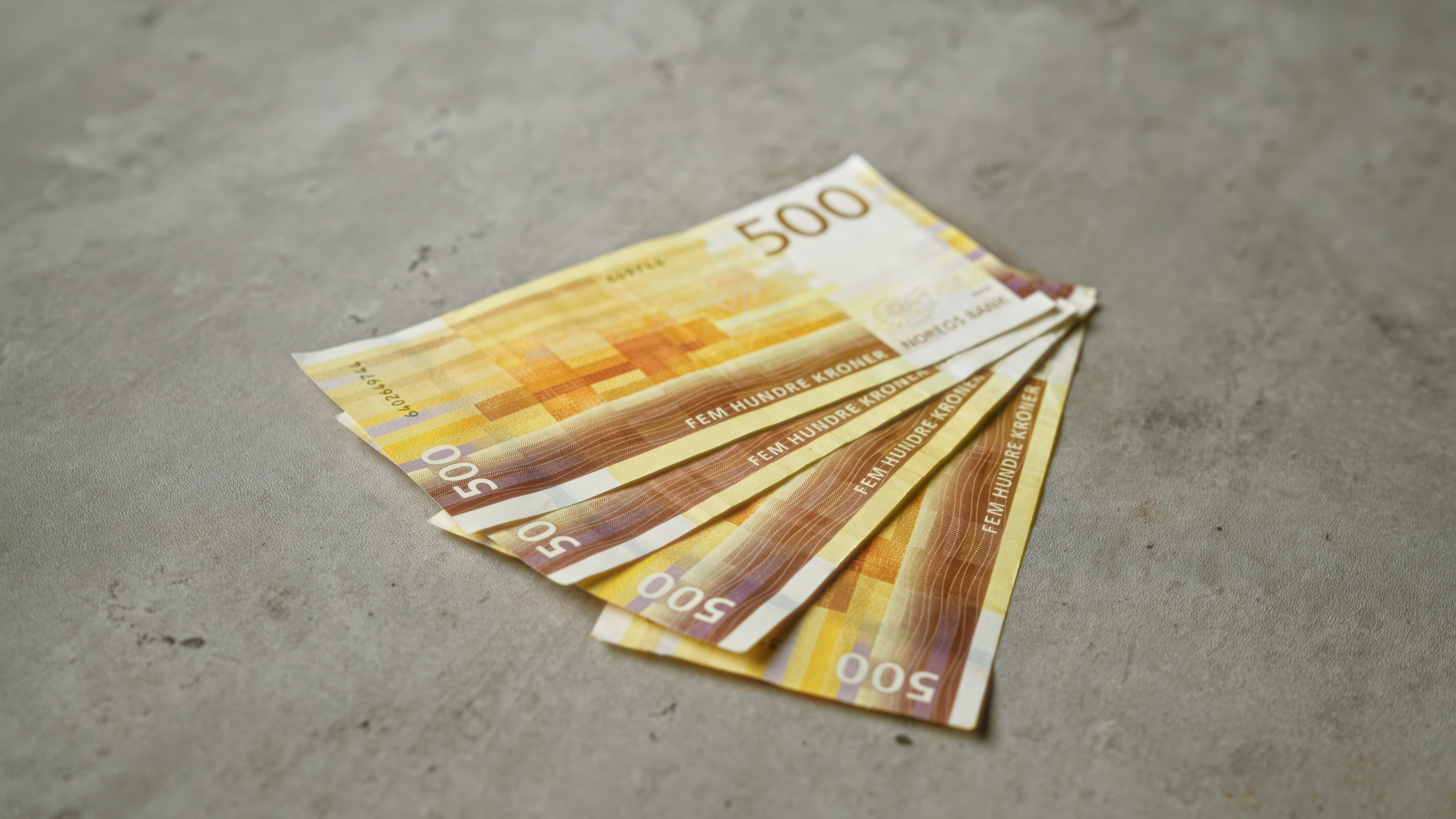
The NOK is at its strongest since 2022. The euro costs NOK 10.47.Photo: Adobe Stock, standard licence
Expensive energy supports the NOK. Strategist outlines two scenarios
Cekov points to oil at USD 112 per barrel. In his view, high energy prices linked to wars in the Middle East and Ukraine are supporting the strengthening of the NOK. Concerns about French public finances also matter. The strategist believes that tensions surrounding the finances of European countries are weakening the euro, creating, together with expensive energy, the “perfect mix” for a stronger NOK.
However, further strengthening is not certain. Cekov assumes that conflicts will ease over time, energy prices will fall, and the situation in Europe will calm down, which should weaken the NOK. He also considers the opposite scenario. Prolonged wars, expensive energy, and growing concerns about elections and public finances in European countries could further strengthen Norway's currency. Under such conditions, the euro could cost even less than NOK 10, the strategist believes.
However, further strengthening is not certain. Cekov assumes that conflicts will ease over time, energy prices will fall, and the situation in Europe will calm down, which should weaken the NOK. He also considers the opposite scenario. Prolonged wars, expensive energy, and growing concerns about elections and public finances in European countries could further strengthen Norway's currency. Under such conditions, the euro could cost even less than NOK 10, the strategist believes.
Exchange-rate changes also matter for prices in Norway. Cekov notes that a stronger NOK should curb price increases caused by import costs. At the same time, he points out that the strengthening of the currency is less favourable for Norwegian exporters.
How do you rate this article?