Oslo comes first, but it was not the fastest-growing. New data on Norway’s population
Oslo remains Norway’s largest urban area. At the beginning of 2026, more than 1.1 million people lived there, and over 20 years the population grew by 35.7 per cent. The data also show major differences between the country’s largest urban areas and municipalities.
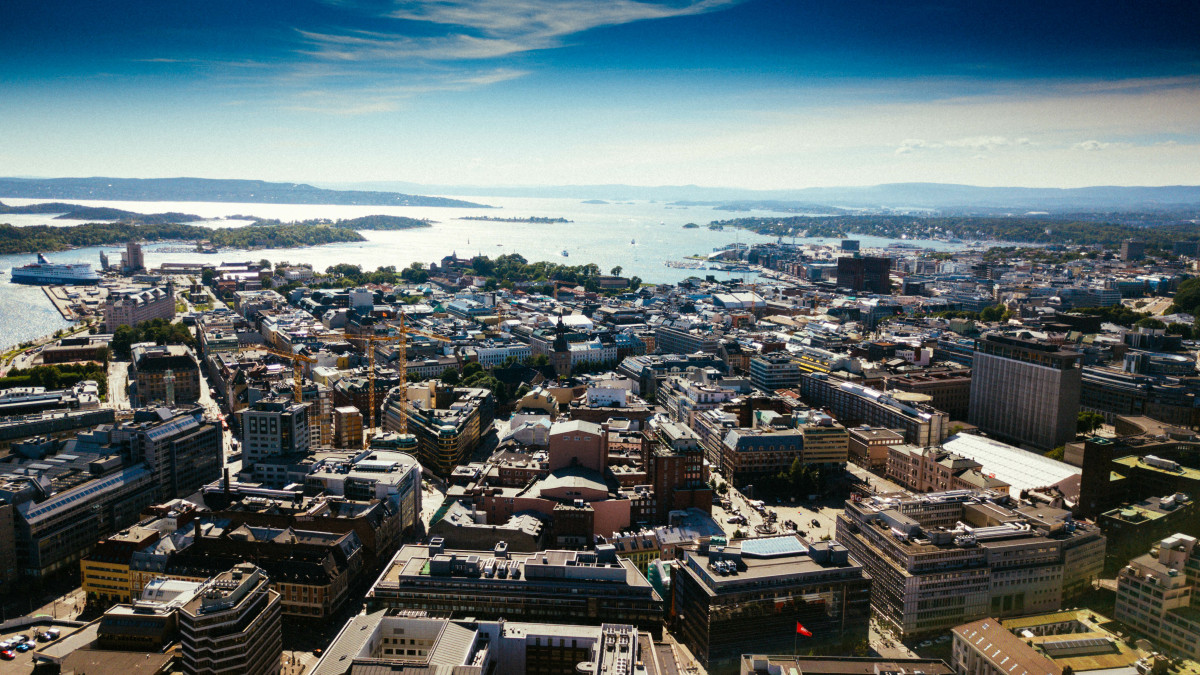
Although Oslo is by far the largest urban area, it cannot boast the highest percentage population growth.
Fot. Adobe Stock, licencja standardowa
Statistics Norway (SSB) points out that official statistics do not contain a formal definition of a city. Therefore, the data primarily concern urban areas and municipalities. The overview covers the situation as of 1 January 2026 and also shows changes in population since 2006. In some places, growth exceeded 35 per cent.
Oslo clearly the largest. Stavanger and Drammen are growing rapidly
Oslo remains the largest urban area, with 1,119,478 residents at the beginning of 2026. That is 35.7 per cent more than 20 years earlier. Bergen ranks second with 274,589 residents. Stavanger/Sandnes has 244,378 residents, and the population of this area has grown by 37.8 per cent since 2006. Trondheim ranks fourth with 202,397 residents.
Fifth-placed Drammen has 126,230 residents, and its population has increased by 37.8 per cent over 20 years. It is followed by Fredrikstad/Sarpsborg with 123,608 residents. Porsgrunn/Skien has 97,240 residents, while Kristiansand has 68,300. The top ten is rounded out by Tønsberg, with 57,011 residents, and Ålesund, home to 56,763 people. Among the ten largest urban areas, Kristiansand recorded the smallest growth – 5.2 per cent.
Fifth-placed Drammen has 126,230 residents, and its population has increased by 37.8 per cent over 20 years. It is followed by Fredrikstad/Sarpsborg with 123,608 residents. Porsgrunn/Skien has 97,240 residents, while Kristiansand has 68,300. The top ten is rounded out by Tønsberg, with 57,011 residents, and Ålesund, home to 56,763 people. Among the ten largest urban areas, Kristiansand recorded the smallest growth – 5.2 per cent.
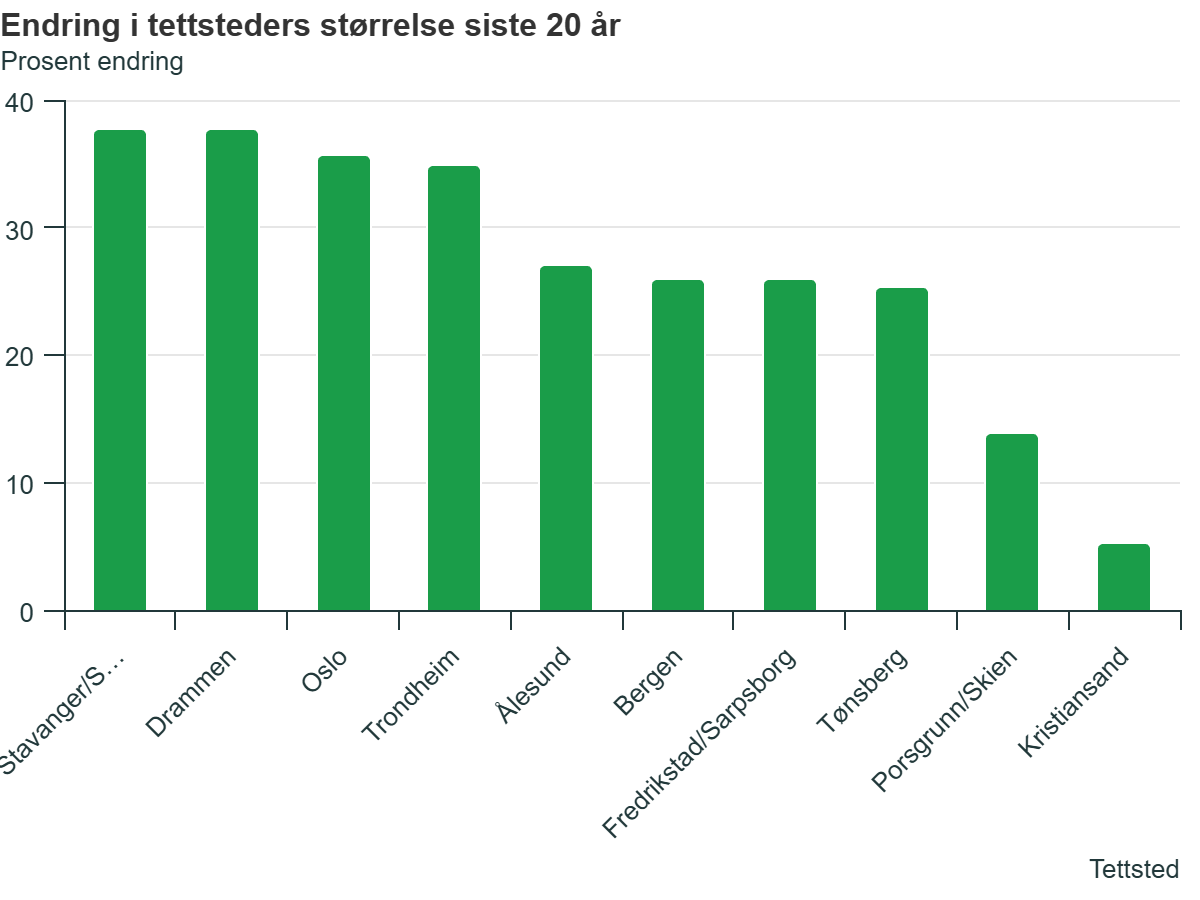
Change in the size of urban areas over the past 20 yearsIll. SSB
Municipalities have a different ranking. Lillestrøm stands out for the scale of its growth
Oslo also leads the municipal ranking, but its population is 728,714. Bergen has 294,860 residents and Trondheim 218,460. The next places are held by Stavanger, with 151,669 residents, and Bærum, with 133,228. Over 20 years, the population of the municipality of Oslo increased by 35.3 per cent.
Kristiansand is in sixth place with 119,287 residents. Drammen has 106,013 residents, and Asker 101,509. Lillestrøm has 96,771 residents, but it was this municipality that recorded the largest growth among the top ten – 46 per cent. The ranking is completed by Fredrikstad with 86,243 residents.
Kristiansand is in sixth place with 119,287 residents. Drammen has 106,013 residents, and Asker 101,509. Lillestrøm has 96,771 residents, but it was this municipality that recorded the largest growth among the top ten – 46 per cent. The ranking is completed by Fredrikstad with 86,243 residents.
SSB data also show why figures for urban areas and municipalities are not directly comparable. The administrative boundaries of municipalities do not coincide with the boundaries of contiguous built-up areas. This is why Oslo as an urban area has more than 1.1 million residents, while the municipality itself has 728,714.
How do you rate this article?