
More than 60 temperature records in Norway. October this warm has not been seen in years
October 2026 was Norway’s third warmest October in the history of measurements. The average temperature exceeded the current climate normal by 2.7 degrees. Warmer Octobers were recorded only in 2000 and 1901.
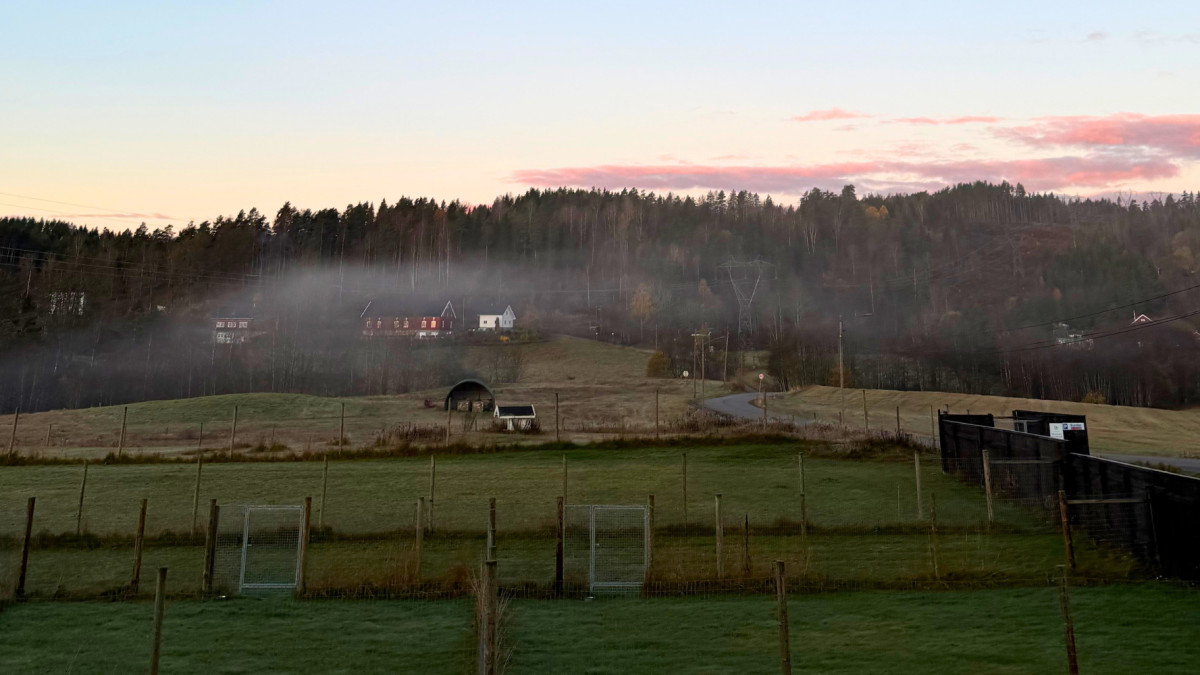
In the photo: Drammen in October 2026.
Fot. Vilde Jagland/MET
This is according to data from the Norwegian Meteorological Institute (MET). It was warm across the country, and no measuring station recorded temperatures below normal. More than 60 records for average monthly temperature were set. More than 20 records were also recorded for the highest temperature measured during a 24-hour period.
Exceptionally warm north. Record equalled in Svalbard
Northern Norway stood out the most. In parts of the Nordland region and in northern Troms and Finnmark, October was classified as extremely warm. High temperatures were also recorded in Svalbard. The weather station at the local airport registered 10.2 degrees, equalling the maximum temperature record from 7 October 2025.
The warmest location in the overview was Ytterøyane Fyr in the municipality of Kinn. The average temperature there was 11.5 degrees, 1.9 degrees above normal. The Kvitsøy – Nordbø, Lindesnes Fyr and Svinøy Fyr stations each recorded 11.3 degrees. The lowest average temperature, -1.4 degrees, was registered at Gaustatoppen and Juvvasshøe. Even in these locations, temperatures were above normal by 1.6 and 2.2 degrees respectively.
The warmest location in the overview was Ytterøyane Fyr in the municipality of Kinn. The average temperature there was 11.5 degrees, 1.9 degrees above normal. The Kvitsøy – Nordbø, Lindesnes Fyr and Svinøy Fyr stations each recorded 11.3 degrees. The lowest average temperature, -1.4 degrees, was registered at Gaustatoppen and Juvvasshøe. Even in these locations, temperatures were above normal by 1.6 and 2.2 degrees respectively.
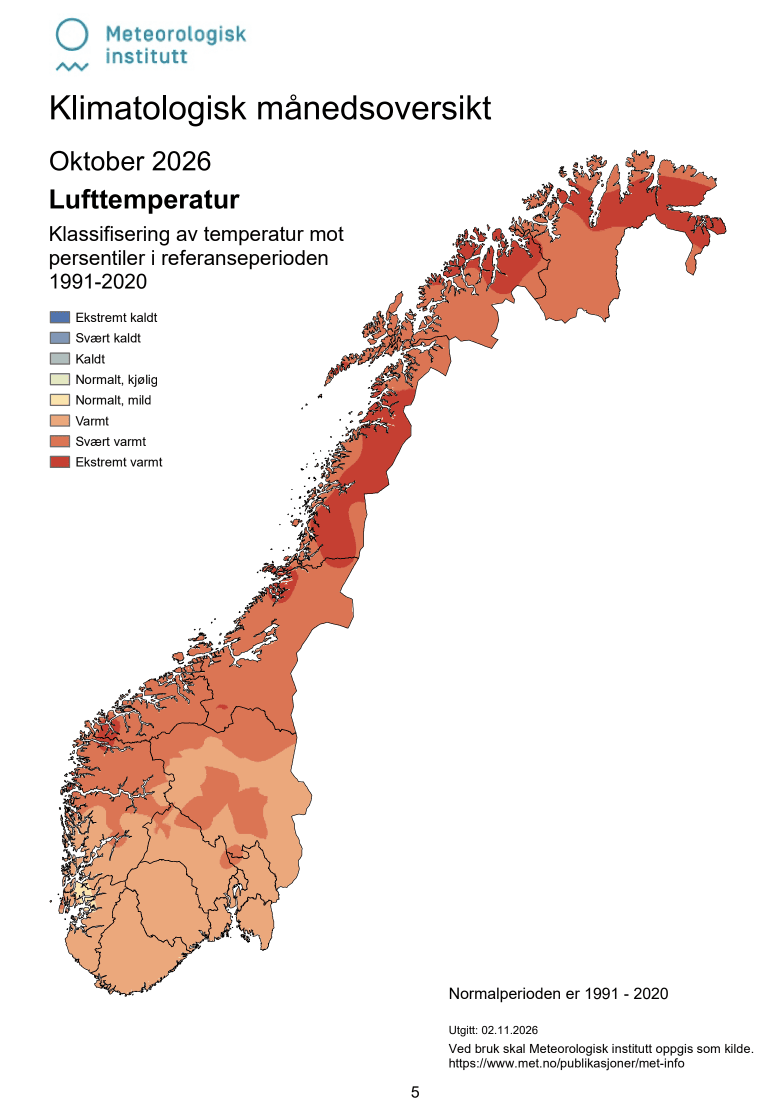
In the photo: temperatures in Norway in October 2026. The darker the shade of red, the greater the deviation from normal.Il. Lars Grinde/MET
Large differences in precipitation. Finnmark exceptionally dry
October also brought significant differences in precipitation levels. In parts of Finnmark, conditions were very dry, and in some places even extremely dry. The situation was different in Østfold. This year’s October ranked among the ten wettest since measurements began in 1901. Across the country, 22 precipitation records were set.
The most rain was recorded at the Gullfjellet station in Bergen. Total precipitation amounted to 583.8 mm, 43 percent more than normal. The Kvitfossen station in Vågan measured 519.2 mm, while Samnanger II recorded 517.7 mm. Completely different figures were registered in the north of the country, where only 9.1 mm of rain fell in Cuovddatmohkki. In Skogfoss, total precipitation was 9.3 mm, 80 percent below normal.
The most rain was recorded at the Gullfjellet station in Bergen. Total precipitation amounted to 583.8 mm, 43 percent more than normal. The Kvitfossen station in Vågan measured 519.2 mm, while Samnanger II recorded 517.7 mm. Completely different figures were registered in the north of the country, where only 9.1 mm of rain fell in Cuovddatmohkki. In Skogfoss, total precipitation was 9.3 mm, 80 percent below normal.
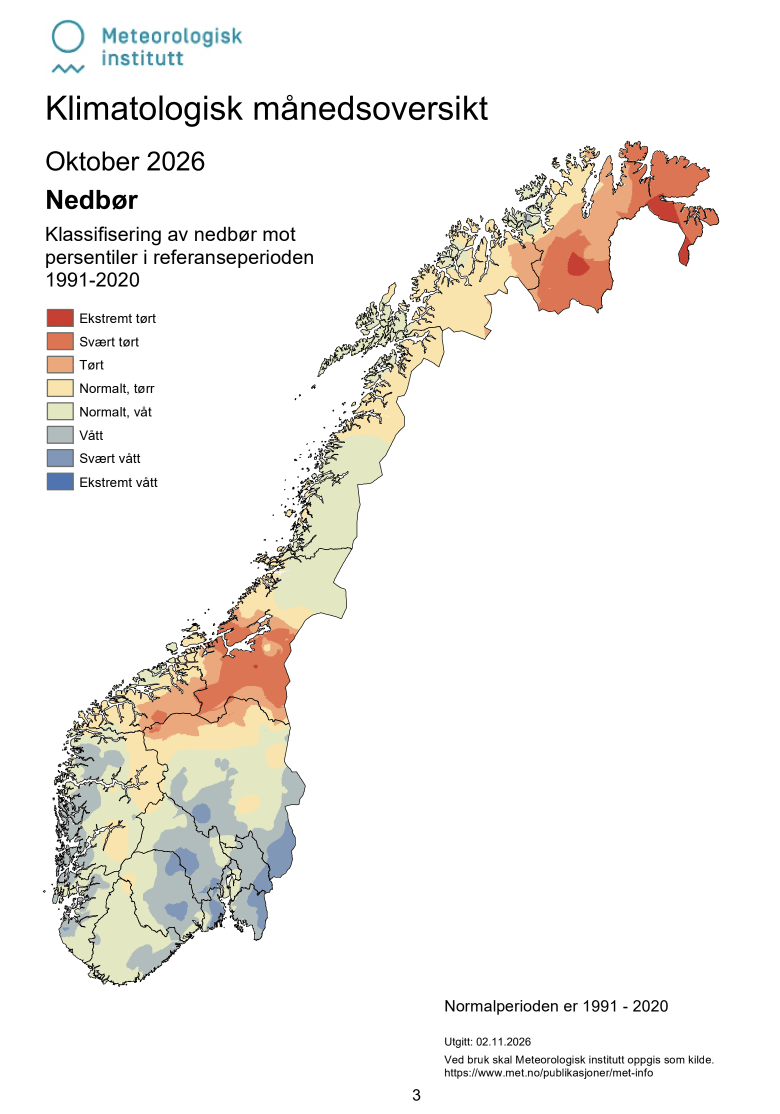
In the photo: precipitation in Norway in October 2026. Orange and red indicate drought, while shades of blue indicate exceptionally high moisture levels.Il. Lars Grinde/MET
MET climate researcher Reidun Gangstø points out that the impact of climate change is already visible both in typical weather conditions and in extreme events. According to her, Norwegian autumns are becoming warmer and wetter, although they remain unpredictable. As the average temperature rises, the number of autumn days when thermometers show more than 15 degrees is also increasing.
How do you rate this article?