Inflation in Norway accelerated again. One factor had a major impact on the data
Consumer inflation in Norway stood at 3.3 percent year-on-year in August. This was 0.3 percentage points higher than in July. The rise in the indicator was mainly driven by prices for care services, including fees for kindergartens and after-school programmes.
In August 2026, inflation was higher both year-on-year and month-on-month.
Fot. Adobe Stock, licencja standardowa
The consumer price index rose by 3.3 percent between August 2025 and August 2026, Statistics Norway (SSB) reported. Compared with July, however, the index level itself fell by 0.3 percent. The comparison base was significant. A year earlier, fees paid by parents for kindergartens had fallen markedly, while this year they remained almost unchanged between July and August.
Care fees pushed up the indicator. Last year's effect faded
Prices for social care services, including kindergartens and after-school programmes, rose by 0.8 percent from July to August. A year earlier, they had fallen by 21.1 percent over the same period. This difference had a strong impact on the annual data. As a result, the annual rate of price growth in this category increased by 22.5 percentage points.<br /><br />SSB points out that the sources of the current acceleration should also be sought in changes introduced a year earlier. In August 2025, parental fees for kindergarten places were reduced, which at the time lowered the annual CPI growth rate by around 0.4 percentage points. There was no similar decline this year. According to Espen Kristiansen of SSB, nearly unchanged prices between July and August therefore caused a rebound in the annual indicator.
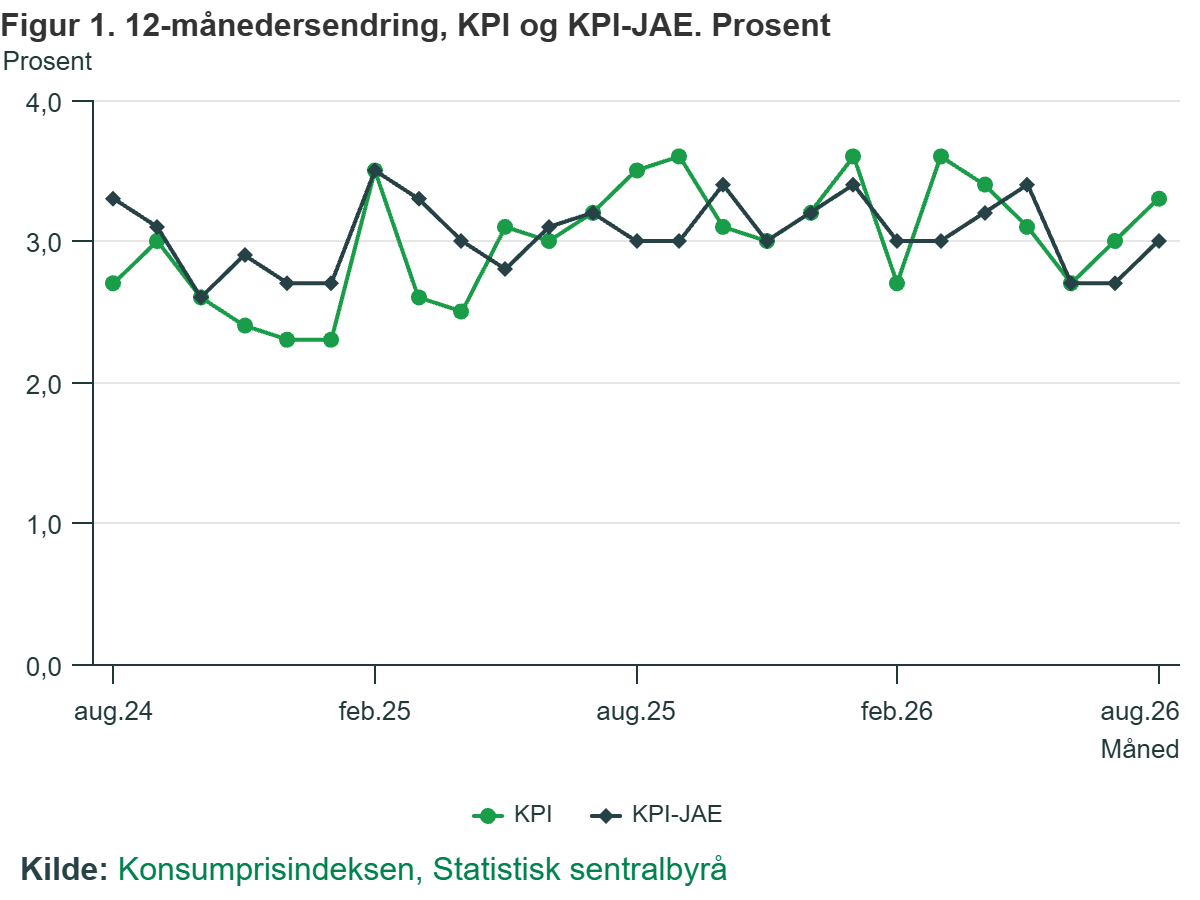
Inflation and core inflation over the past two years.Fig. SSB
Energy curbed inflation. Food acted in the opposite direction
Excluding administered prices, the annual growth rate of CPI-XADM was 3.4 percent in August. This was 0.1 percentage points lower than a month earlier. Electricity was one of the reasons. Its prices, together with grid charges, rose by 0.7 percent from July to August, but the increase was weaker than during the same period the previous year.<br /><br />As a result, the annual growth rate of electricity prices fell from 10.3 percent in July to 7.1 percent in August. At the same time, the CPI-JAE indicator rose by 3.0 percent year-on-year, compared with 2.7 percent in June and July. In addition to kindergarten fees, food contributed to the acceleration. Food prices did fall by 1.3 percent month-on-month in August, but a year earlier the decline had been 2.1 percent, which is why the annual growth rate increased from 0.9 to 1.7 percent.
Excluding tax changes, energy and administered prices, the CPI-JAE-XADM indicator remained at 3.0 percent year-on-year, the same level as in July. Rising food prices pushed the indicator up, while cheaper air tickets and non-alcoholic beverages worked in the opposite direction. Air transport prices fell by 22.4 percent from July to August and were 7.6 percent lower than a year earlier.
How do you rate this article?