Head lice at a Norwegian school: What to do if your child gets them?
Finding head lice on your child does not mean several days away from school or kindergarten. According to Norwegian recommendations, they can return to class after the first treatment. However, you should check the hair of everyone in the household, begin treatment for those who have lice, and inform the institution that the issue also affects your child.
Head lice at a Norwegian school: effective treatment and guidance for parents
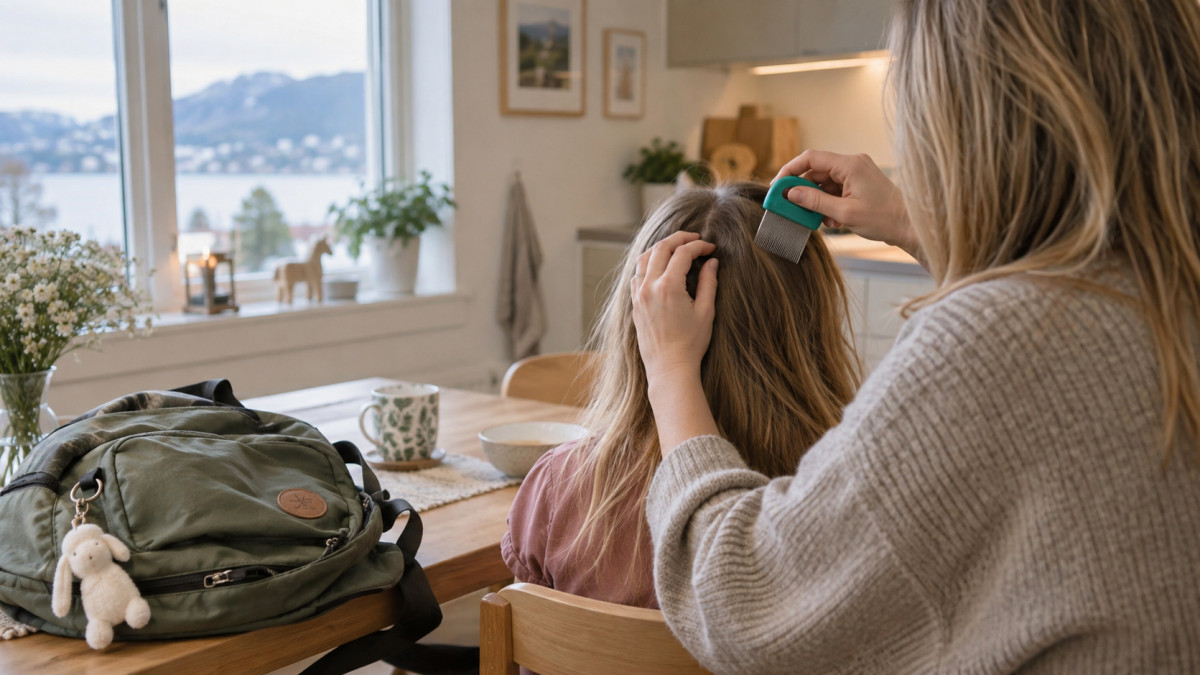
fot.Ai Norweskie podejście do wszy opiera się na spokoju i faktach - dziecko nie musi zostawać w domu, a pranie całego domu jest bezcelowe; pokazujemy, jak krok po kroku pozbyć się problemu zgodnie z lokalnymi standardami.
In brief
- After the first treatment, a child can return to school or kindergarten.
- Lice are mainly spread through head-to-head contact and are not related to poor hygiene.
- Treatment should only be used on people in whom live lice have been found.
- Treatment with a product usually needs to be repeated after 8–10 days.
- After treatment, hair should be checked once a week for 3 weeks.
In a Norwegian message from school, you may come across the word “hodelus”, meaning head lice, or a request for a “lusesjekk” – a hair check. Do not wait to do it, even if your child is not scratching. Itching does not always occur immediately, and some people do not feel it at all.
Lice are primarily spread through direct head-to-head contact. They do not jump or fly; they move from one hair to another. Head lice are not linked to poor hygiene. They can also occur in people who wash their hair frequently. Ordinary shampoo does not kill lice or their eggs.
There is no need to collect your child during lessons
If lice are noticed at school or kindergarten, there is no need to send the child home immediately. As the Helsenorge website explains, they probably had them already, so a few additional hours do not significantly change the risk of spreading them.
It is best to start treatment the same day, after returning home. After the first treatment, the child can attend classes as usual. However, this does not mean the treatment is complete. Depending on the method chosen, the treatment will need to be repeated or regular combing will need to continue.
How to check the hair
A fine-toothed lice comb, sold in Norway as a “lusekam”, is useful for checking. Adult lice are about 2–3 mm long. They move more slowly in wet hair and are easier to catch in the comb.
- Wet the hair. You can apply conditioner to make combing easier and place a white towel over the shoulders.
- Comb through all the hair thoroughly, section by section, from the scalp to the ends.
- Regularly wipe the comb on paper and check it for lice. Also inspect the towel.
Nits alone, meaning lice eggs, do not necessarily indicate an active infestation. They may be dead eggs or empty casings left in the hair after previous treatment. Finding live lice is definitive confirmation.
Once the problem has been found in one person, everyone in the household should be checked. If several people have lice, they should start treatment at the same time to avoid passing them back and forth.
Treatment products only for people in whom lice have been found
Helsenorge recommends products containing dimethicone. This is a silicone substance that works mechanically against lice. Products containing permethrin, called “permetrin” in Norwegian, are not recommended due to lice resistance.
The product should not be used preventively on the whole family simply because there has been a head lice outbreak in the class. It should be used to treat people in whom lice have actually been found. Each product must be used according to the instructions provided.
For most products, treatment must be repeated after 8–10 days. Not all eggs are killed during the first treatment. Repeating it removes lice that have had time to hatch before they begin laying new eggs. The exact timing depends on the product selected.
Combing is also a treatment method
Lice can be removed without a pharmacy product, but combing the hair just once is not enough. With this method, wet hair must be combed thoroughly every day or every other day for 12–14 days. Conditioner can make the procedure easier.
Cutting the hair is not necessary. Shaving it to a length of less than 0.5 cm is one of the alternatives listed by the Norwegian Institute of Public Health (FHI), but you can choose a treatment product or systematic combing.
There is no need to wash everything in the house
Finding lice does not require washing the entire wardrobe, cleaning furniture, or thoroughly cleaning the home. Away from the head, lice quickly weaken and survive for only 1–2 days at most. Spreading them through most objects is unlikely.
Combs and brushes are the exception. Helsenorge recommends washing them thoroughly at 60°C or freezing them at -20°C for at least 4 hours. The comb must be cleaned before it is used on another person. The towel used during combing should also be washed at 60°C.
Notify the school and note the dates for checks
If lice are found on a child, the school or kindergarten and people with whom the child has had close contact should be informed. This allows other parents to check their children and detect lice even if itching has not yet appeared.
After treatment has ended, follow-up does not stop after a single check. For 3 weeks after the last treatment, the hair should be checked once a week with a lice comb.
Regardless of previous treatment, Norwegian recommendations encourage checking everyone in the household at least once a month, as well as before the start of school and after holidays. After a new message about lice in the class or among friends, it is worth checking the hair right away, without waiting for the next scheduled check.
How do you rate this article?