Giant trade surplus. Norway benefits from rising oil and gas prices
Norway's trade surplus reached NOK 105 billion in September 2026. This was the highest result in more than three and a half years. Rising oil and gas prices, linked to the conflict in the Middle East, significantly increased revenues from Norwegian exports.
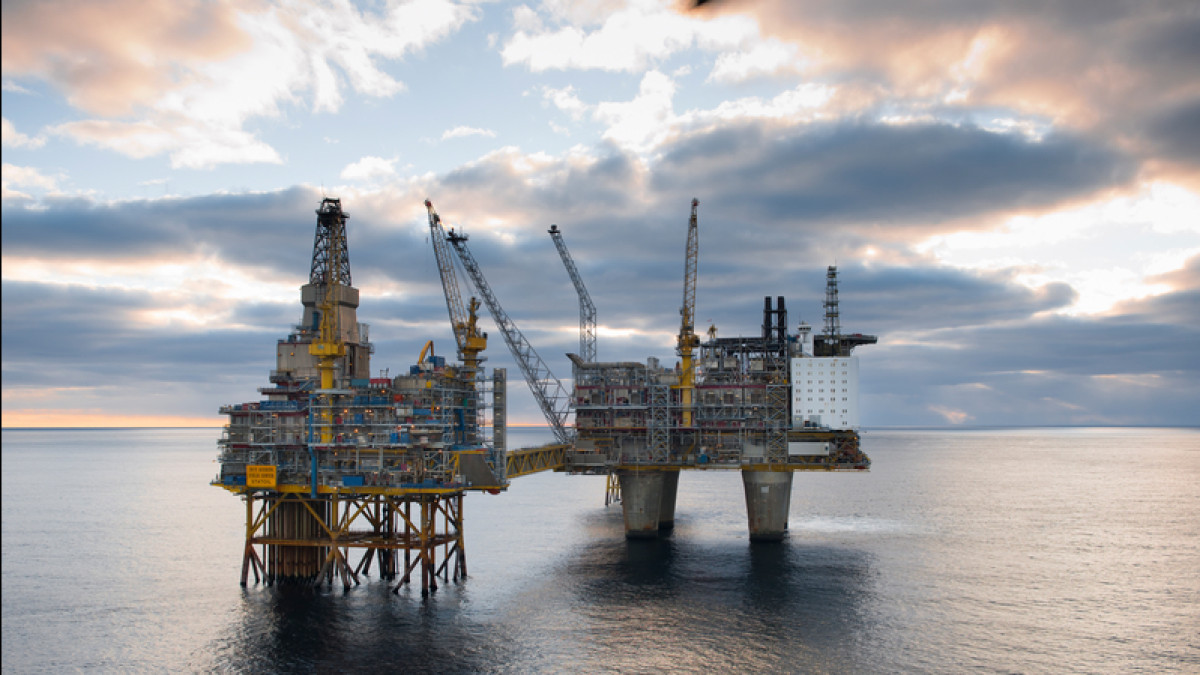
Norwegians benefited from rising oil and gas prices.
Fot. Øyvind Hagen, materiały prasowe Equinor
The latest data from Statistics Norway (SSB) show that the value of exports reached NOK 207.7 billion. This represents an increase of 53.3 percent compared with September 2025 and the highest level in nearly four years. Imports amounted to NOK 102.7 billion. They were 6.2 percent higher than a year earlier, while the trade surplus nearly tripled and rose for the fourth consecutive month.
Gas prices rose sharply. Oil generated higher revenues
Revenue from natural gas exports increased significantly. In September, it reached NOK 79.4 billion, more than twice as much as in the corresponding period last year. This was the highest figure since January 2023. The average gas price stood at NOK 8.96 per standard cubic metre and was the highest in nearly four years. At the same time, Norway exported 8.4 billion standard cubic metres of gas, 6.3 percent more than a year earlier.
Higher prices also increased revenue from crude oil sales. The value of its exports amounted to NOK 56.3 billion, up 60.6 percent compared with September 2025. The average price per barrel reached NOK 1,069. It was NOK 414 higher than a year earlier and NOK 225 higher than in August 2026. According to SSB, higher commodity prices were the main reason for the increase in the value of oil exports.
Higher prices also increased revenue from crude oil sales. The value of its exports amounted to NOK 56.3 billion, up 60.6 percent compared with September 2025. The average price per barrel reached NOK 1,069. It was NOK 414 higher than a year earlier and NOK 225 higher than in August 2026. According to SSB, higher commodity prices were the main reason for the increase in the value of oil exports.
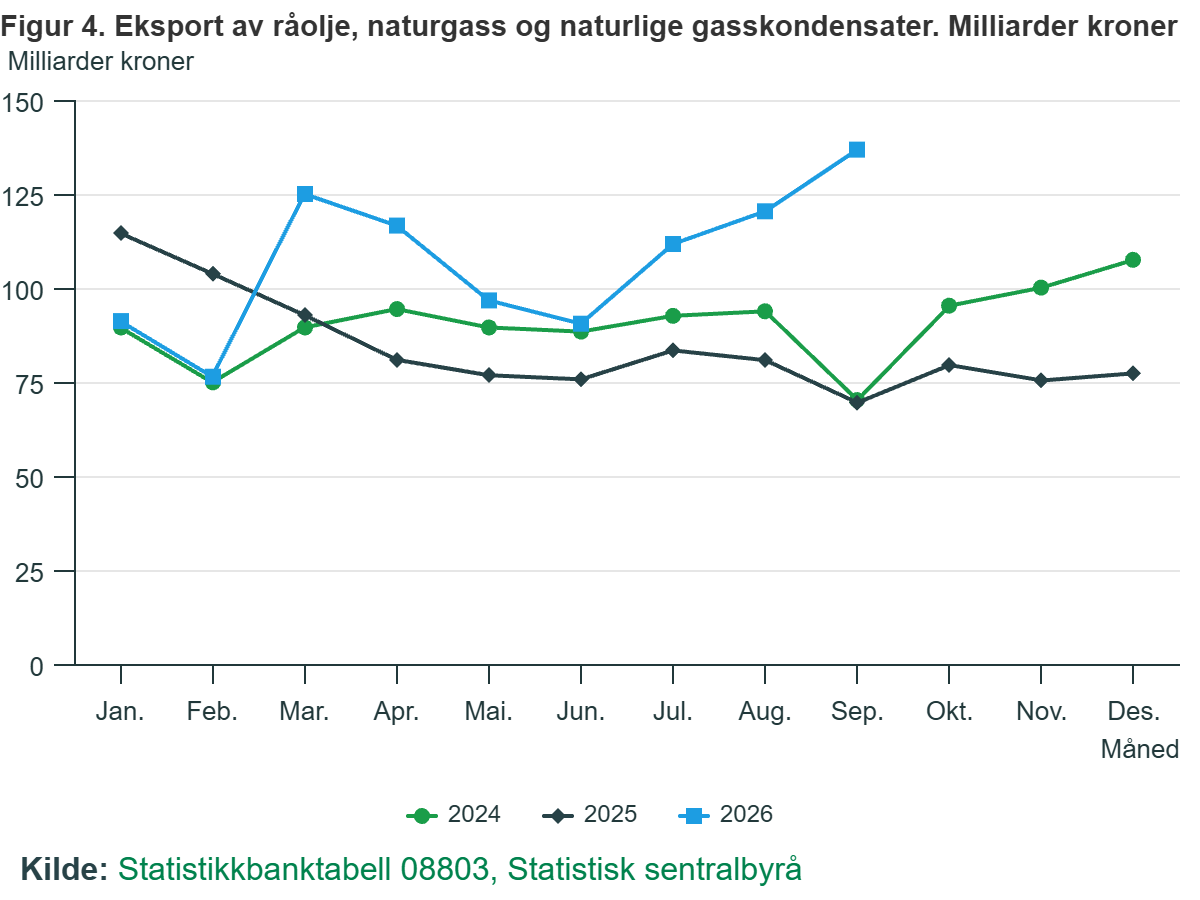
Exports of crude oil, natural gas and natural gas condensates. Amounts are stated in billions of kroner.Ill. SSB
Supply disruptions. Prices of more goods are rising
The changes also affected other sectors of Norwegian exports. The value of goods exports from mainland Norway reached NOK 70.9 billion, representing an annual increase of 7.4 percent. The largest increases concerned petroleum products and aluminium. Supply disruptions from the Gulf states, related to the situation around the Strait of Hormuz, contributed to rising global prices for these products. The value of Norwegian aluminium exports amounted to NOK 5.6 billion, 18.3 percent more than a year earlier.
Revenue from petroleum product exports more than doubled. SSB indicates that this was due both to higher prices and a larger volume of products sold. The value of exported electricity also increased. Norway sold electricity abroad for NOK 2.5 billion, or 30.5 percent more than a year earlier, driven by higher energy prices in Europe. Fish exports, meanwhile, maintained a value of NOK 17 billion, despite their volume declining by 8.3 percent.
Revenue from petroleum product exports more than doubled. SSB indicates that this was due both to higher prices and a larger volume of products sold. The value of exported electricity also increased. Norway sold electricity abroad for NOK 2.5 billion, or 30.5 percent more than a year earlier, driven by higher energy prices in Europe. Fish exports, meanwhile, maintained a value of NOK 17 billion, despite their volume declining by 8.3 percent.
The changes were also visible on the import side. In September, Norway imported around 20,000 passenger cars, 47.3 percent more than a year earlier, with electric vehicles accounting for nearly nine out of ten. At the same time, imports of data storage equipment rose by 61.4 percent to NOK 5.5 billion, which SSB links to the development of data centres in Norway.
How do you rate this article?